A Virus Evolved the Same Way Four Times, and a Method for Tracking Spread Mistook It for Travel
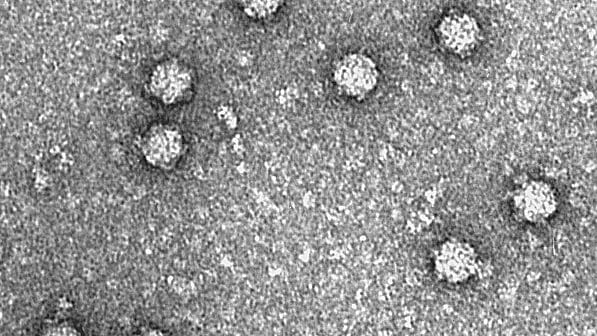
Four populations of a bacterial virus, kept in separate wells for 412 generations with no contact between them, repeatedly arrived at the same whole genomes. A widely used method for reading a population's history then reported migration between lines that had never been connected. Eva Bons, Hélène Chabas and colleagues at ETH Zürich published the experiment Oct. 29, 2026, in PLOS Biology.
Phylodynamics works out how fast a population grew and where it moved, from the genetic differences between its members, and it assumes those differences pile up without selection sorting them. The authors say such methods are applied widely but have never been tested in an experiment, and they conclude that the effects of selection should be built into them.
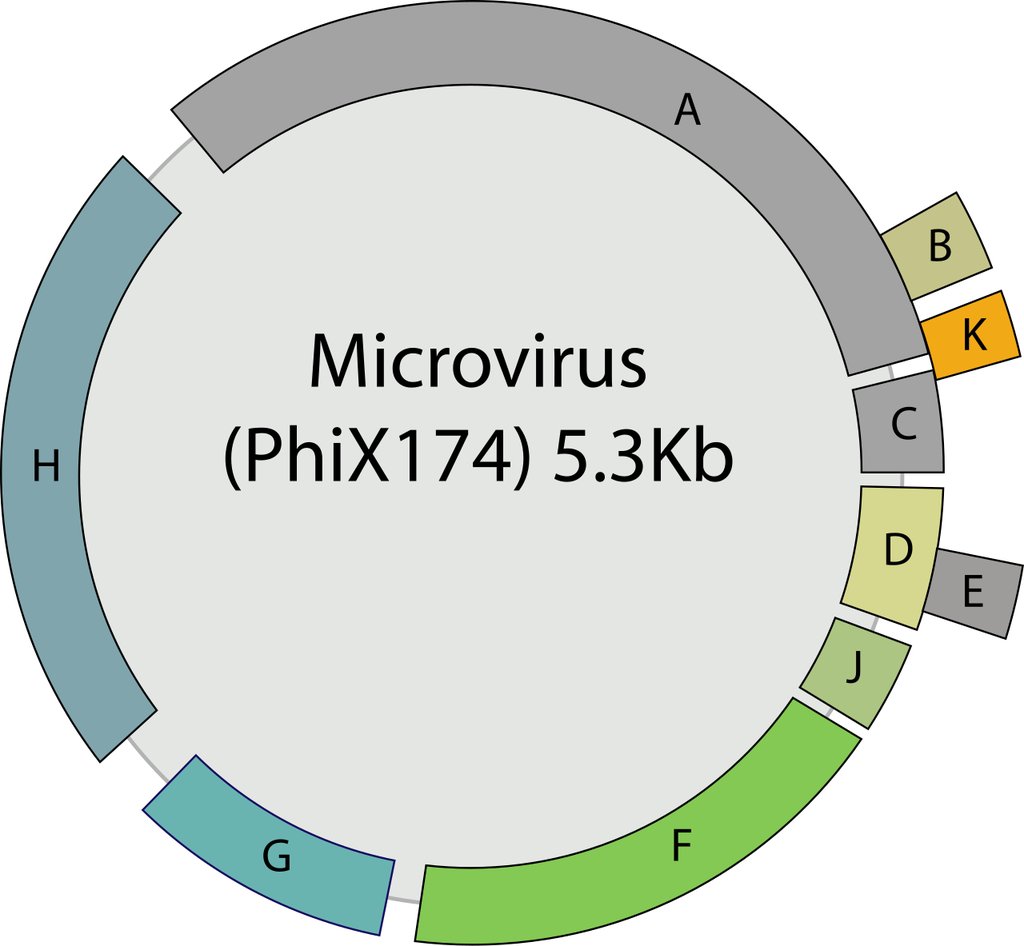
The team seeded four lines of the bacteriophage phiX174 from one stock, then moved a sample of each population into fresh Escherichia coli host cells roughly every 26 minutes. The paper says no selection pressure was imposed deliberately, though selection inherent in the bacterial host environment was present and the authors found evidence of it. Long-read sequencing of more than 80,000 genomes turned up 884 distinct genotypes, 26 of which appeared in more than one line.
In the phylodynamic analysis, the estimated migration rate between the four lines came out significantly above zero, when the true rate was zero. The authors report that over the whole experiment the estimate implies a 68% chance for any single genome to have moved to a different line. Dropping those repeated genotypes from the data did not remove the bias; masking the mutations that had evolved in three or four lines did.
The authors also report that simulations built to mirror the experiment indicate that this much repetition is not what neutral evolution produces. They add that correcting the bias is hard, because the sites where a useful mutation can appear are usually unknown.
Sources
- PLOS BiologyPeer-reviewed