Shorter Rabies Vaccine Course Raised Fewer Antibodies Than India's Longer One
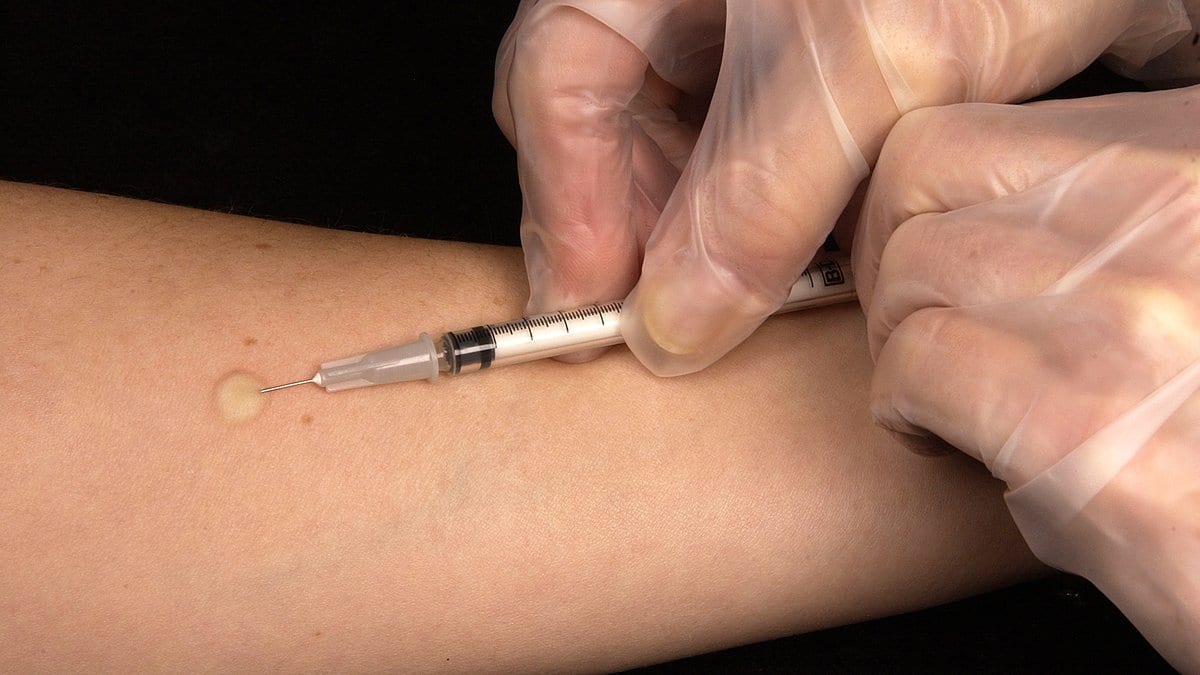
An Indian Council of Medical Research team reported Oct. 29, 2026, in PLOS Medicine that the one-week rabies vaccination schedule the World Health Organization recommends produced lower antibody levels in healthy volunteers than the one-month schedule India uses, missing the standard the trial had set in advance for calling the two equivalent.
The researchers write that a shorter course of post-exposure shots could improve compliance and access by cutting clinic visits and the amount of vaccine needed per patient. They report that only 40% of dog-bite patients in India finish the prescribed schedule.
The trial, at a single center in Pondicherry, randomly assigned 400 volunteers between Oct. 10, 2023, and Dec. 23, 2023. Half got the one-week Institut Pasteur du Cambodge regimen on days 0, 3 and 7; half got the one-month updated Thai Red Cross regimen, which adds a visit on day 28. Both regimens are given into the skin, and each was tested with both of the rabies vaccines India uses.
The investigators defined equivalence in advance as the whole 95% confidence interval for the day 42 ratio of average antibody levels falling between 0.72 and 1.04. The measured ratios, one-week against one-month, were 0.59 (95% CI 0.47–0.75) with the chick embryo cell vaccine and 0.76 (95% CI 0.61–0.95) with the Vero cell vaccine, which "did not meet the prespecified equivalence criterion."
Missing the criterion is a statement about antibody levels; the trial did not test whether either regimen prevents rabies after a bite. Every participant in all four groups reached the antibody level the authors call "indicative of seroprotection" at every check from day 14 to one year, with side effects mild and similar between the regimens. Nearly a quarter of volunteers already had that antibody level before their first dose, which the authors attribute to unrecognized earlier priming.
The WHO recommended the one-week regimen in its 2018 position paper on the basis of observational studies from Cambodia, and India's National Rabies Control Programme recommends the one-month course. The authors write that replacing it should also turn on compliance, cost and vaccine availability.
Sources
- PLOS MedicinePeer-reviewed
