One Gene Keeps Two Childhood Brain Tumor Types Growing in Lab Models
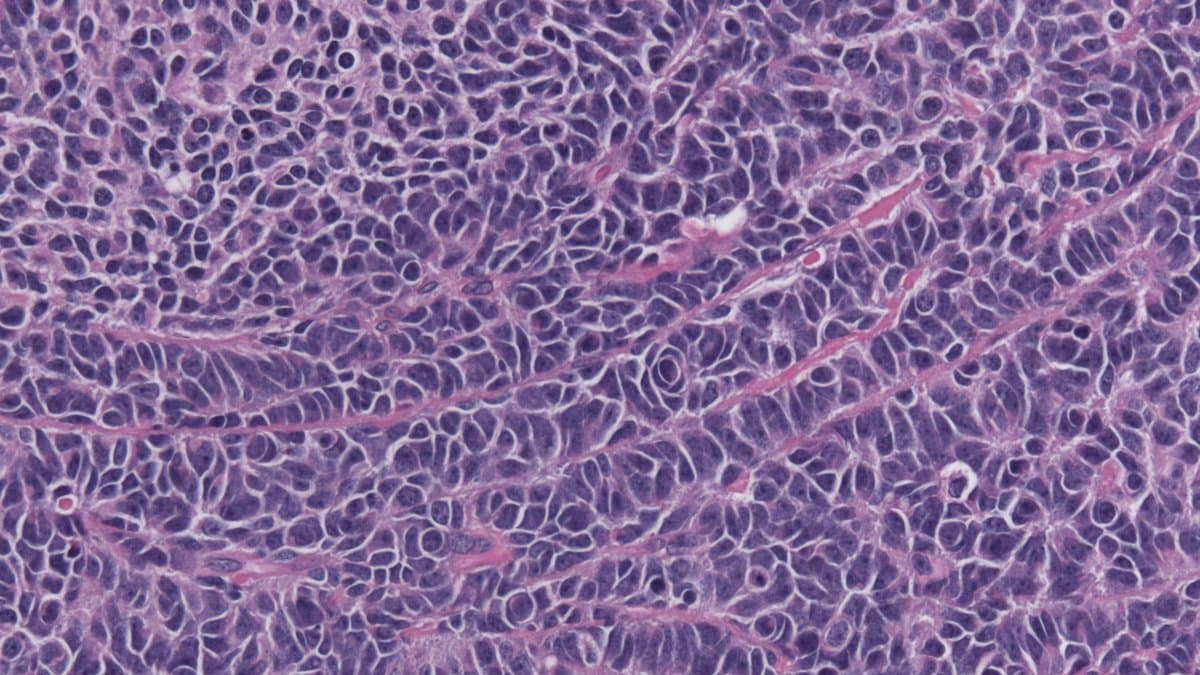
A team at St. Jude Children's Research Hospital in Memphis, Tennessee, and the Hopp Children's Cancer Center Heidelberg reports that a gene called KDM2B is required for growth in laboratory models of Group 3 and Group 4 medulloblastoma, two high-risk forms of a childhood tumor of the cerebellum. Deleting the gene, or destroying the protein it makes, slowed those models; a high-grade glioma line used for comparison was unaffected.
The paper, published Sept. 24, 2026, in Nature Genetics, frames that as a nomination rather than a finding about treatment. The authors put KDM2B forward as a candidate target worth pursuing in these two subgroups, note that no targeted therapies are currently effective against them, and say the work stops at models. No patients took part.
Ran Tao, Paul A. Northcott and colleagues profiled six chemical marks on histone proteins across 52 frozen tumor samples, 45 of them Group 3 or Group 4. They combined those profiles with mutation, DNA methylation and gene expression data from largely the same cohort. One pattern separated the subgroups: in Group 3 and Group 4, the promoters of genes involved in brain development sat in a poised, half-on state, and KDM2B was bound there.
The authors report that knocking the gene out with CRISPR, or tagging the protein so it could be destroyed within hours, switched those genes on and cut growth in cell lines and in patient tumor cells grown in mice. Because the degrading compound does not cross the blood-brain barrier, the animal test ran for seven weeks on tumors implanted under the skin rather than in the brain.
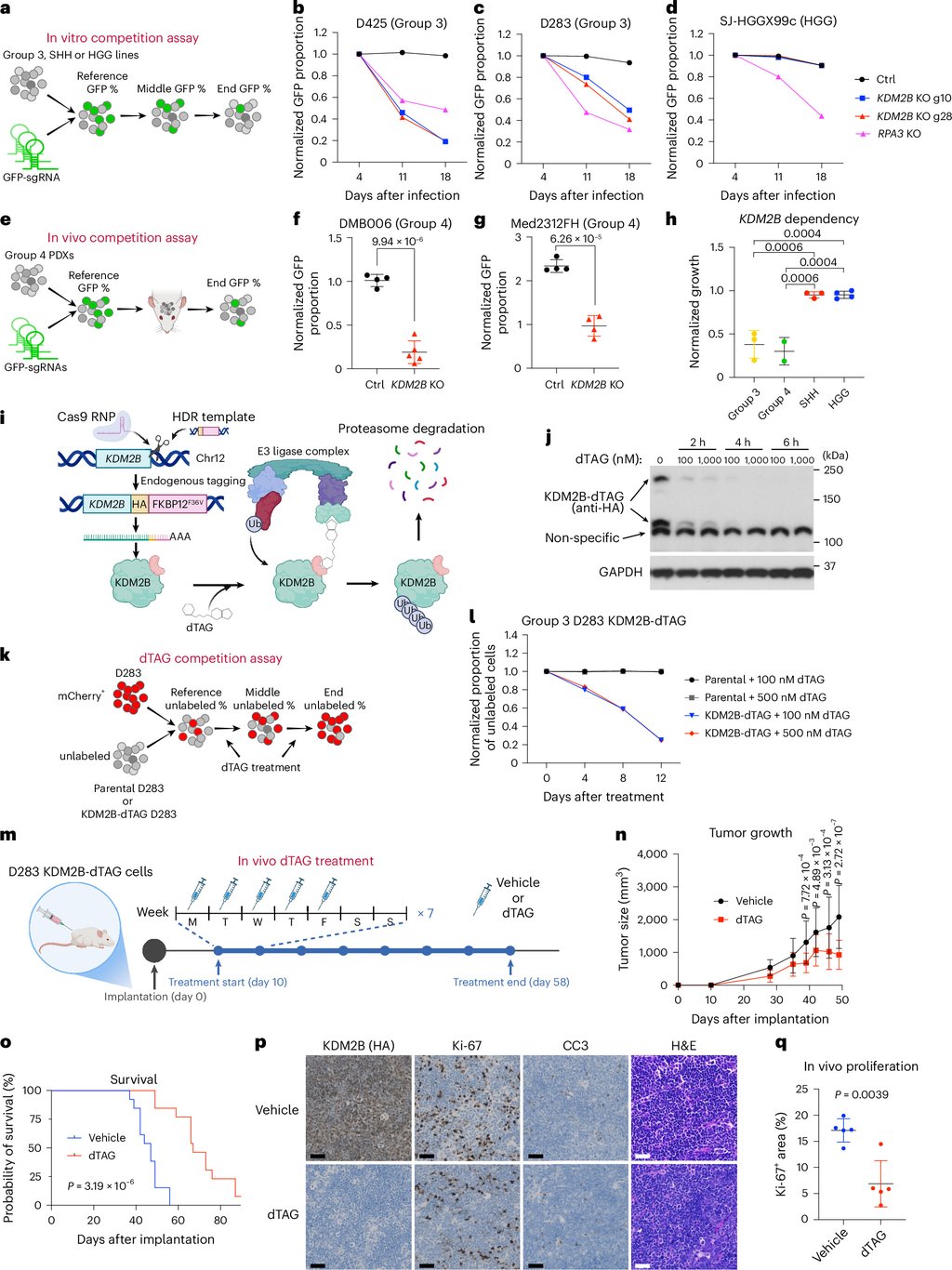
The dependency does not rest on KDM2B's enzyme activity. Rescue experiments showed the models needed the protein's DNA-binding region instead, which the authors say makes enzyme-blocking compounds an unpromising route and favors molecules that remove the protein outright.
The same paper notes that chromatin-modifying genes are altered in close to half of all medulloblastoma cases, while KDM2B itself is mutated in about 1%. The study's chromatin profiles are available through St. Jude's ProteinPaint portal.
Sources
- Nature GeneticsPeer-reviewed

Medical Disclaimer: This content is provided for general informational and educational purposes only. It is not medical advice and should not be used as a substitute for professional medical advice, diagnosis, or treatment. Always consult a qualified healthcare professional regarding any medical condition, concern, symptom, or treatment decision.