Pressure Sensors Placed Like a Bird's Nostrils Could Help Drones Fly in Formation
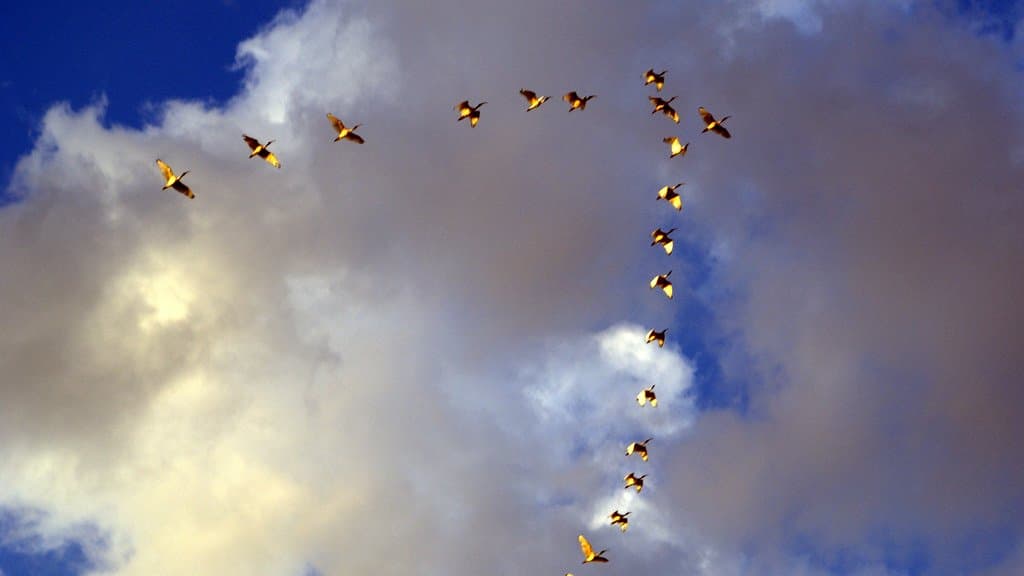
A team at the University of California, Davis fitted a model wing with air-pressure sensors, including one pair set where a bird's nostrils sit, and found that the pressure readings together with the wing's position predicted flight efficiency better than position on its own. The test ran in a wind tunnel with a single leader and a single follower model, not with aircraft in flight.
Writing in Communications Engineering, the authors say sensor placement copied from birds could sharpen how well formation-flying drones read the air around them, and with it their efficiency and their ability to fly themselves. The paper was published Sept. 29.
Huanglun A. Zhu, the study's first author, and colleagues spaced pressure ports along the follower model's wingspan and added two where a bird's nares, its nostril openings, would be. The authors report that pressure and position inputs together improved prediction of the lift-to-drag ratio, a standard measure of flight efficiency, over position alone. The nares-inspired pair by itself captured a substantial portion of the useful pressure information. They used information-theory measures and machine-learning models to establish how much each reading contributed. The study tests prediction from sensor readings. It does not include a control system that steers a drone.
Many bird species fly in formation and save energy by riding the leader's wake, and the saving depends on the follower holding a precise position. The paper's starting point is earlier work indicating that birds are sensitive to pressure cues, which may let a follower pick out the energy-efficient places to fly.
Sources
- Communications EngineeringPeer-reviewed