Antarctic Sea Ice Can Break From the Inside out, Wave Buoys Show
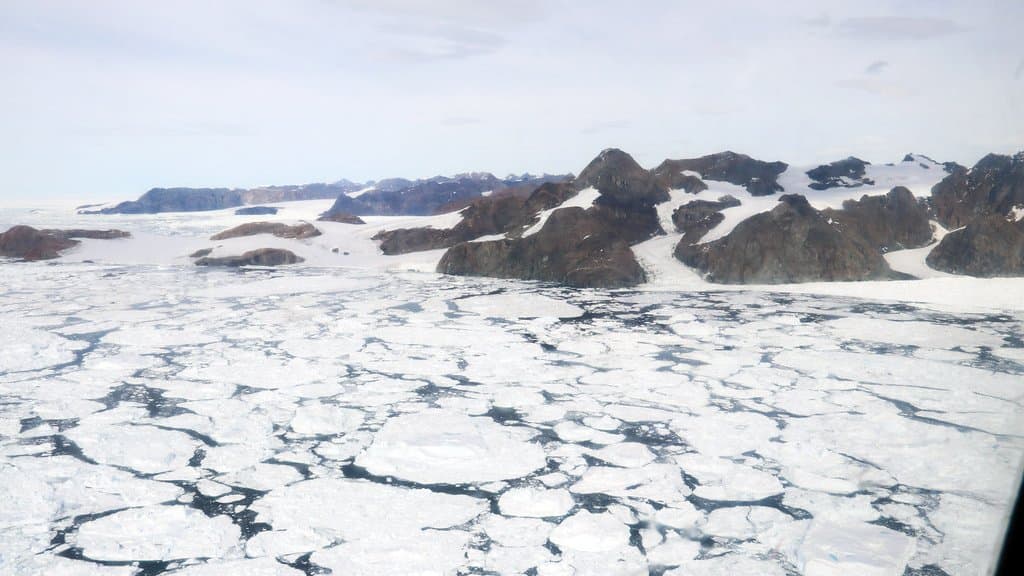
Joey J. Voermans and Alexander V. Babanin of the University of Melbourne and colleagues report that wave buoys moored in a patch of open water inside East Antarctic sea ice recorded wind-driven waves strong enough to break the surrounding ice outward, the reverse of the direction in which ocean swells break it. Their paper was published Sept. 29 in Nature Communications.
These openings, called coastal polynyas, recur in the same places each year. The paper describes them as sea-ice factories that make far more new ice than the ice-covered water nearby. Their formation and persistence are commonly put down to strong offshore winds, while the influence of waves on how they behave has been largely unexplored.
The measurements came from wave buoys in the Vincennes Bay Polynya, off the coast of East Antarctica. Satellite records for 2003 to 2022 show that the most extreme wave-driven breakup events coincided with large reductions in the fraction of the sea surface covered by ice. Those reductions lasted at least a week. The records also show more frequent shifts to active frazil ice, the loose crystals that form as open water starts to freeze.
Swells arriving from the Southern Ocean break the Antarctic pack from the outside inward. The authors conclude that waves raised inside a polynya do the opposite, and that locally generated waves both affect how polynyas behave and reshape the sea ice around them.
The authors add that as Antarctic coastal polynyas shift under a changing climate, wave activity may matter more in shaping their sea ice. The buoys were deployed with help from staff at Australia's Casey Station, and the work was supported in part by the Australian Antarctic Program.
Sources
- Nature CommunicationsPeer-reviewed
