A New Way to Catch the DNA Letters That Drive Autoimmune Disease
A group at the University of Oxford has published a way to map the contacts a disease risk variant makes with nearby genes, one copy of each chromosome at a time and down to single DNA letters. The report appeared on October 2, 2026, in Nature Genetics.
The authors say the hard part has never been finding risk variants but working out which one in a group of variants inherited together does something, and to which gene. More than 90% of the variants linked to common disease sit in DNA that does not code for proteins. Because each person carries two copies of every chromosome, measuring them separately compares the risk version and the non-risk version in the same cells.
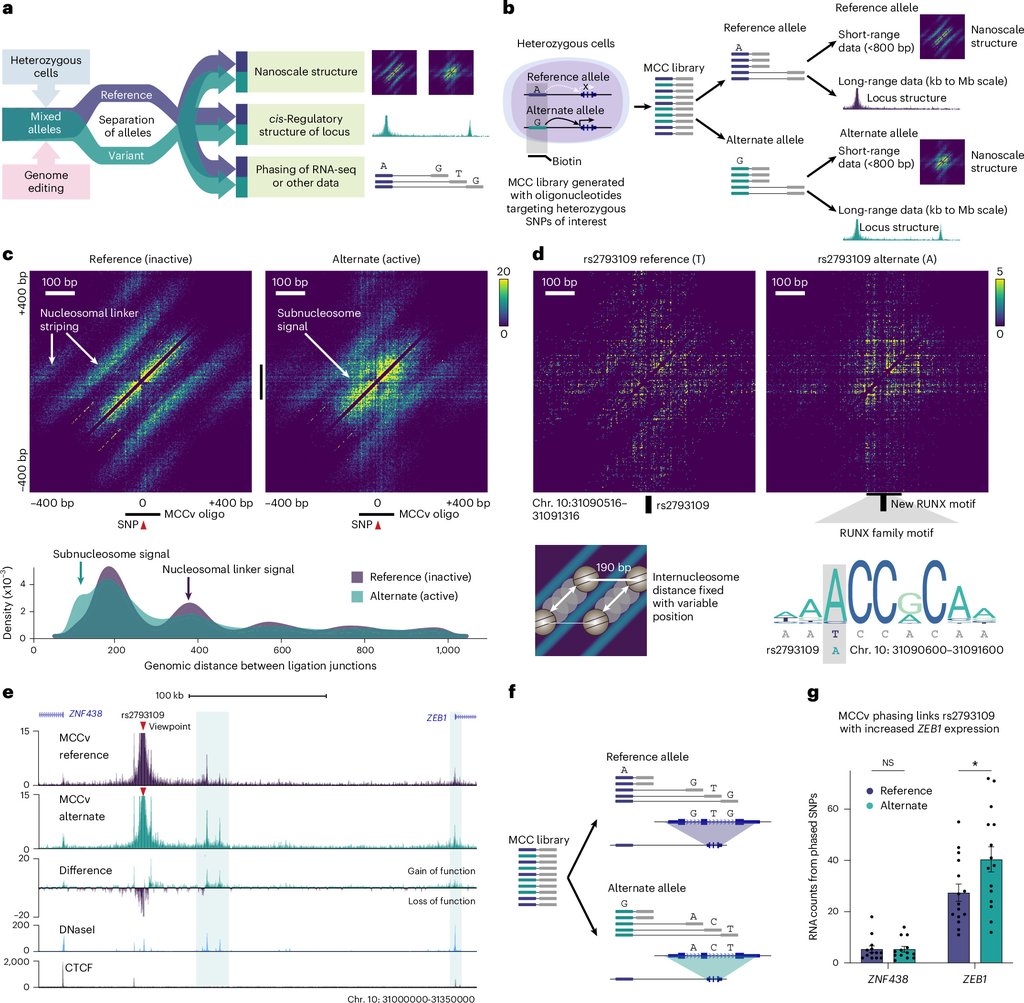
First author Joseph C. Hamley and colleagues applied the platform they call MCCv to 405 regulatory DNA segments tied to autoimmune and inflammatory diseases in human CD4+ T cells, a key immune cell type. Ranking the genes each variant contacted most often, they nominated 251 candidate causal genes. At the sites where a donor carried one risk copy and one ordinary copy, 54.6% had at least one contact that differed between the two. They estimate only about 30% of those sites could have been studied with older methods.
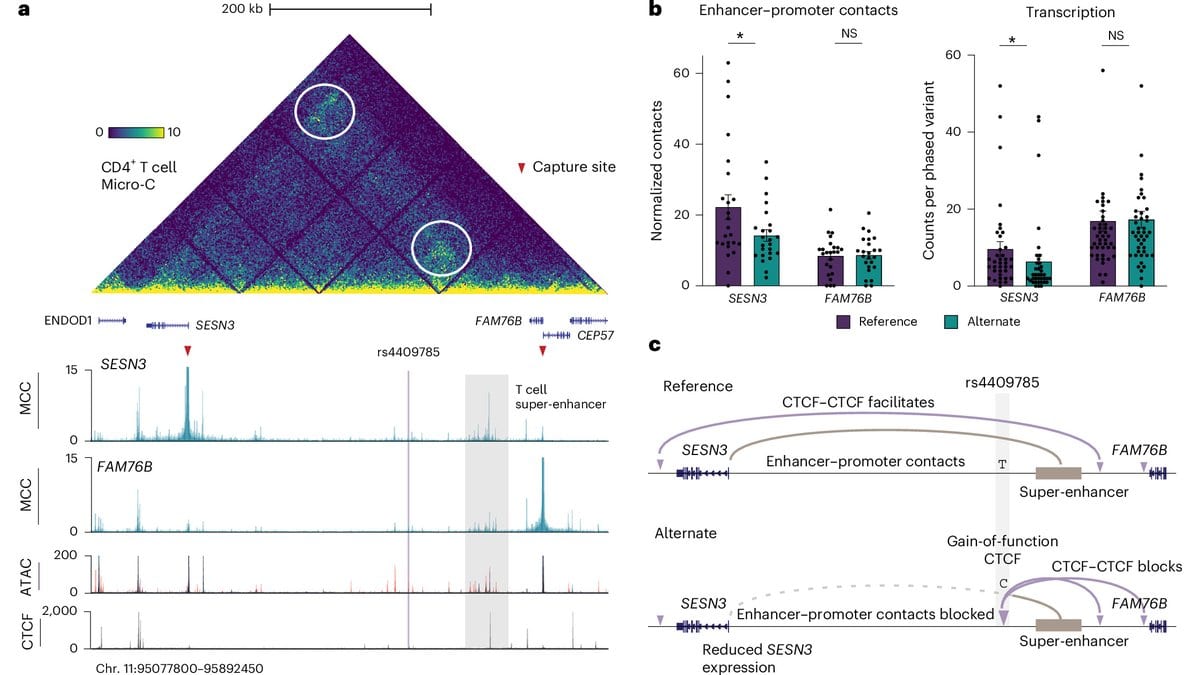
At one site linked to multiple sclerosis and rheumatoid arthritis, the authors report that the risk version of a variant called rs4409785 creates a new landing site for CTCF, a protein that pinches DNA into loops. The new site walls off a gene called SESN3 from a cluster of DNA switches active in T cells, and the risk copy produced 36.6% fewer SESN3 transcripts. Mice whose blood stem cells had Sesn3 edited out developed a multiple-sclerosis-like disease sooner than controls.
Sources
- Nature GeneticsPeer-reviewed