Twice-Yearly Antibiotics for Babies Did Not Raise Drug Resistance, Mali Trial Finds
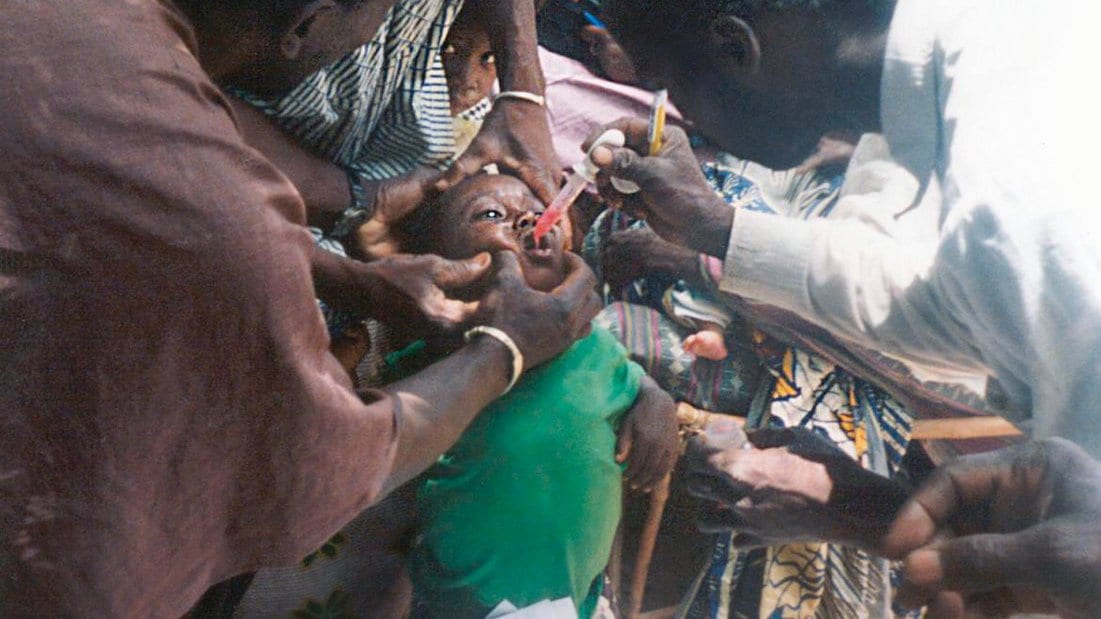
Infants in rural Mali given the antibiotic azithromycin twice a year for two years carried no more drug-resistant bacteria than infants given a placebo, a sub-study of the LAKANA trial reports. Where it was given four times a year, the trial could not rule out a modest rise.
Mass dosing of young children with azithromycin has cut child deaths in parts of sub-Saharan Africa, and the worry is that it breeds harder-to-treat bacteria. The paper notes that the World Health Organization recommends it for children aged 1 to 11 months where child deaths are common, and asks for resistance monitoring alongside.
Jane Juma of the Center for Vaccine Development–Mali, Dagmar G. Alber of University College London, and colleagues published the sub-study in PLOS Medicine on Nov. 13, 2026. They analyzed 5,025 nose swabs and 5,021 rectal swabs from children in 59 Malian villages. Villages rather than children were assigned at random to placebo, azithromycin twice a year, or the drug every three months; treated infants were aged 1 to 11 months.
The margin was fixed in advance: resistance in treated villages had to stay no more than 10 percentage points above placebo. After three years, resistance to azithromycin's drug class was 1.0 percentage point higher in twice-yearly villages than in placebo villages for Streptococcus pneumoniae, a cause of childhood pneumonia. The 95% confidence range on that gap ran from minus 4.7 to 6.8. Escherichia coli moved the same way, and both stayed inside the margin. Under the four-times-a-year schedule the gap for S. pneumoniae was 3.8 points, with a range from minus 3.3 to 10.9 points that crosses the margin. The authors report that a modest dose-related rise cannot be excluded, and that the study may have been too small to detect one. Among untreated older children in the same villages, they found no marked differences.
The parent LAKANA trial found no reduction in deaths under either schedule. The authors say these results cannot be carried over to programs that dose every child under five, where antibiotic exposure would be far greater. The Gates Foundation paid for the work.
Sources
- PLOS MedicinePeer-reviewed

Medical Disclaimer: This content is provided for general informational and educational purposes only. It is not medical advice and should not be used as a substitute for professional medical advice, diagnosis, or treatment. Always consult a qualified healthcare professional regarding any medical condition, concern, symptom, or treatment decision.