A Plug-And-Play Single-Photon Source That Works at Room Temperature
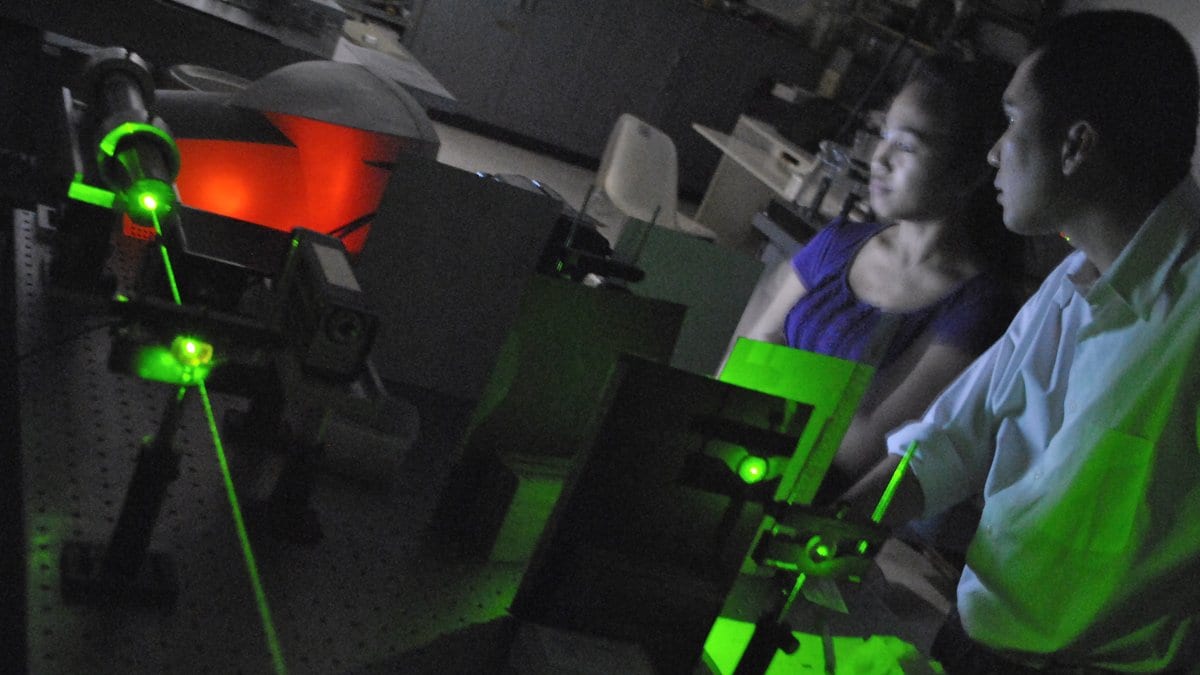
Researchers at the Korea Research Institute of Standards and Science (KRISS) have demonstrated a single-photon source that operates at room temperature and plugs into ordinary 220-volt power, according to work published in the journal Laser & Photonics Reviews. The device is built as a 19-inch rack-mounted unit and needs no cryogenic cooling and no fine optical alignment to run, the two requirements that have long confined such sources to the laboratory bench.
Single photons (individual particles of light, emitted strictly one at a time) are a basic ingredient of quantum communication, sensing, and cryptography. A source that reliably produces exactly one photon on demand is hard to build. Most existing designs rely on quantum dots that only behave well when chilled to around -270°C, close to absolute zero, and on optical setups that have to be tuned by hand. That combination makes them powerful but delicate, and expensive to keep running.
The KRISS device sidesteps the deep freeze by using a gallium-nitride (GaN) semiconductor, a material that can emit single photons without cryogenic cooling. To pull those photons out efficiently, the team patterned the semiconductor surface with nanometer-scale circular Bragg gratings, concentric ring structures that channel emitted light outward rather than letting it scatter and be lost. The researchers also describe a mapping technique that records the exact location of each emission site on the chip, so a specific single-photon emitter can be found again and used, a bit like saving GPS coordinates.
"Competitiveness in the quantum industry depends on whether you can build core components yourself," said KRISS researcher Lee Dong-hoon, who added that the team aims to develop a smaller and more robust version. The work drew on collaborators including Professor Lee Wook-Jae of Kongju National University on the device design and fabrication, and the institute has spun off a company, QRAD Inc., to commercialize the technology. According to KRISS, the unit is designed to slot into existing quantum key distribution equipment used to secure communications.
While independent groups have not yet reproduced or benchmarked the device, its real-world performance against established cryogenic sources remains to be seen. Furthermore, a more practical single-photon source is a component advance, not a leap in quantum computing; it makes quantum communication and sensing hardware easier to deploy, nothing more sweeping than that.
Still, portability is the point. Much of quantum technology's promise has been stuck behind equipment that only works in a temperature-controlled lab. A single-photon source that runs from a wall socket, in a box you can rack alongside conventional gear, is the kind of unglamorous engineering that decides whether a laboratory demonstration ever becomes a usable tool.
The study appears in Laser & Photonics Reviews (DOI 10.1002/lpor.202401966).