How a Honey Bee's Sting Keeps Pumping Venom After the Bee Flies Off
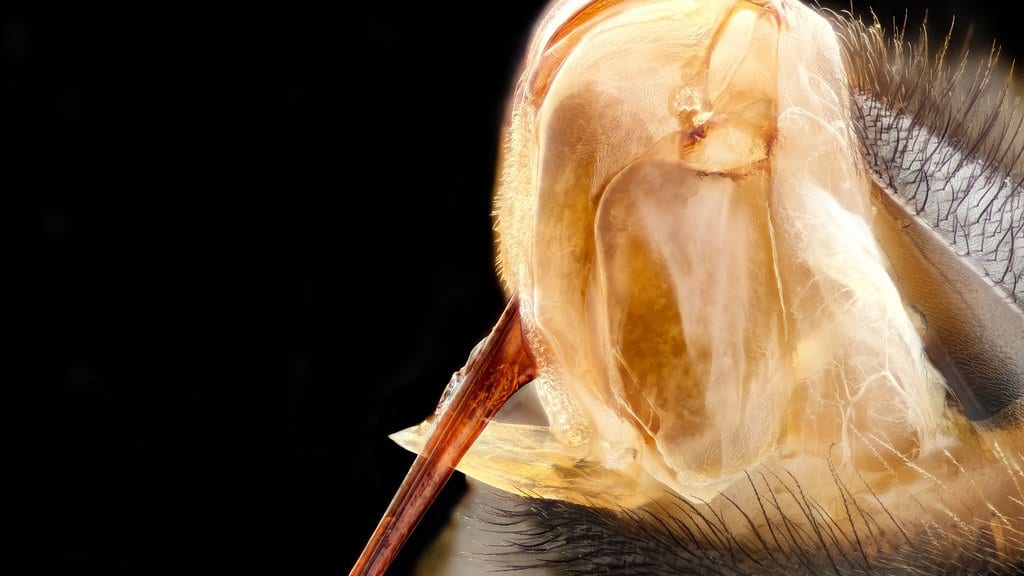
A honey bee stinger that has torn free from the bee works as a pump with two sliding pistons, and it keeps pushing venom into the skin after the bee itself has gone. Fiorella Ramirez-Esquivel and Sridhar Ravi of the University of New South Wales, with colleagues at Macquarie University, reached that conclusion by filming active detached stingers at high speed; they published it Oct. 12, 2026, in Proceedings of the National Academy of Sciences.
The paper says the mechanics of venom pumping had stayed unresolved through more than a century of anatomical description, because the stinger is hard to watch in action. Most stinging animals deliver venom by squeezing muscle around a venom sac; a worker bee's stinger instead separates from the body and goes on stinging by itself.
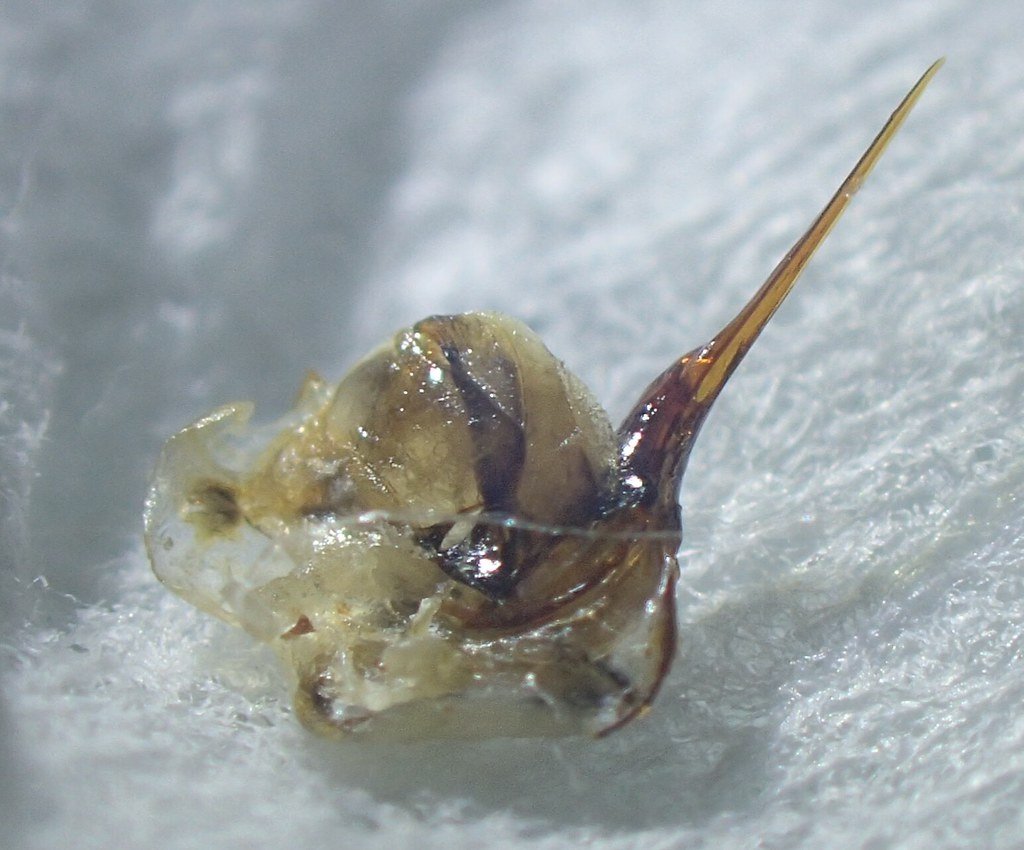
Two lancets, the sliding needles that cut into the skin, move in opposite phase inside a bulb-shaped chamber. That motion came from high-speed video and from micro-CT X-ray scans that rebuilt the stinger in three dimensions, the authors found. Each lancet carries a soft valve that changes shape as it travels, sealing the chamber on the downstroke and collapsing on the upstroke. The authors report that this builds the pressure that drives venom out, and say it probably also limits backflow while the chamber refills. The chamber's inverted teardrop shape lets it fill again even as the pumping continues.
The measurements were made in the western honey bee, Apis mellifera. To test what the video showed, the team built a scaled-up working model of the bulb chamber and reports that it reproduced the main features of the pumping cycle. The two-piston design adds considerable complexity, the authors write, and the payoff is venom delivery that continues in a small, self-contained unit.
The authors describe the stinger as evidence that an axial piston pump, a layout used in hydraulics, exists in a living animal, and suggest it could give engineers ideas for pumps that move very small volumes of fluid.
Sources
- Proceedings of the National Academy of SciencesPeer-reviewed