Farming Has Multiplied the Calcium That Helps Prairie Soils Hold Carbon
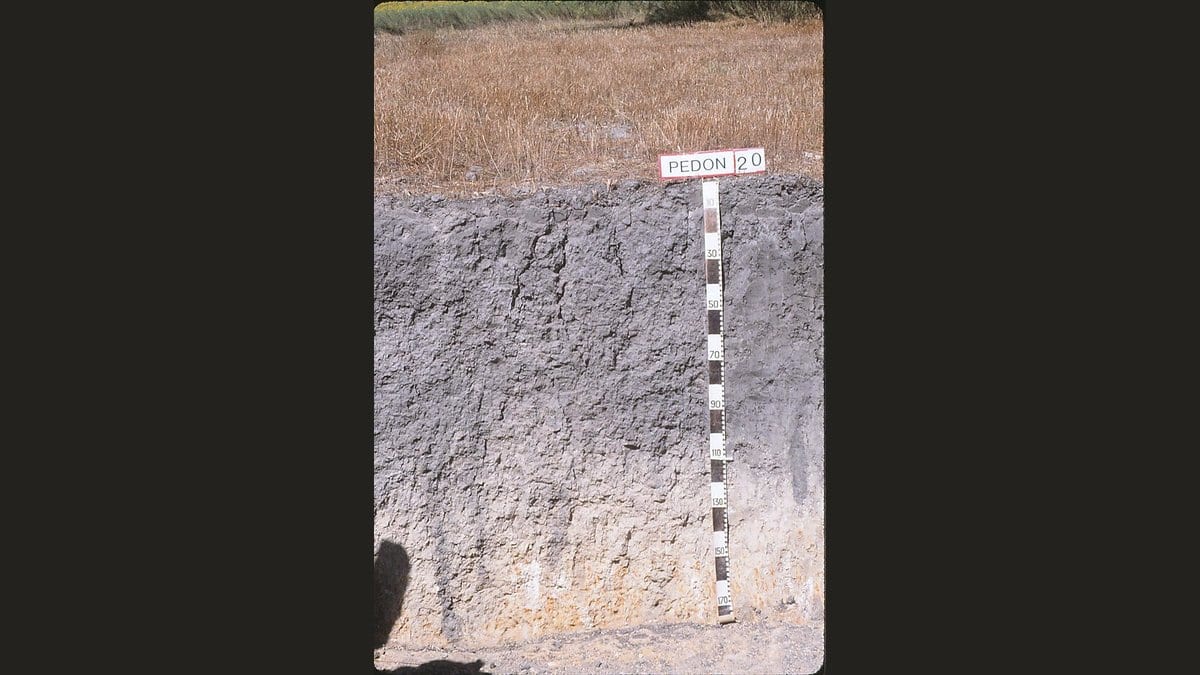
Agriculture has raised calcium inputs to cultivated Mollisols in the United States four- to five-fold, according to a geochemical model of US soils published Oct. 13, 2026, in Communications Earth & Environment. Mollisols are dark grassland soils, intensively farmed and rich in organic matter, giving them an important role in the carbon cycle.
The paper reports that calcium released as carbonate and silicate minerals break down is associated with how much organic carbon a soil stores, and that the association is stronger in Mollisols than in other soil types. The authors say the rise in calcium inputs means humans have fundamentally changed the geochemical conditions that sustain organic carbon in these soils, and that managing how much calcium is released, and when, may help preserve and restore carbon in the world's most intensively farmed landscapes.
The model simulated how much calcium weathering releases in soils across the country, and the team then compared that with the organic carbon those soils hold. The finding is an association generated by a model, not a measurement from a field experiment.
The paper is open access under a Creative Commons Attribution license. Its first author is E. W. Slessarev of Yale University, now at the University of California, Berkeley, writing with seven colleagues. The journal received the manuscript Feb. 2, 2026, and accepted it Sept. 29, 2026. The accepted version is being posted early and will be replaced by a final version of record that may carry further edits. The work was supported mainly by a Lawrence Livermore National Laboratory research grant under a Department of Energy contract.
Sources
- Communications Earth & EnvironmentPeer-reviewed