Skip to content
See the World Through ScienceA project of ALLATRA
Source: Peer-reviewedJournal of the American Chemical Society1 source

Five Rare Earths in One Catalyst Turn Methane Into Plastics Feedstock
Science

Republish this story

Our work is licensed under Creative Commons BY-NC 4.0. You may republish this piece for free — with credit to ALLATRA Media and a link to the original, unedited beyond length trims, and not for commercial use.

Read the full license

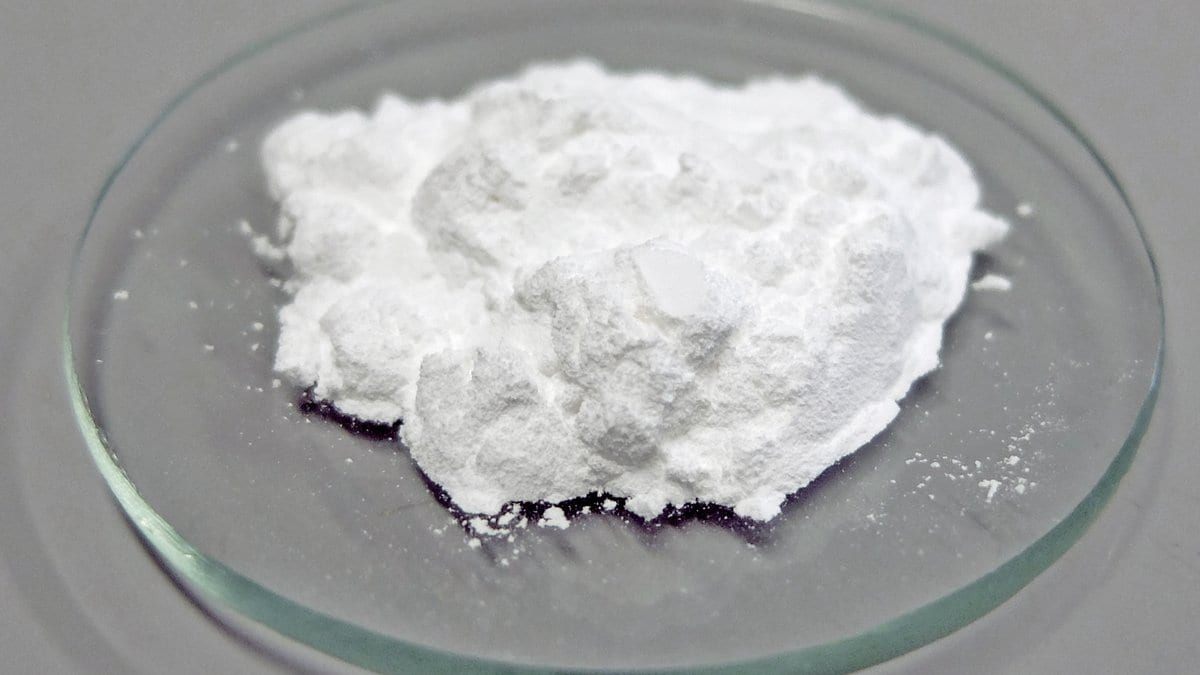
A mound of fine white lanthanum oxide powder resting in a round glass dish.
Lanthanum oxide powder, one of the five rare earth oxides combined in the catalyst reported by the Institute of Science Tokyo group (illustrative)."Oxyde de lanthane en poudre" by GeoffreyHautecouverture, via Wikimedia, CC BY-SA 4.0

A group at Institute of Science Tokyo has made a methane catalyst from five rare earth metals mixed into a single oxide, and reports that, in laboratory tests, it gave ethylene and ethane in about 12.3% total yield at temperatures below 600 °C and held its activity for 240 hours at 600 °C. The work was published on Oct. 8, 2026, in the Journal of the American Chemical Society.

Oxidative coupling, the reaction they ran, turns methane directly into ethylene and ethane, the feedstocks plastics are made from. It normally needs enough heat to wear a catalyst out, and the authors' case for mixing metals is that it keeps the surface chemistry stable while lowering the temperature the reaction starts at.
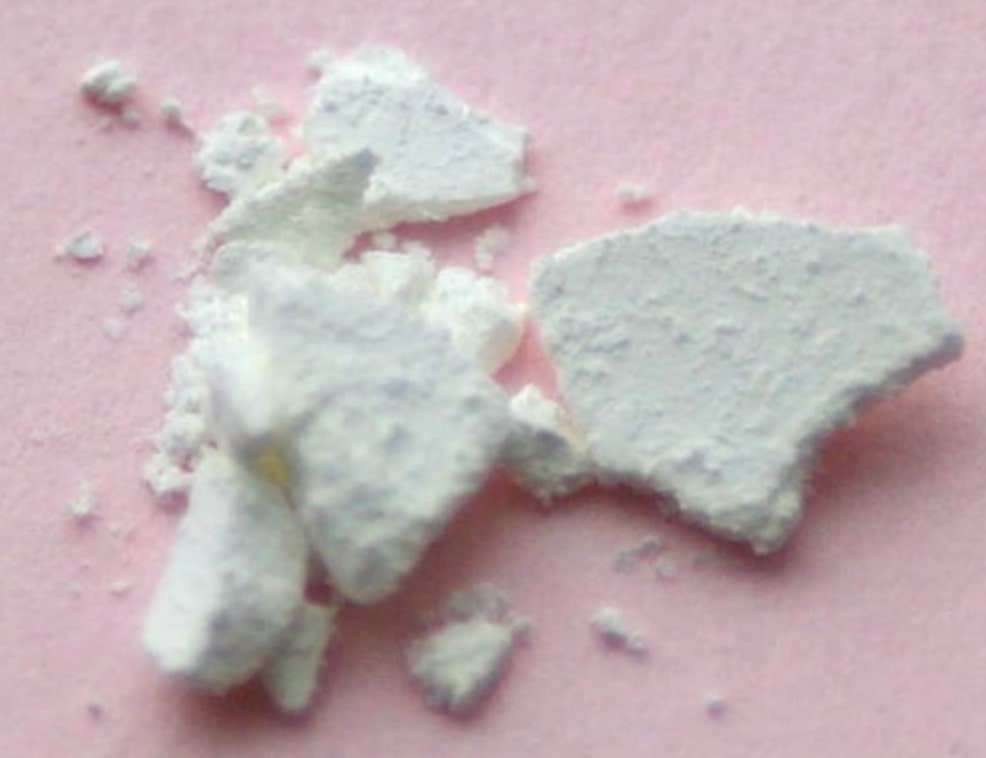
Flakes and crumbs of white dysprosium oxide powder on a pink surface.
Dysprosium oxide. Dysprosium is the heaviest of the five rare earth metals in the catalyst, and the average size of those metal ions sets how strongly the surface holds carbon dioxide (illustrative). "Dy2O3powder" by Materialscientist, via Wikimedia, CC BY-SA 3.0

The catalyst is written (LaSmEuGdDy)0.4O3: lanthanum, samarium, europium, gadolinium and dysprosium share the same positions in one crystal instead of a single metal filling them, an arrangement chemists call a high-entropy oxide. The paper reports it was made by a sol-gel route, from the metals' acetate salts and an amino acid.

The authors report that, against oxides of the individual metals, the mixture began coupling methane at a lower temperature and lasted longer. Carbon dioxide desorption measurements tracked how strongly the surface binds an acidic gas, and they report that this strength can be set through the average size of the metal ions, producing the sites needed to break a carbon-hydrogen bond at low temperature.

Sources

By Olga SchmidtEditor-in-Chief, Writer

Spot an error?

Spot an error?

Report an error

Spotted a mistake on this page? Tell us what's wrong and our editors will take a look.

What kind of problem?

Only if you'd like us to be able to follow up. We won't use it for anything else.

We correct mistakes openly. Select any text to flag it. Fixes are logged under our Corrections Policy.

Report an error

Reporting on

Five Rare Earths in One Catalyst Turn Methane Into Plastics Feedstock

What kind of problem?

Only if you'd like us to be able to follow up. We won't use it for anything else.

We read every report. Corrections are logged publicly.