Researchers Put a Price on Spreading Crushed Rock Across China's Farmland
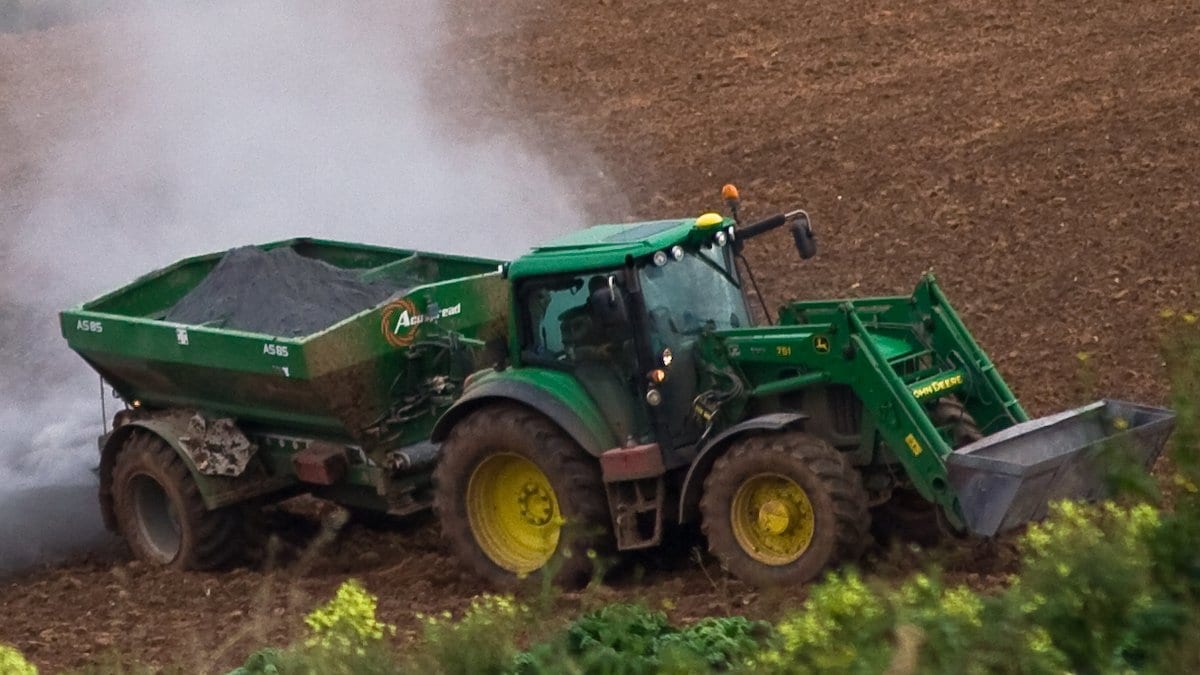
Spreading crushed basalt on China's croplands for a single year could remove 0.44 to 0.79 billion metric tons of carbon dioxide by 2100, at a net cost of 127 to 226 U.S. dollars for every metric ton removed, counted across the rock's full life cycle. Zeyu Wang and Fei Teng of Tsinghua University in Beijing, with David M. Reiner of the University of Cambridge, report the estimates in Communications Earth & Environment, published Oct. 10, 2026.
The authors say the method's viability at a national scale in China had not been quantified before this analysis, which works through the country's farmland area by area. They offer it as a basis for considering enhanced rock weathering among China's carbon-management options, and as a reason to run field trials. The technique spreads crushed rock on fields, where weathering of the grains consumes carbon dioxide and carries the carbon away in water.
The authors calculate that a yearly repeat application could cover 5% to 30% of the carbon dioxide removal China needs by 2060 in their modeling, with the best prospects in Northeast, Central-South and East China. They also report that rock ground finer than the particle sizes used commercially gives the most favorable balance between the carbon removed and the cost.
Those are modeled potentials and modeled costs, not carbon measured coming out of the air on a working farm. The authors describe the study as an initial assessment and say field trials and linked soil and river modeling are needed to establish how fast the basalt weathers, how much of the carbon stays locked away downstream and how much is lost on the way.
The work was supported by the National Key R&D Program of China. The journal has posted the accepted version of the paper ahead of its final edited record.
Sources
- Communications Earth & EnvironmentPeer-reviewed