FDA Approves a Bladder Cancer Drug for a Second Form of the Disease

The U.S. Food and Drug Administration expanded the approved use of the bladder cancer drug Anktiva on Oct. 14, 2026, to cover adults whose cancer has not spread into the bladder's muscle and no longer responds to BCG, the immune treatment usually tried first. The agency says it is the first treatment approved specifically for these patients.
Treatment usually starts with BCG, which is put into the bladder to turn the immune system against the tumor, but the cancer sometimes persists or returns. In its announcement, the FDA says adding Anktiva gives the immune system another way to fight, and that the combination can help some people whose cancer BCG alone did not control.
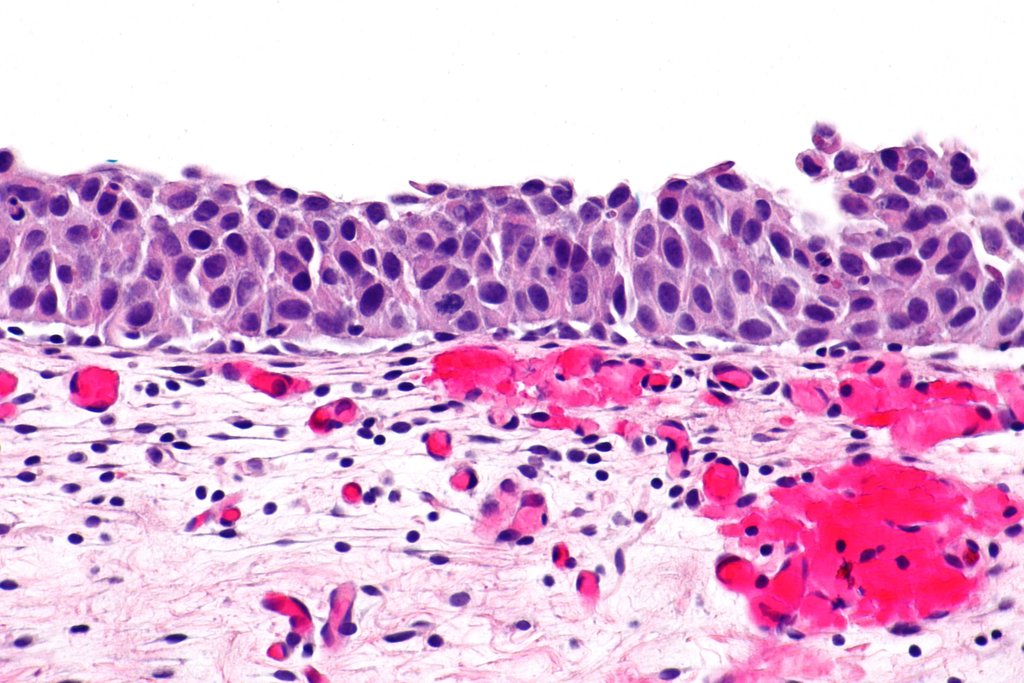
The new approval covers people whose high-grade tumors are all of the papillary kind, the finger-like growths that sprout from the bladder's lining. It does not rest on a new trial in that group. The FDA says it relied on the evidence behind Anktiva's earlier approval for carcinoma in situ, a flat form of the same cancer, plus evidence that the two often occur together and look similar under a microscope. The agency calls this a new approach and says it is working toward finalizing draft guidance so other developers can follow the same route.
That earlier approval was supported by a trial in 77 adults, some of whom also had papillary tumors. The agency reports that 62% of them had no high-grade cancer detected at follow-up, and that 40% of those responses lasted at least two years.
Anktiva is given with BCG through a catheter into the bladder, once a week for six weeks. Further doses depend on how the cancer responds, and treatment may continue for up to 37 months. Its prescribing information warns that delaying surgery to remove part or all of the bladder can let the cancer spread, which can be fatal. The agency lists painful or frequent urination, blood in the urine and urinary tract infections among the most common side effects.
Sources

Medical Disclaimer: This content is provided for general informational and educational purposes only. It is not medical advice and should not be used as a substitute for professional medical advice, diagnosis, or treatment. Always consult a qualified healthcare professional regarding any medical condition, concern, symptom, or treatment decision.