A Genetic Method Weighs Schizophrenia, Bipolar Disorder and Depression at Once
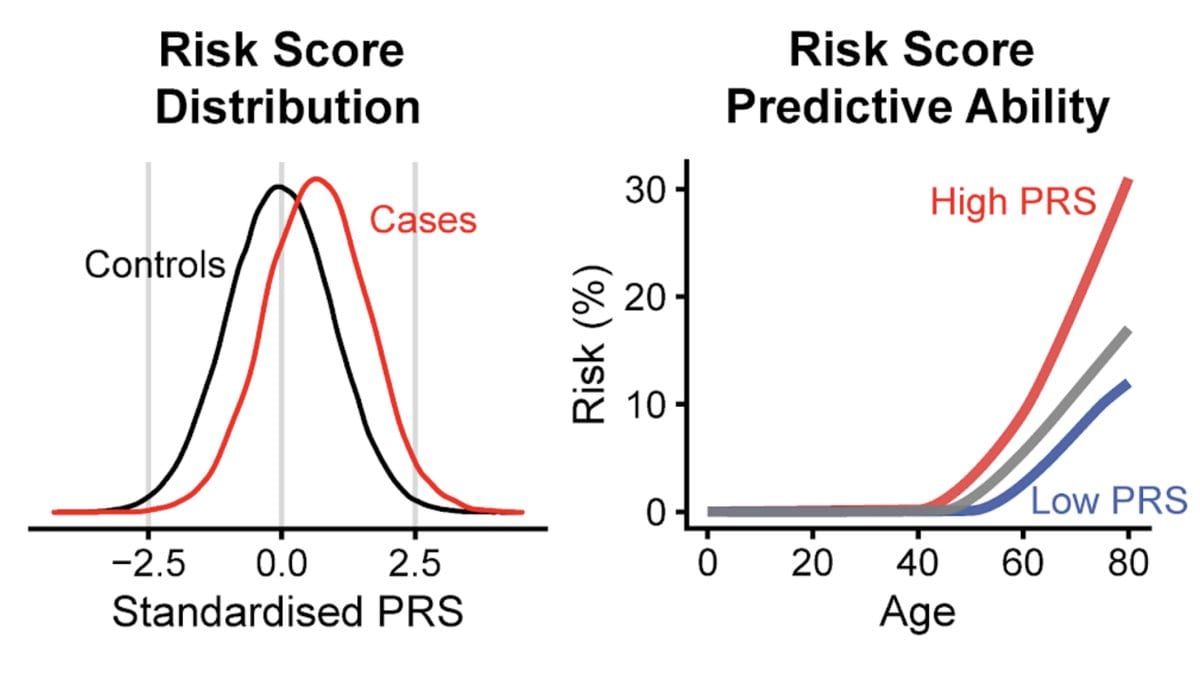
A method published Aug. 20 in Nature Genetics returns a probability for each of four categories at once: schizophrenia, bipolar disorder, major depression, or none of the three. Genetic risk scores are normally computed one disorder at a time against controls. The authors call the method DDx-PRS, short for differential diagnosis-polygenic risk score, and the worked illustration in the study runs schizophrenia 50%, bipolar disorder 25%, major depression 15%, control 10%.
It combines case-control polygenic risk scores, which sum up many small genetic effects into one number per disorder, with prior clinical probabilities, and models how the underlying liabilities to the three disorders overlap, according to the study. The authors, with first author Wouter J. Peyrot and the schizophrenia, bipolar disorder and major depressive disorder working groups of the Psychiatric Genomics Consortium, trained it on summary results from three case-control genome-wide association studies, covering 41,917 to 173,140 cases each and 1,048,683 people in total.
They then tested it on held-out consortium cohorts totaling 11,460 people, assembled with equal numbers in each of the four categories, which is not the mix that walks into a clinic. On that data the method was "well calibrated and well powered," consistent with the group's own simulations, and gave results comparable to methods that need separate tuning data, the authors report.
In the top deciles of predicted probability, meaning the highest-scoring slices of the test sample rather than a typical person in it, the true diagnosis probabilities were "considerably larger" than the baseline probabilities the model was given to start from, the paper reports. From that the authors write that the results imply "appreciable potential for clinical utility in certain settings." That is their assessment of their own method, which has not been used in a clinic, tested in a trial or submitted to a regulator.
The paper is classified as a Technical Report. The software is posted on GitHub and archived on Zenodo, and the case-control study results behind it can be downloaded from the consortium.
Sources
- www.nature.comPeer-reviewed