In a Lung Cancer Trial, Clearing Tumor DNA From the Blood Went With Fewer Relapses

Patients with operable lung cancer whose blood stopped carrying detectable tumor DNA during drug treatment before surgery went longer without a relapse or death than patients whose blood did not, investigators on the phase 2 NeoCOAST-2 trial reported Oct. 25, 2026, in Nature.
The authors report that such patients stay at high risk of relapse even with drug treatment around the operation. They suggest that reading the blood result alongside whether any cancer is left in the removed tissue may improve how patients are sorted by risk.
NeoCOAST-2 randomly assigned patients with stage IIA to IIIB non-small cell lung cancer to chemotherapy plus the antibody durvalumab, combined with one of three added drugs: oleclumab, monalizumab or datopotamab deruxtecan. Event-free survival at 24 months, the share of patients with no relapse and no death by that point, ranged from 70.5% in the oleclumab group to 77.9% in the datopotamab deruxtecan group.
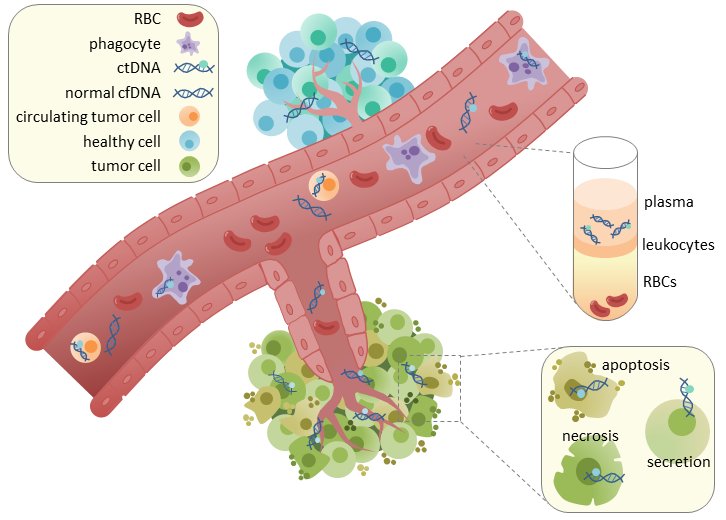
Blood tests at the start of the third round of presurgery treatment found no tumor DNA circulating in the blood of 50.9% of the oleclumab group, rising to 72.5% of the datopotamab deruxtecan group. With the three groups pooled, patients whose blood cleared went on to relapse or die at about a fifth the rate of those whose blood did not, a hazard ratio of 0.22. The paper presents that link as an exploratory analysis of an association, not as evidence of causation.
The trial's primary analysis, reported earlier, had also found that same datopotamab deruxtecan group to have the highest rate of complete tumor disappearance in the removed tissue. The authors write that the combination warrants further evaluation.
The paper's first author is Lara McGrath of AstraZeneca's oncology research division in Cambridge, Massachusetts, and its senior author is Tina Cascone of the University of Texas MD Anderson Cancer Center in Houston; several other authors also list AstraZeneca.
Sources
- NaturePeer-reviewed

Medical Disclaimer: This content is provided for general informational and educational purposes only. It is not medical advice and should not be used as a substitute for professional medical advice, diagnosis, or treatment. Always consult a qualified healthcare professional regarding any medical condition, concern, symptom, or treatment decision.