Why Only One Known Antibody Blocks Both Kinds of Flu
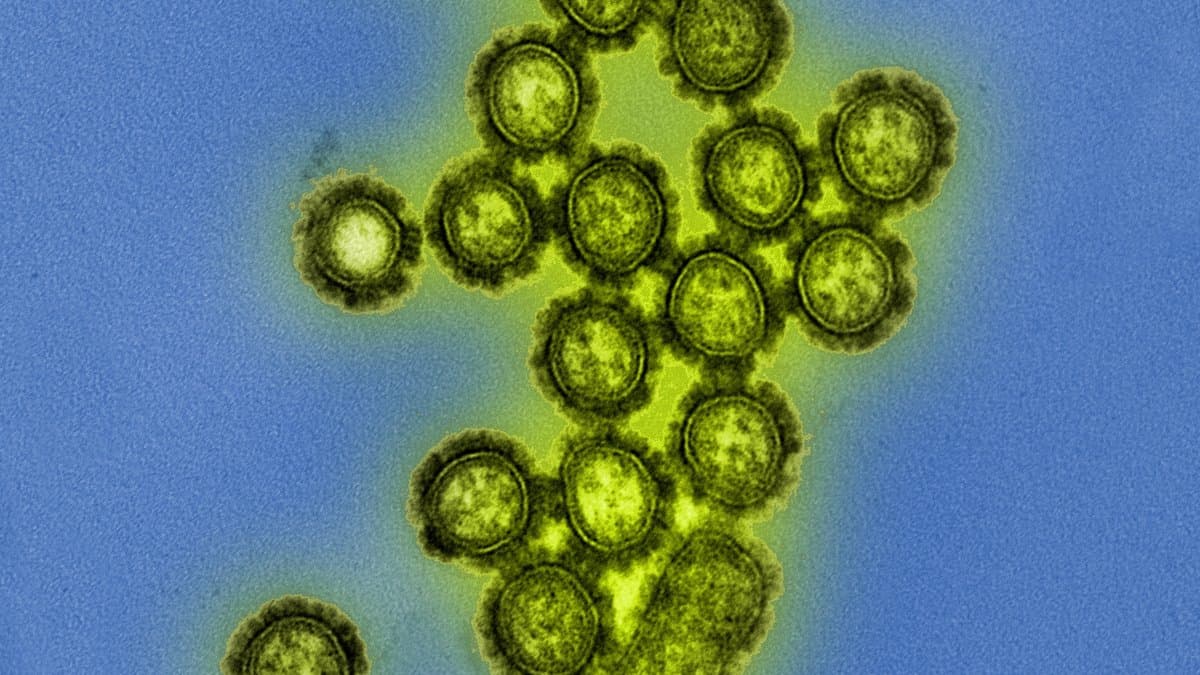
More than a decade after it was found, an antibody called CR9114 is still the only one known to block both influenza A and influenza B. Researchers at the University of Illinois Urbana-Champaign say they can now explain why: the mutations that would build a second such antibody work against one another.
Writing in PLOS Biology on Sept. 28, Katrine E. Dailey, Nicholas C. Wu and colleagues report that a change improving the antibody's grip on one flu protein often ruins its grip on another. They say the trade-off explains why such antibodies are so scarce, and that it bears on efforts to design a flu vaccine that would not need rebuilding each year. Their suggestion is to aim at influenza A and influenza B separately, with a different vaccine component for each, rather than chase one antibody covering both.
CR9114 latches onto the stalk of hemagglutinin, the protein influenza uses to enter cells. That stalk barely changes between strains, which is what makes it a target. The team altered almost every amino acid in the antibody's heavy chain, the part that grips the virus. They then measured how tightly each version held on to stalk proteins from an H1 virus, an H3 virus and an influenza B virus. The four runs, a method called deep mutational scanning, covered both the antibody's inherited form and its matured form.
Many changes that left the H1 grip intact, or improved it, weakened or destroyed the grip on the H3 and influenza B proteins. Tolerance for change fell in step with binding strength: highest against H1, lower against H3, lowest against influenza B. Which changes help also depends on which are already present, an effect called epistasis. It turned up widely: of 160 other antibodies aimed at the same stalk, most carried at least one change that would have hurt CR9114's inherited form.
The authors say the antibody's route to such wide coverage is easily derailed. The study was funded by the National Institutes of Health and the Vallee Scholars Program, and its sequencing data and analysis code are public.
Sources
- PLOS BiologyPeer-reviewed