Chimpanzee Calls Give Away Where the Animals Live, and More so With Age
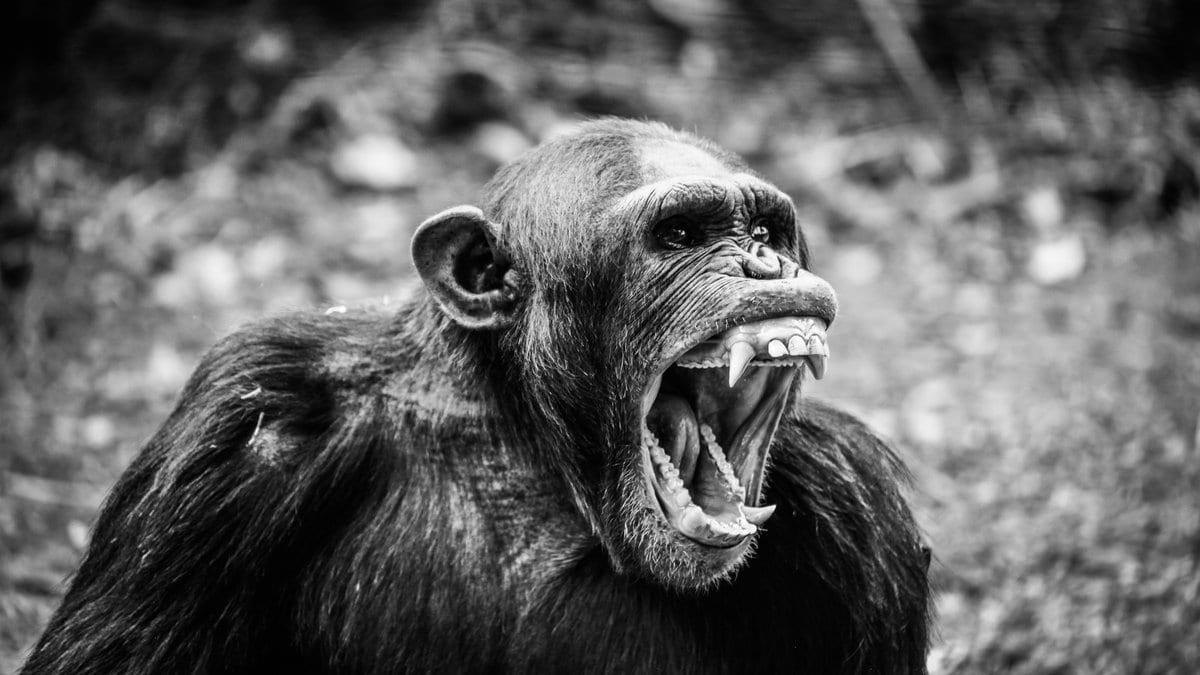
Chimpanzees at two African sites can be told apart by the sound of their laughs, grunts and whimpers, and the difference is sharper in juveniles than in infants, researchers report in PLOS One.
Published Sept. 2, the paper measured the acoustics of 4,733 laughs, 3,694 grunts and 2,798 whimpers from 21 infant and 10 juvenile chimpanzees at Chimfunshi Wildlife Orphanage in Zambia and Gombe National Park in Tanzania. Using permuted discriminant function analysis, a statistical test of whether recordings can be sorted back to the site they came from, the authors write that they "could discriminate between sites for all call types."
The age difference is the new part. The site signature held across all three call types in juveniles, but "infant whimpers did not show site-specific vocal signatures," the authors write, and the analysis separated the two sites "significantly better for juveniles compared to infants." The paper classes infants as 0 to 4 years old and juveniles as older than 4 and up to 10.
The authors call these site differences dialects, a term the paper defines as "a vocal signature of population membership." They write that the sharpening of those signatures through development "suggests a role for social and ecological factors in shaping chimpanzee vocal acoustics." The paper does not resolve where the variation comes from, and says the debate over social, genetic and ecological explanations continues.
Population-level vocal differences in chimpanzees are not themselves new. The paper says research in recent decades has already shown chimpanzees carry population-specific vocal signatures. What this study adds is a measurement of how far those signatures have developed by infancy and by the juvenile years.
The two groups were recorded in different settings. The paper describes the Chimfunshi chimpanzees as semi-wild animals at a sanctuary and the Gombe chimpanzees as wild.
Sources
- journals.plos.orgPeer-reviewed