Chimpanzees Raised Around Adults Blow a Raspberry in Just One Situation
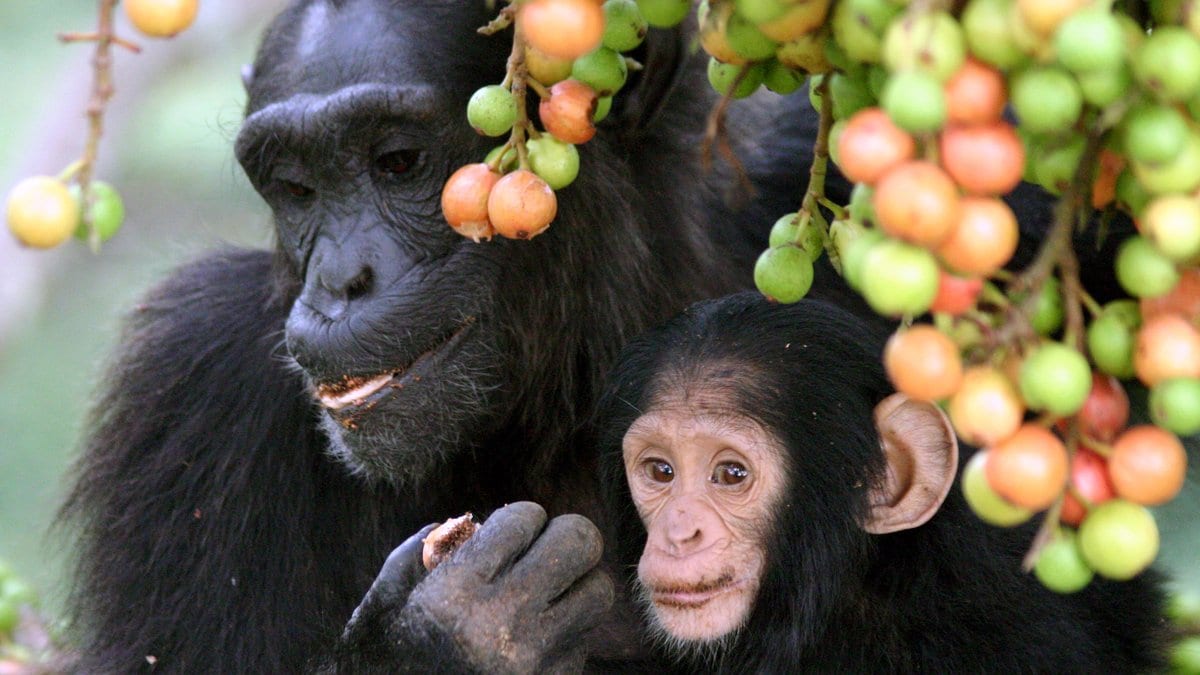
Chimpanzee groups with adult role models in them used an acoustic raspberry, one of a set of calls made without the voice, in a single dominant context, and kept using it that way for years. Groups with no adults to copy used the same call across many contexts, and the usage shifted from year to year. Antoine Valet of the Ape Social Mind Lab in Lyon and colleagues report the contrast.
The comparison is set against human language, which the authors describe as relying on signals that are arbitrary, stable and socially transmitted: a word's sound does not account for how it is used, and a community sticks to the use anyway. Writing in Proceedings of the National Academy of Sciences on Nov. 9, 2026, they say that whether other animals have communicative conventions of that kind is virtually unknown.
The data cover audio and contextual records from 91 chimpanzees aged 0 to 55 years, in eight wild and captive groups that differed in whether adult role models were present. In the groups with role models, the single dominant context held steady over years and was in place from the animals' first utterances, at 1 to 2 years old. The variation in the other groups was not explained by the animals' ages or by a shared emotional state, and individuals sometimes used different forms of the call in the same context. The authors read that as the signal's form coming apart from its use.
Valet and colleagues report that the findings provide evidence that the calls "meet key criteria for a signal convention": an arbitrary pairing of a signal with a use, social transmission, and stability inside a community. They write that the findings demonstrate "conventionalized communication is not a uniquely human feature" and that it can also emerge through social learning in other animals' own communication.
Chimpanzee calls of this kind were already known to vary in how they are used. The work was funded by the European Research Council and the Leakey Foundation.
Sources
- Proceedings of the National Academy of SciencesPeer-reviewed