Skip to content
See the World Through ScienceA project of ALLATRA
Source: Peer-reviewedScience1 source

Poison Residues Found on Stone Weapon Tips at an Ancient Arabian Lakeshore
Science

Republish this story

Our work is licensed under Creative Commons BY-NC 4.0. You may republish this piece for free — with credit to ALLATRA Media and a link to the original, unedited beyond length trims, and not for commercial use.

Read the full license

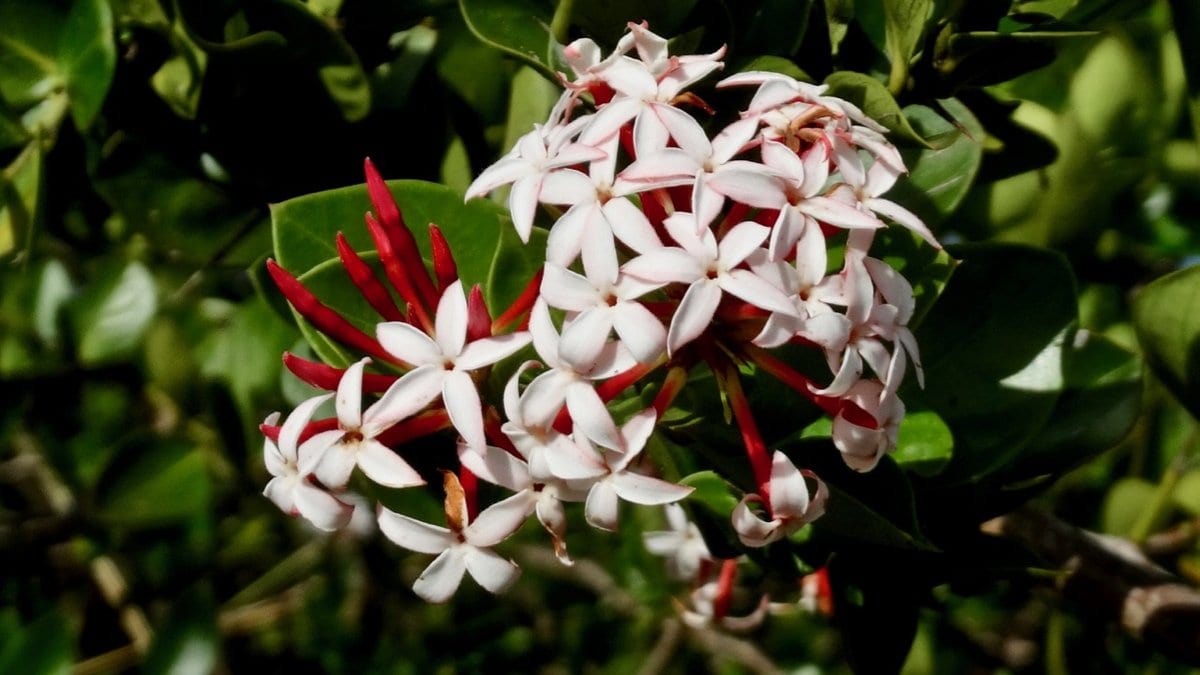
Clusters of small white star-shaped flowers with red tubes on a dark-leaved shrub, the arrow-poison tree Acokanthera schimperi.
The arrow-poison tree Acokanthera schimperi in flower, photographed March 28, 2020. Traces of this plant are what the team reports on the stone tips (illustrative)."Acokanthera schimperi flowers" by ChriKo, via Wikimedia Commons, CC BY-SA 4.0, cropped

Stone weapon tips from a 125,000-year-old site on a lakeshore in Saudi Arabia carry residues of a poisonous plant, a team led by Chris Clarkson of Griffith University reported Nov. 12, 2026, in Science. Several of the points also show impact damage, which the authors read as evidence that the tips were fixed into shafts and used as hunting weapons.

The paper sets the site against a wider gap: after Homo sapiens arose in Africa, people spread into Asia repeatedly, yet the archaeological record across the Sahara and Arabia remains sparse. The site, called ‘Uruq Aljelibah, sits on the shore of Mundafan, a lake that has since dried out.
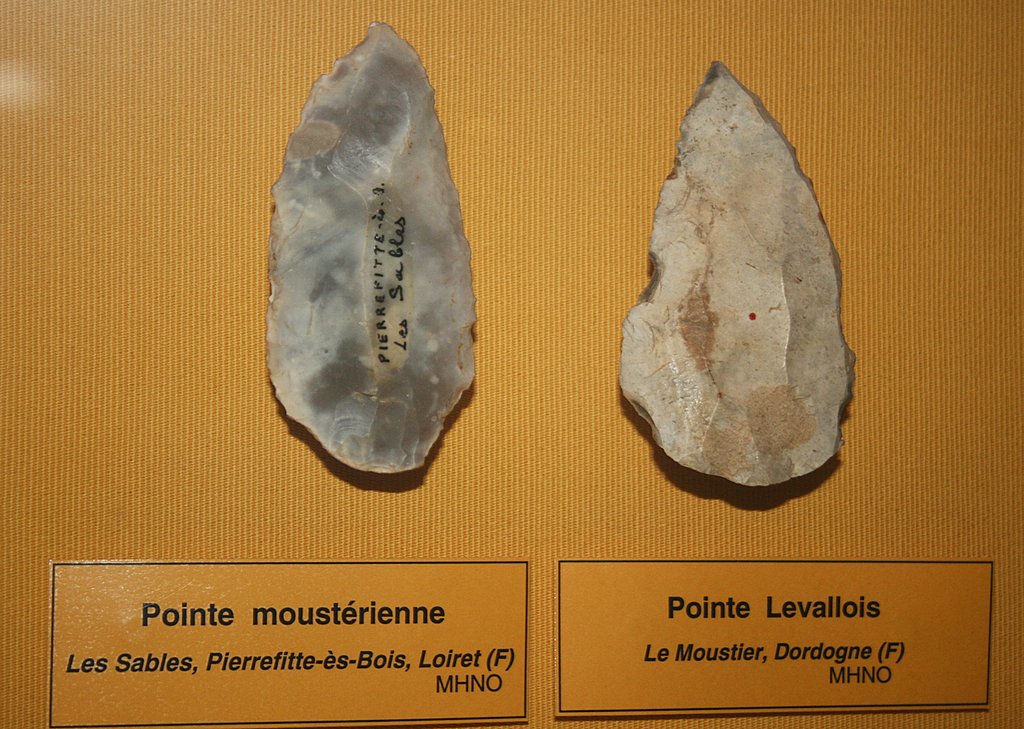
Two flint points side by side in a museum case above printed labels reading Pointe mousterienne and Pointe Levallois.
Two Middle Paleolithic flint points from French sites, shown side by side in a museum case (illustrative). The authors read impact damage on the Arabian points as evidence the tips were fixed into shafts. "Paleo moy Mousterien Pierrefitte Pointes" (no author stated), via Wikimedia Commons, CC BY-SA 3.0, resized

The team reports that residues, wear patterns and chemical traces on the tools show the handling of both animals and plants. Among the plants are palms, tubers, trees and shrubs. The poison itself was traced to Acokanthera schimperi, a plant known as the arrow-poison tree.

Animal bones from the site include hippopotamus, buffalo, gazelle, ostrich and camel. The authors take that mix as a sign that the people there drew on both freshwater and grassland surroundings.

The paper also places the toolmaking at the site itself: flakes recovered there fit back together, and animal carcasses were cut up on the spot.

Sources

By Andreja JezernikEditorial Coordinator, Writer

Spot an error?

Spot an error?

Report an error

Spotted a mistake on this page? Tell us what's wrong and our editors will take a look.

What kind of problem?

Only if you'd like us to be able to follow up. We won't use it for anything else.

We correct mistakes openly. Select any text to flag it. Fixes are logged under our Corrections Policy.

Report an error

Reporting on

Poison Residues Found on Stone Weapon Tips at an Ancient Arabian Lakeshore

What kind of problem?

Only if you'd like us to be able to follow up. We won't use it for anything else.

We read every report. Corrections are logged publicly.