Antarctic Soil Holds Bacteria Found on No Other Continent
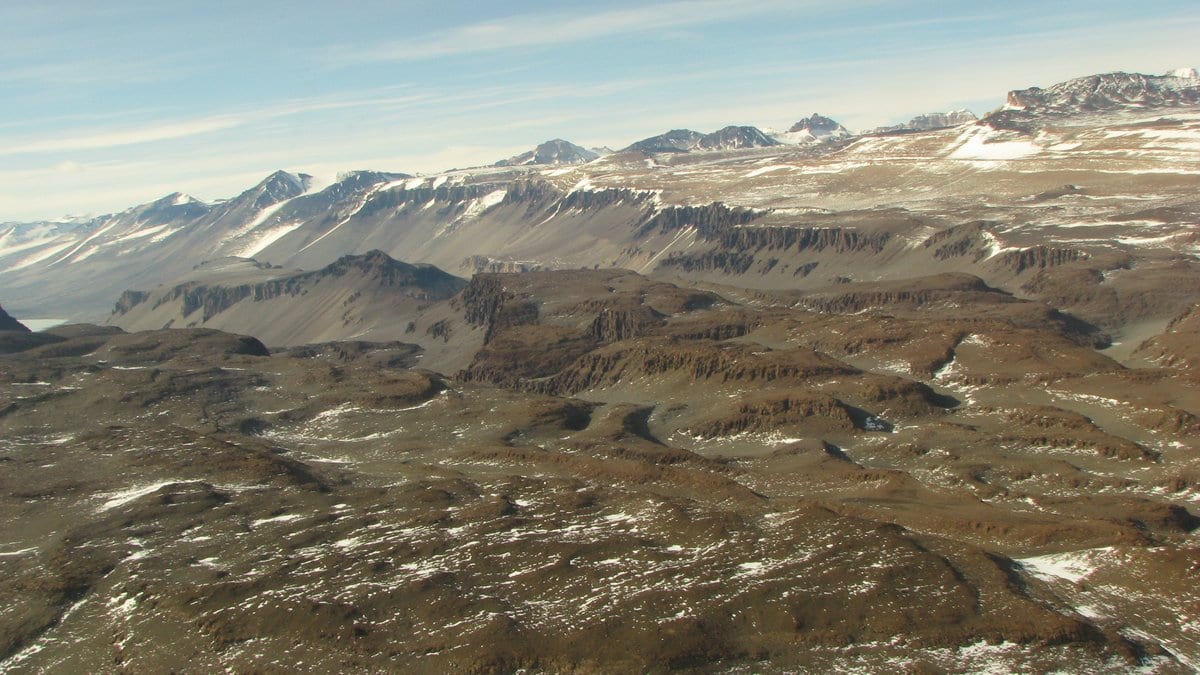
Ninety percent of the Arthrobacter bacterial strains found in Antarctic soils occur nowhere else on Earth, according to a study published on August 31 in the Proceedings of the National Academy of Sciences.
"Biologists have long hypothesized that Antarctic microorganisms are unique from those found on other continents due to the extreme geographic isolation and the cold, dry, and challenging conditions typical of Antarctica," the authors write. The paper sets out to test that. The team picked Arthrobacter, a genus it describes as cosmopolitan and "widely distributed across global soils," and compared where its strains turn up.
The group profiled a global metagenomic dataset (soil DNA sequenced without culturing anything first) covering Antarctic and non-Antarctic surface soils, then counted where each strain occurred. "Despite high strain-level diversity, 90% of the strains found in the Antarctic soils were only found on the continent," the authors write. The figure covers strains of that one genus in the surveyed surface soils, not Antarctic microbial life in general.
The team then grew strains in culture, measured their traits and compared their genomes against non-Antarctic ones. Antarctic Arthrobacter, the authors report, "have genomic characteristics and environmental tolerances that suggest they are uniquely adapted to Antarctic conditions."
The paper, "Evidence for endemism and local adaptation in Antarctic soil bacteria," carries 12 authors and is led by Nicholas B. Dragone of the Cooperative Institute for Research in Environmental Sciences at the University of Colorado Boulder, with co-authors at the University of Massachusetts Amherst, Monash University in Australia and Brigham Young University. PNAS lists the U.S. National Science Foundation and the Australian Research Council as the funders. The article is open access and runs in the journal's September 15 print issue.
Sources
- PNASPeer-reviewed