New Robot Submarine Scouts the Seafloor Before People Dive
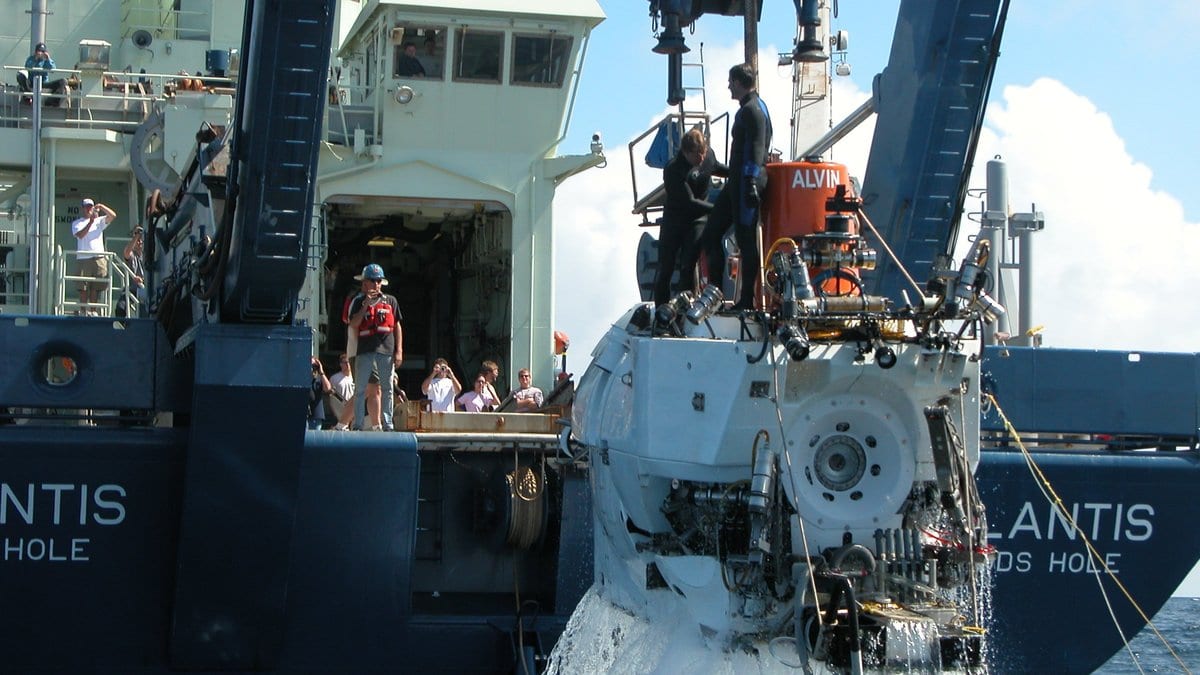
Woods Hole Oceanographic Institution and NASA's Jet Propulsion Laboratory have finished Deep Venture, an autonomous underwater vehicle for deep-ocean research. WHOI puts its weight at 250 kilograms and rates it for depths of up to 11,000 meters — the full depth of the ocean. The deepest dive the institution reports is about 6,000 meters, on a June 2026 expedition near Bermuda, where Deep Venture photographed the seafloor and helped the team running the crewed submersible Alvin choose where to dive.
In its news release, WHOI says Deep Venture is meant to open deep seafloors to more research groups: it is modular; a small team can launch it from a wide range of research vessels with little specialized support; and it can land on the bottom to collect samples. Deep-sea vehicles of this kind have each been built for a specific mission, needing dedicated equipment, support staff and access to a limited set of ships.
"Because it's lightweight, compact and modular, we can reconfigure it for different mission types with minimal changes to the vehicle, making it a real workhorse for oceanographic research," said Allisa Dalpe, a WHOI research engineer on the Deep Venture team.
Robin Littlefield, a senior WHOI engineer who leads the program, described the Bermuda pairing as a case of autonomous vehicles complementing crewed and remotely operated ones rather than replacing them. "By surveying an area in advance, an AUV like Deep Venture can provide researchers with information that helps determine where and how to deploy other vehicles like Alvin," he said. "This can help inform dive planning and maximize scientific value."
Deep Venture follows an earlier program the two institutions ran together, which ended in 13 autonomous dives in the Gulf of Alaska in 2024 in support of Alvin science dives. WHOI describes the new vehicle as taking that program to operational readiness and expects to build more of them for science use.