Indonesia's Last Tropical Ice Has Stopped Behaving Like a Glacier
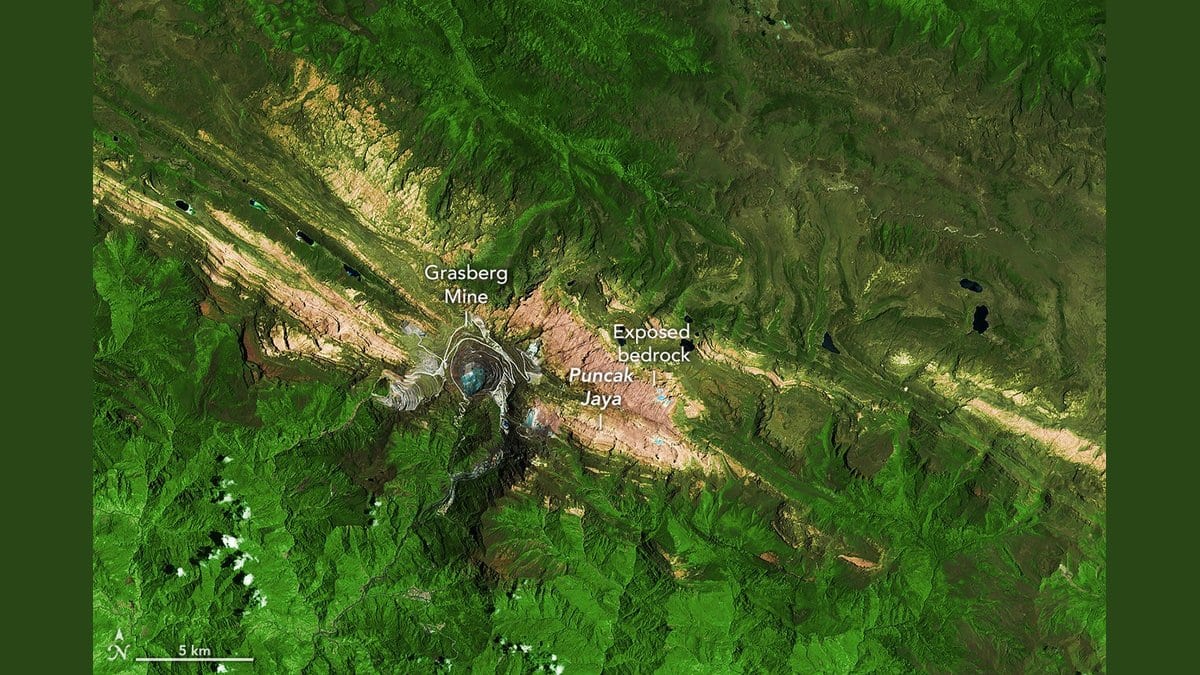
NASA Earth Observatory has published a Landsat 9 image of the ice near the summit of Puncak Jaya, in Indonesia's Sudirman Range on the island of New Guinea, acquired Oct. 19, 2026. Set beside a Landsat scene of the same ridges from 1988, it shows the ice broken into fragments, with freshly uncovered bedrock between them.
"While small ice remnants persist in high-altitude crevices around Puncak Jaya, their functional life as active glaciers is effectively over," said Donaldi Permana, a climate scientist at Indonesia's Agency for Meteorology, Climatology and Geophysics (BMKG). NASA's account sets out the test: a body of ice generally has to be thick enough to flow downhill under its own weight, and it needs an area where snow builds up faster than it melts. Such ice is rare: the Sudirman Range is one of the few places near the equator that have held ice year-round, and the others include the ice fields of Kilimanjaro and remnants in Peru and Venezuela.
The numbers behind that judgment are BMKG measurements made before this image, not figures released with it. Permana put the ice at about 4.31 square kilometers in 1988 and at about 0.09 square kilometers by September 2025, an area NASA's account compares to about a dozen soccer fields. He also gave thickness readings from the main monitoring site on the East Northwall Firn: 32 meters in 2010, 4 meters in 2023, and no ice at all by November 2024.
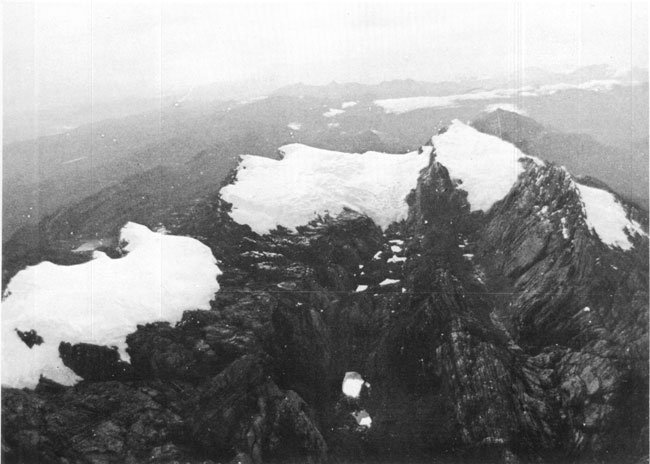
Thinning and breaking up reinforce each other, NASA Earth Observatory reports: every new fragment exposes edges where ice can melt, and the snow that still falls does not last long enough on the bare rock to build up into new ice. "It's a house of cards problem," said Chris Shuman, a retired University of Maryland glaciologist who has tracked Puncak Jaya's glaciers in satellite imagery. "Once this process gets going, there's really no turning back."
An aerial survey planned for December should provide an estimate of how much ice remains, according to Permana.