Stopping Emissions Does Not Reset the Tropical Pacific, Simulations Find
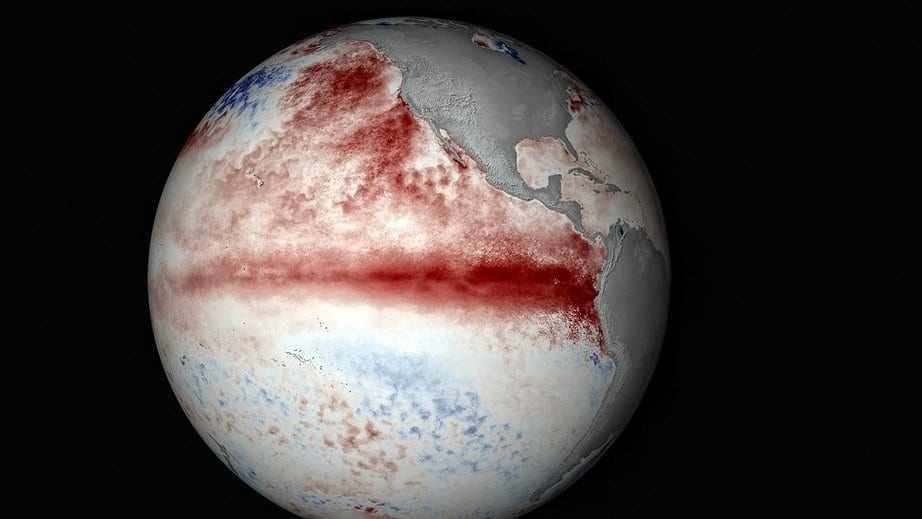
New climate simulations find the tropical Pacific does not return to its earlier state after greenhouse gas emissions stop. In runs that continue for centuries past the point of net zero, the region holds an average state resembling El Niño, the warm phase of the Pacific's main climate swing, and the strongest El Niño events arrive more often even as the carbon dioxide in the air falls.
The study was published Oct. 13, 2026, in Communications Earth & Environment. Aditya Sengupta and colleagues write that the tropical Pacific shapes rainfall across large parts of the world, and that how it responds to different emissions paths has not been well pinned down. Their conclusion: key parts of the change are effectively irreversible over many centuries, and net zero slows further change without restoring pre-industrial conditions.
The authors used two sets of simulations: a multi-model experiment in which emissions are switched off after a fixed amount of carbon has been released, and purpose-built runs with an interactive carbon cycle, which let atmospheric carbon dioxide fall on its own afterward. In both, the El Niño-like shift appears while the planet is still warming and then stays. The authors attribute that persistence to the Southern Ocean and the deep ocean, which go on warming long after the push at the surface levels off. As that happens, the temperature difference between the hemispheres narrows, the equatorial trade winds stay weak, and the Pacific's warm upper layer stays flattened.
The paper reports that the higher frequency of extreme El Niño events persists in the runs after emissions cease. Changes in the size of the swings are less clear-cut and differ more from model to model. The authors also report that reaching net zero later, at a higher level of warming, makes the changes both larger and longer-lasting.
Earlier work on the question mostly used idealized experiments in which carbon dioxide is ramped up and then back down. The authors write that those scenarios do not match the limited deployment of large-scale carbon dioxide removal today.
Sources
- Communications Earth & EnvironmentPeer-reviewed