Depth, Not Warming, Drives What Soil Microbes Do With Carbon
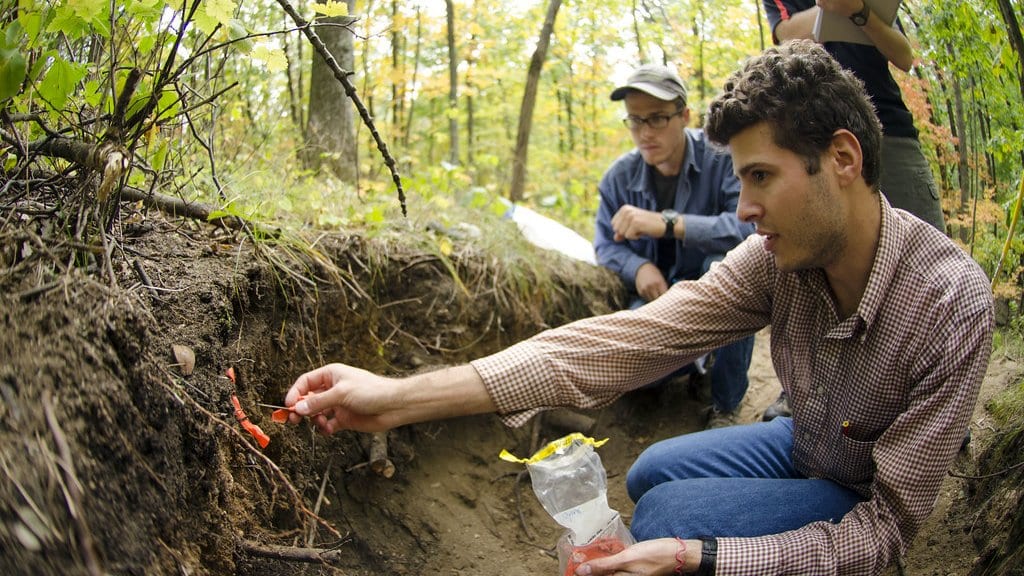
A team at Lawrence Berkeley National Laboratory reports that depth through the soil profile, not temperature, drove what carbon-cycling microbes were doing in a California forest soil kept 4 °C warmer than the ground beside it since 2014.
That is the finding of a study published Oct. 13, 2026, in Nature Communications. Its authors report that most computer models of soil carbon neither represent how soil changes with depth nor include microbial traits at all. That gap is one reason projections of how soils will behave in a warming climate remain so uncertain. Most of the world's soil carbon sits below the topsoil, where the microbes have barely been described.
Ulas Karaoz, Ricardo J. E. Alves and Eoin L. Brodie, with colleagues, sampled paired heated and unheated plots from 0 to 90 cm at the UC Blodgett Forest Research Station in the Sierra Nevada, across 7.5 years of warming. They used proteogenomics: the genes present in each sample, read alongside the proteins the microbes there were actually making.
The team reports that depth explained 33% of the variation in community composition, against 2.3% for warming. Surface and deep communities also differed in what they fed on, with methanol oxidation concentrated near the top and alcohol fermentation, carbon monoxide oxidation and nitrogen fixation lower down. Warming moved a narrower set of traits, and the moves were specific to depth. Warmed surface soils took up more amino sugars and sugar alcohols and carried more stress-tolerance genes, while single-carbon and nitrogen chemistry shifted in the middle and deep layers. The divergence between heated and control plots narrowed over the second half of the experiment rather than widening.
The protein measurements carried one surprise. Among the most abundant carbohydrate-processing enzymes in the deep soil were sialidases, which cut sugar caps off proteins. The authors take that as evidence that microbes deep in the profile are feeding on the sugar-coated proteins left behind by dead microbes and fungi, a pool the field has largely treated as stable carbon.
Sources
- Nature CommunicationsPeer-reviewed