Global Warming Sped up in Some Regions Decades Before Others
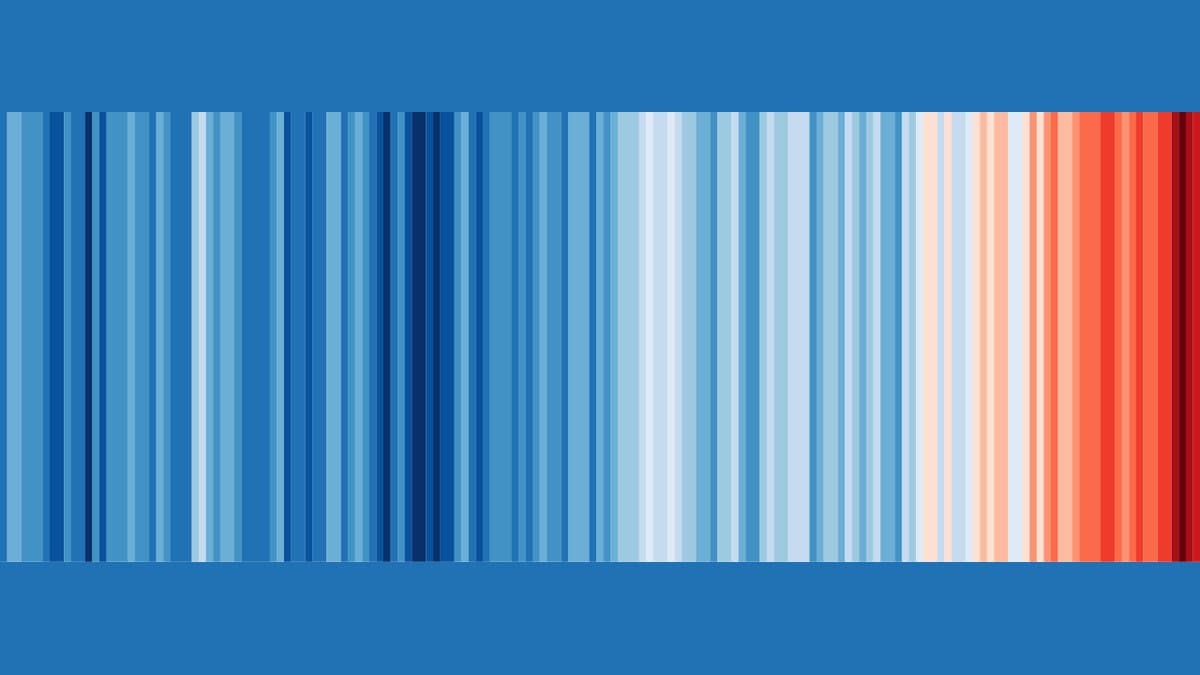
Surface warming has sped up in particular regions since 1970, and the speed-ups did not begin everywhere at once: their onset dates run from the 1980s to the 2010s. That is the finding of a study published Sept. 22 in Nature Communications by Claudie Beaulieu of the University of California, Santa Cruz, Thomas Knutson of NOAA's Geophysical Fluid Dynamics Laboratory and colleagues.
The authors say a debate over whether global warming is accelerating has run in scientific journals and in the media since the record heat of 2023 and 2024. Working region by region, they say, is meant to add nuance to that debate by identifying which places changed and when.
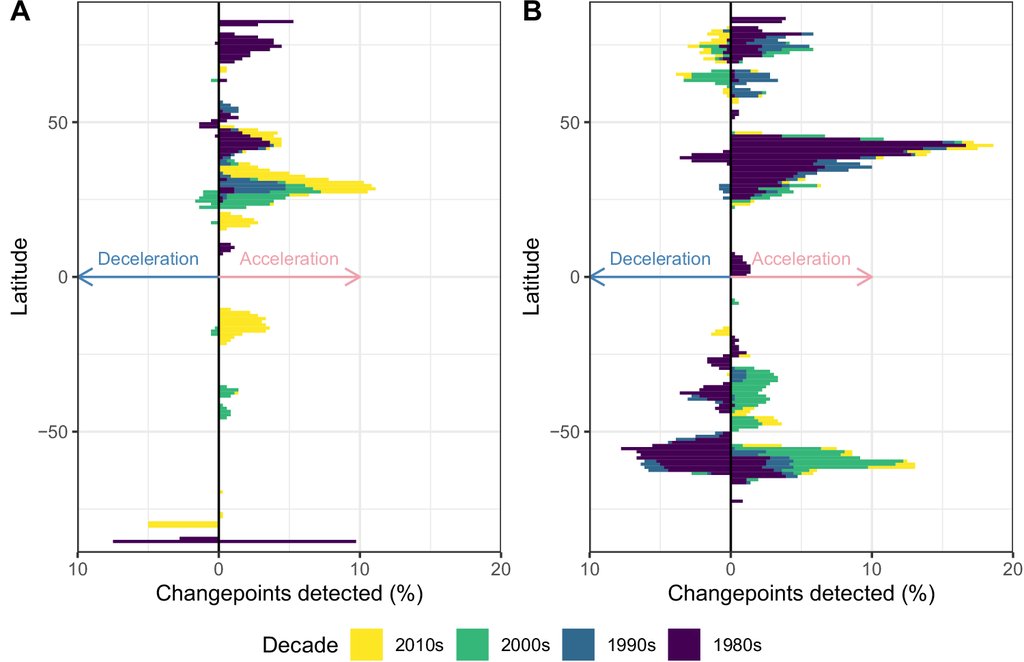
Beaulieu and colleagues fitted changepoint models, which find the year a trend bends, to annual temperatures since 1970 in five observational datasets that divide the world into cells. The paper reports that between 4% and 10% of those cells carried at least one detectable change in the rate of warming, depending on the dataset, and it counts more accelerations than slowdowns. The changes sit mostly at the middle latitudes of the Northern Hemisphere.
Seven regions showed a change in most of the datasets, and they did not arrive together. The eastern Mediterranean and the North Pacific changed first, in the 1980s and 1990s. New Zealand and its coastal waters followed in the 2000s. Southeast Mexico and the Gulf of Mexico, Bolivia and southeast China came last, in the 2010s. The authors put the increase in southeast Mexico at roughly tenfold after 2012.
Land and ocean behaved differently. Over land, most of the detected changes are accelerations, in the Northern Hemisphere and in every decade. Over the ocean, accelerations dominate in the Northern Hemisphere, while the Southern Hemisphere carries slowdowns and accelerations in similar proportions, with the slowdowns concentrated in the Southern Ocean and in the 1980s.
None of that adds up to a global signal. The authors report that their results agree with earlier analyses finding no acceleration in global surface temperature yet detectable since 1970. The paper is open access.
Sources
- nature.comPeer-reviewed
