Earth Has Nine Safety Limits. Scientists Say Humanity Has Crossed Seven
The Planetary Boundaries Science Lab at the Potsdam Institute for Climate Impact Research published its Planetary Health Check 2026 on Sept. 21, reporting that seven of the nine planetary boundaries have been crossed and that all seven are at their highest recorded levels of transgression.
The boundaries are the Earth-system processes that must stay within safe limits to keep the planet stable and resilient, and the check is an annual update on where each one stands. The institute announced that the assessment is authored by more than 60 scientists and uses the latest available data, some of which predate 2026.
Ocean acidification is the most recent boundary to be crossed, in 2025. The others are climate change, biosphere integrity, land system change, freshwater change, the modification of biogeochemical flows (nitrogen and phosphorus pollution) and the introduction of novel entities (the report's term for synthetic chemicals).
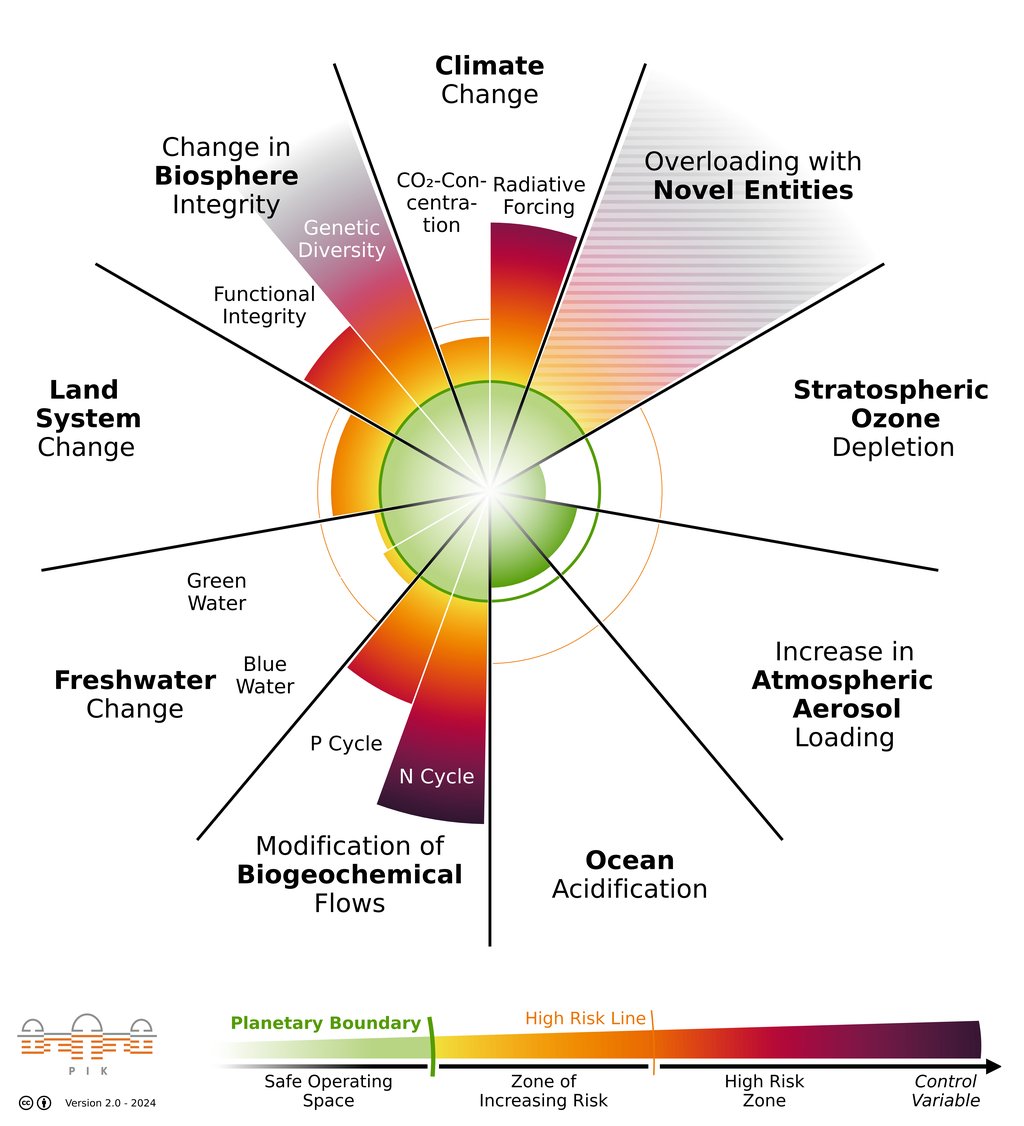
Only the stratospheric ozone depletion and atmospheric aerosol loading boundaries have improved over the past decade, and PIK cautions that global progress on aerosols may mask unsafe levels persisting in some regions.
Boris Sakschewski, the report's lead author, explained: "The diagnosis is unambiguous. Pressure is rising across every Planetary Boundary already outside the safe operating space."
The report also examines whether the models used to calculate how much carbon the land absorbs overestimate the resilience of that uptake. Vegetation and soils take up a substantial share of human carbon dioxide emissions, and repeated heat, drought, fire and ecosystem degradation can reduce that uptake and in some regions turn ecosystems into sources of carbon.
On those sinks, Sakschewski noted: "Our path to net zero emissions relies on functioning carbon sinks. Current observations raise the alarm that our planet may be losing its buffering capacity against the increasing pressures we're putting on it."
PIK's account of the past year cites record global ocean heat content in 2025 and a coral-bleaching event it calls the largest observed to date.