Wet Ground Makes an Arctic Stream Respond Far More Sharply to Rain
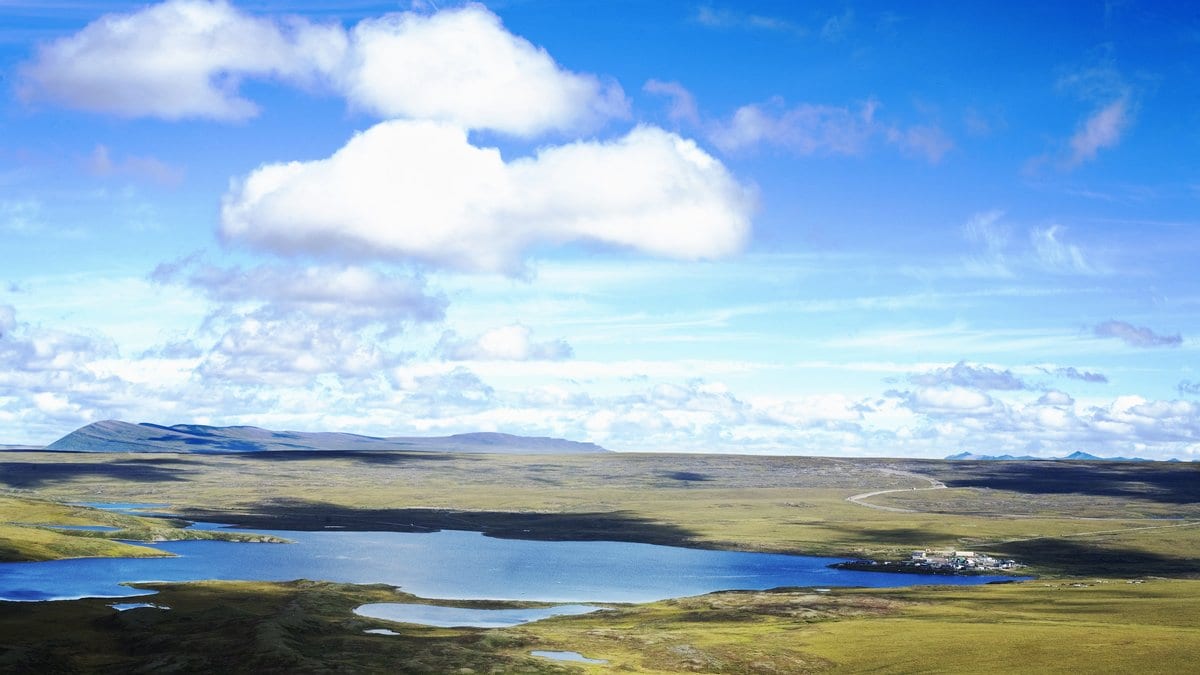
Hydrologists report that the peak of a permafrost stream's response to rain rose more than fivefold when the ground was already wet, and fell after warmer winters and springs, in a study of three Arctic catchments.
Cansu Culha of the University of British Columbia, James W. Kirchner of ETH Zürich, and colleagues published the work Nov. 20, 2026, in Hydrology and Earth System Sciences. The authors offer it as a more nuanced alternative to calling Arctic landscapes "drying" or "wetting," and say the results can inform expectations year by year: a wet summer following a cold winter is likely to yield strong runoff responses to rain.
The team used ensemble rainfall-runoff analysis, which averages a catchment's reaction across many rain events, on hourly rain and streamflow records. At Upper Kuparuk, a headwater catchment in northern Alaska, they used data from 2005 and 2007 to 2017. The peak of the response rose more than fivefold across the range of antecedent streamflow in that record, a stand-in for how wet and well connected the ground already was. About 57% of the rain falling in a 10-hour period left the catchment as streamflow over the next 12 days.
Temperature pushed the other way — the authors report that warmer winters and springs at the same catchment went with reduced sensitivity to rain, while wetter summers went with stronger responses. They call the two influences comparable in size and opposite in direction, and say the net response to a warming climate remains uncertain.
The other two catchments, Goose and Ptarmigan at Cape Bounty in the Canadian High Arctic, allowed a side-by-side comparison. Two active layer detachments, shallow slides of thawed surface soil, began at Ptarmigan in 2007 and cover 10.8% of it, while neighboring Goose stayed geomorphically stable. The paper reports that rain more readily mobilized streamflow and the stream's loads of dissolved solids, suspended sediment and particulate organic carbon where the detachments were present, and that such features can raise the risk of flash floods and infrastructure damage.
The records and scripts behind the paper's figures are deposited in a public repository.