At COP31, National Geographic Explorers Track the Mediterranean's Shrinking Snow and Stressed Waters
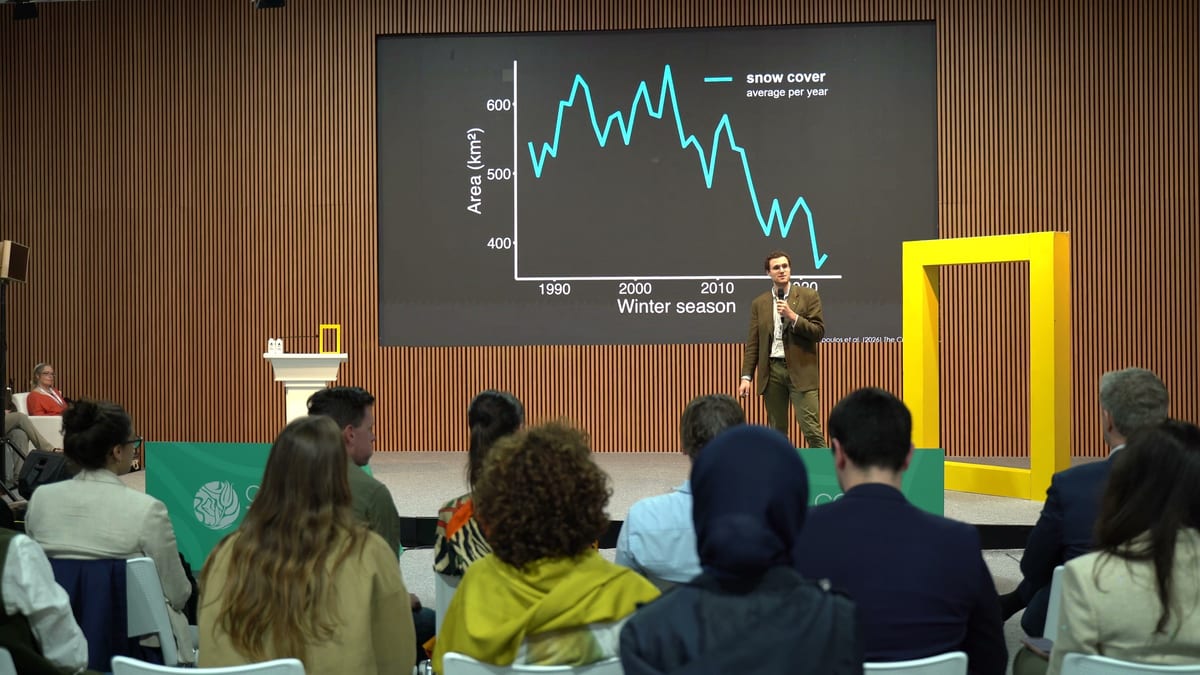
ANTALYA, Türkiye — Snow cover on Greece's highest mountains has shrunk by more than half in four decades, and the scientist who measured the loss explained at a National Geographic Society session at COP31 on Nov. 14, 2026, why it matters for the region's water.
Konstantis Alexopoulos, a doctoral candidate at the University of Cambridge's Scott Polar Research Institute, led the study, published in April 2026 in The Cryosphere. Using satellite images and machine learning, his team rebuilt snow cover on ten Greek massifs that rise above 2,000 meters. It found a decline of about 58% from 1984 to 2025, relative to the period's average, driven mainly by sustained warming.
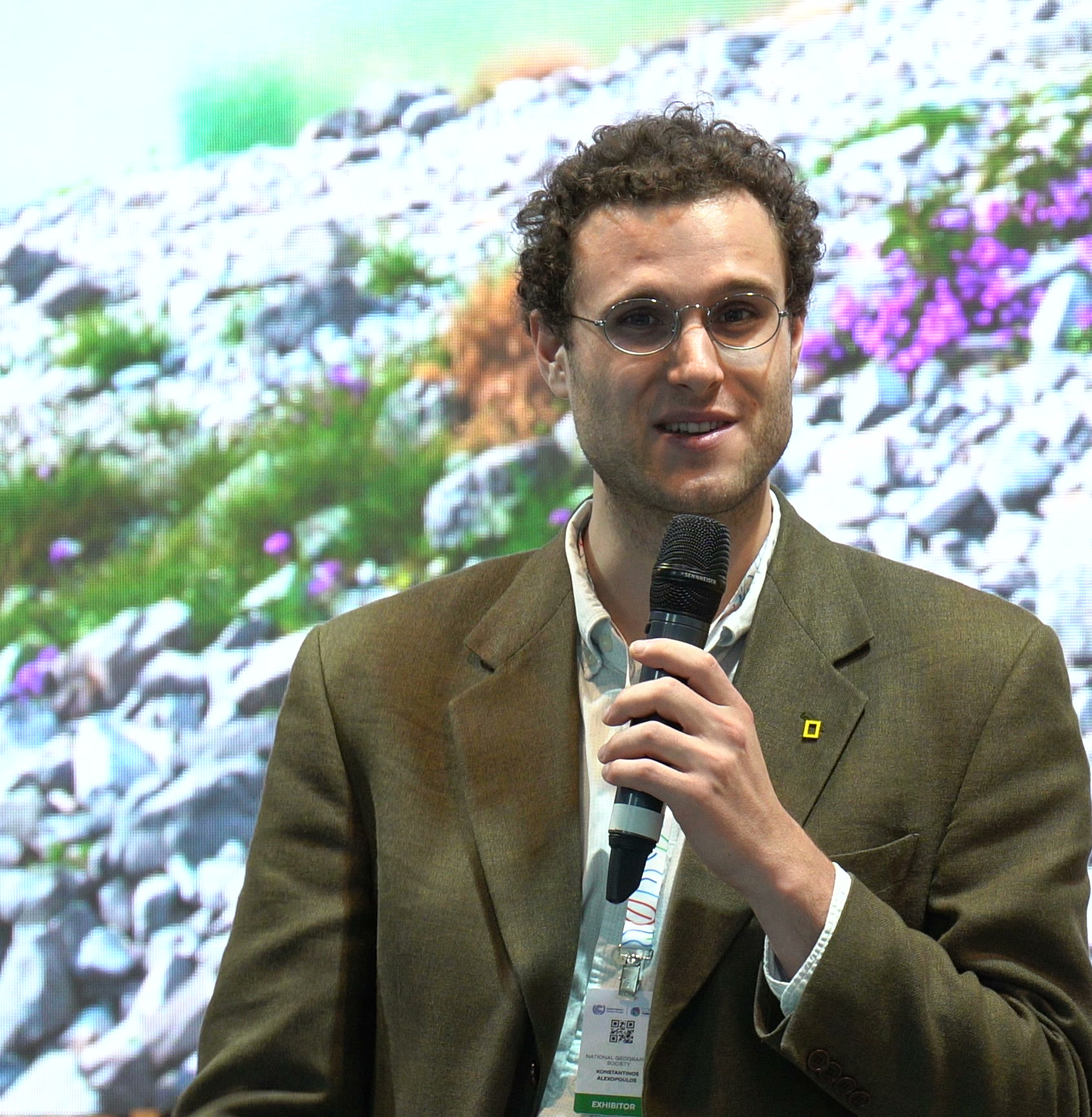
"Unlike rain, which gets funneled into the rivers and quickly rushes out to the sea, snow can be better described as a natural water savings account," Alexopoulos said on stage. Less snow and earlier melt mean longer, harsher summer droughts, he explained.
Three speakers who work in Bosnia and Herzegovina, documentary photographer Nick St.Oegger, eDNA biologist Matej Vucić and cave biologist Iva Njunjić, warned that its Upper Horizons hydropower scheme threatens karst rivers and little-known cave life.
Sera Tolgay Marshall, a hydrologist doing an engineering doctorate at Cambridge, studies the Asi River delta in Türkiye's Hatay province, hit by the 2023 earthquakes. Her team began matching destroyed buildings against the floodplains, she said at the session. Water follows fault lines, depressions and floodplains, she explained, and "buildings that are located in these areas are very vulnerable."
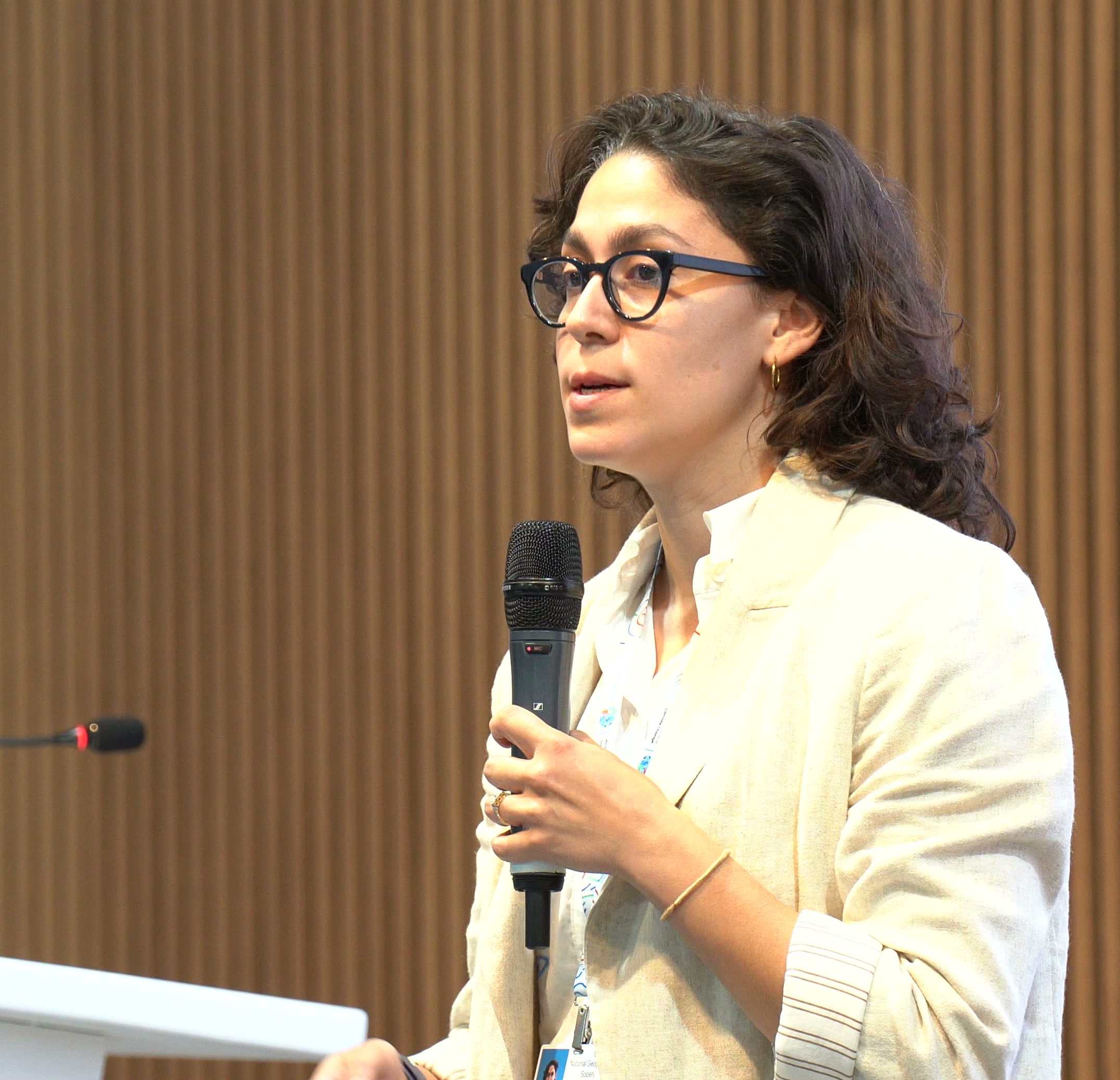
Ela Gökçiğdem, co-founder of The Marmara Project, said the project pays high school students to test the Sea of Marmara for nitrates, phosphates and pH. In 2021, a slimy algae bloom fouled its coast.
The second panel turned to plants. Magda Bou Dagher Kharrat, a forest geneticist who leads the European Forest Institute's Mediterranean team, noted in an interview that "the climate is heating so fast that the adaptation of the trees cannot cope with this." So researchers discuss assisted migration, she explained: moving trees uphill or across the Mediterranean.

The session's subject was the changing Mediterranean; her example of what it stands to lose was a single species. Cupressus atlantica, a cypress, grows only in the part of Morocco's High Atlas that the 2023 earthquake struck, she said. A few thousand old trees remain, she added, and roads built since the quake are taking more. The species is listed as critically endangered by the IUCN, and she wants its seeds kept in seed banks, "because every individual counts."
Sources
 By Nika Kulpin and Andreja Jezernik