Ocean Eddies Leak Away the Water They Were Thought to Carry
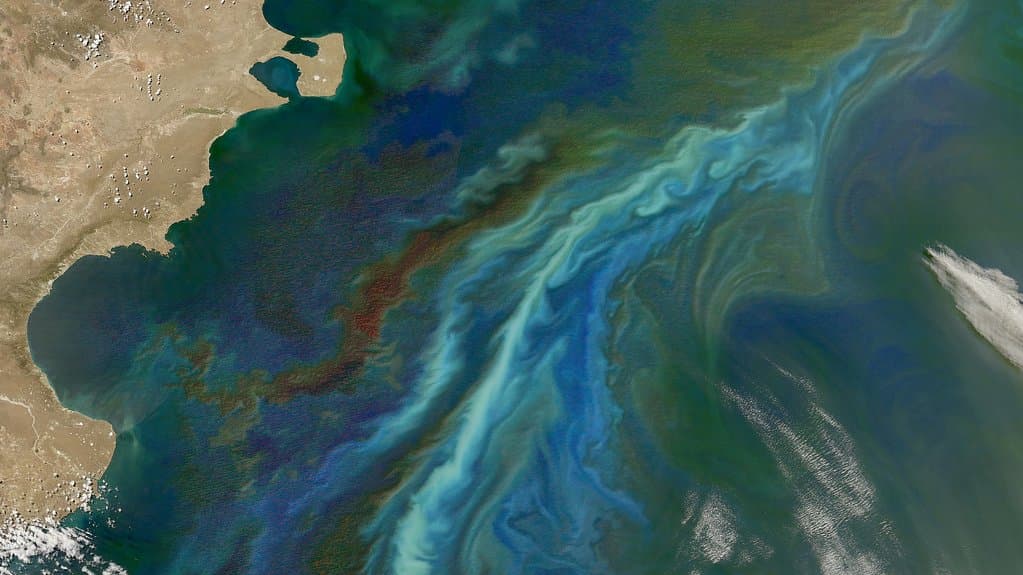
Water enclosed by an ocean eddy leaks back out after only a few days when other eddies are nearby, according to an open-access study published Sept. 19 in npj Climate and Atmospheric Science. Eddies are commonly assumed to trap water and carry it intact over long distances, and the surface-drifter tracks examined in the study do not bear that out for eddies with neighbors.
That assumption matters: eddies are one of the ways the ocean moves heat around, along with carbon and nutrients. The paper argues that in a real ocean crowded with eddies, stirring may move more material than trapping does, which directly impacts how eddy transport is written into climate models.
The observations come from surface drifters, floats that ride the ocean's surface current and report where they are. Tongya Liu, Dake Chen and colleagues at the Second Institute of Oceanography in Hangzhou, working with Xiaoming Zhai of the University of East Anglia, found that drifters starting inside an eddy boundary tended to leak out rapidly, after a few days on average.
Alongside the drifter tracks, the team ran a series of numerical experiments. In the model runs, an isolated eddy carried its enclosed water effectively, and substantial leakage appeared only once several eddies were present, which may be associated with interactions among them. How much water escaped rose with the strength of the background strain field, a measure of how hard the surrounding flow pulls a patch of water apart.
The paper sets the result beside earlier work that followed individual patches of water, which had already indicated that the ocean holds far fewer long-lived, self-contained parcels than the boundaries usually drawn around eddies imply. Funding for the study came from Chinese national and provincial research programs.