Acidified Water Leaves Ocean Plankton Carrying Less Phosphorus
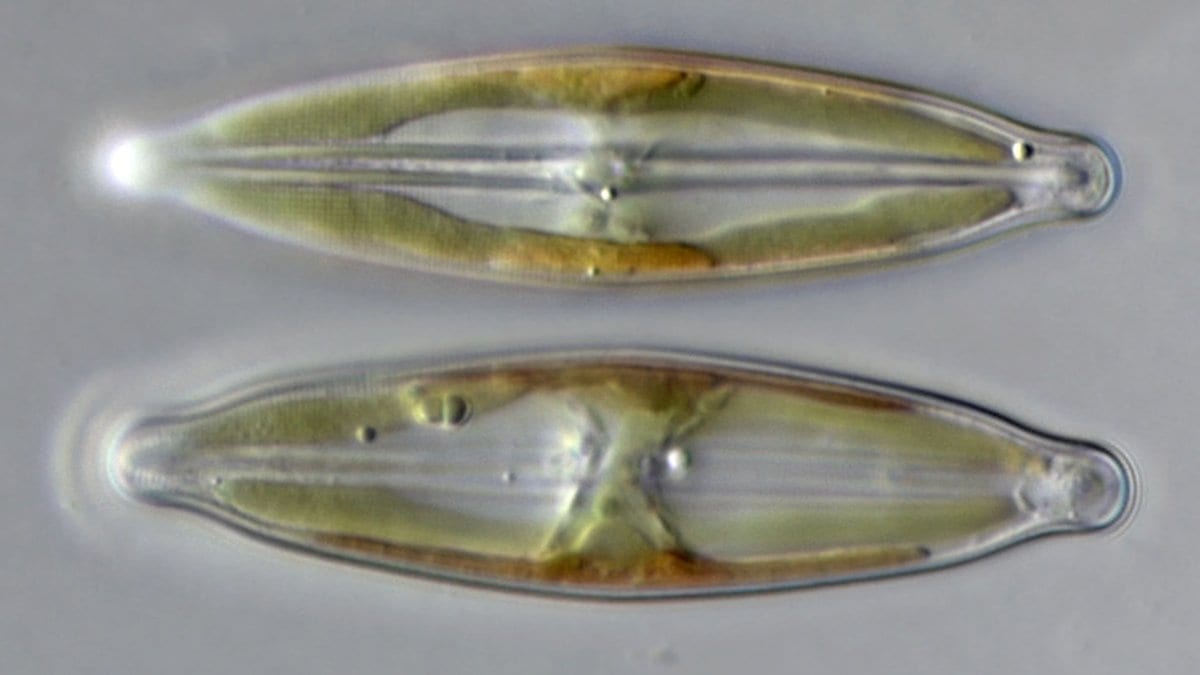
Diatoms grown for more than 1,000 generations in acidified seawater grew faster and fixed more carbon than lines kept at today's carbon dioxide level, but carried less phosphorus in their cells where phosphate was scarce. Bingkun Wang of Harbin Institute of Technology at Weihai, Naihao Ye of the Yellow Sea Fisheries Research Institute in Qingdao and colleagues report the result from a long-running laboratory selection experiment.
Phosphorus limits how much life the open ocean can grow, and the authors say its interplay with acidified water had not been resolved. Their paper was published Oct. 5, 2026, in Nature Geoscience.
The team selected the marine diatom Thalassiosira pseudonana at two carbon dioxide levels and two phosphate supplies. The acidified tanks were held at 1,000 microatmospheres of carbon dioxide, a measure of pressure, against about 420 in the controls. The gains in growth and carbon fixation were inherited and held at either phosphate supply. The phosphorus shortfall was not: it reversed when lines were moved between the two carbon dioxide treatments, which the authors read as an adjustment to current conditions rather than an evolved change.
Gene-expression and biochemical measurements traced the drop to two things. The cells ran down their internal phosphorus stores, and they built more of their membranes from fats that carry no phosphorus.
The same pattern appeared outside the laboratory. In coastal enclosures of seawater, wild plankton at low-phosphate stations also held less phosphorus under acidified conditions, and surveys of gene activity across the world's oceans found the phosphorus-free fat pathways more active where carbon dioxide is high and phosphate low.
The authors also ran Earth system model projections, which point to a decline in the phosphorus held in ocean particles by 2100 under a middle and a high emissions scenario. They write that acidification could intensify nutrient imbalance and reshape phosphorus cycling in marine ecosystems.
The gene and metabolite datasets are deposited in NCBI's sequence archive and on Zenodo. The analysis code is available from the corresponding author on request.
Sources
- Nature GeosciencePeer-reviewed