Warm Water Hidden Below the North Pacific Took Years to Reach the Tropics
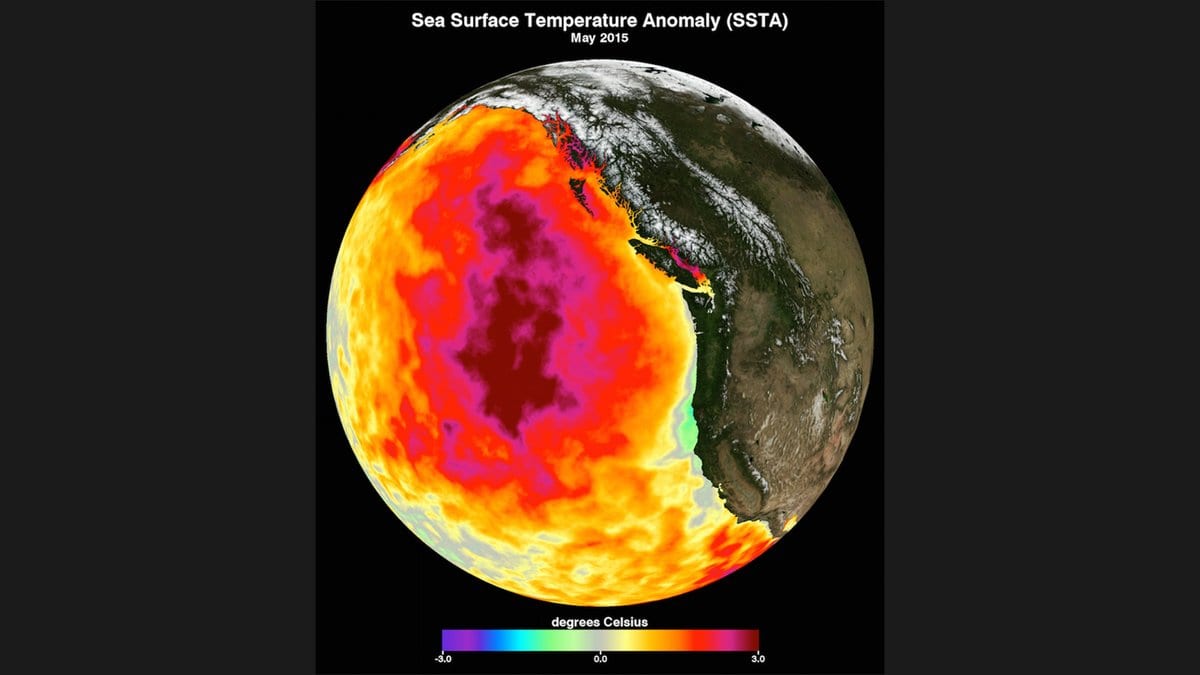
Oceanographers at the Ocean University of China report that two surges of unusually warm water formed below the surface of the eastern North Pacific, in 2009 and in 2013, and then traveled into the tropics over several years.
Marine heatwaves are normally described at the sea surface, where satellites can see them. Song Wan, Yu Zhang and Wei Wang write in Communications Earth & Environment that the climate effects of extreme warming deeper in the ocean have stayed largely unexplored, and that tracing two such episodes was the point of the work.
The team identified the surges from Argo floats, which record temperature down through the water column, together with model reconstructions of past ocean conditions and tracking of individual parcels of water. The authors report that the surges carried heat and extra water volume into the tropics on multi-year journeys across the basin, and that the downstream signals "precede and correlate strongly with the 2015/16 and 2019/20 El Niño events" — a correlation in the record, not a cause the paper demonstrates.
The connection it offers between the two is a theoretical one rather than a measured one. On that reasoning, the added volume enlarges the body of warm water sitting below the tropical surface, which favors the conditions in which a small disturbance can grow.
The two routes were not alike. According to the paper, the earlier surge moved more cleanly at low latitudes and primed the tropical ocean more strongly, while the later one spread out and shifted north, limiting its influence at the equator.
In the authors' reading, warm extremes below the surface amount to "a long-lived form of ocean memory" that could shape later swings in climate. That is their interpretation of the two episodes they tracked.
The study was published Nov. 20, 2026, open access, and was supported by the National Natural Science Foundation of China. Springer Nature has posted the accepted version ahead of the final edited one.
Sources
- Communications Earth & EnvironmentPeer-reviewed