Plankton Blooms in the North Atlantic Track Wetter, Greener Summers in Europe
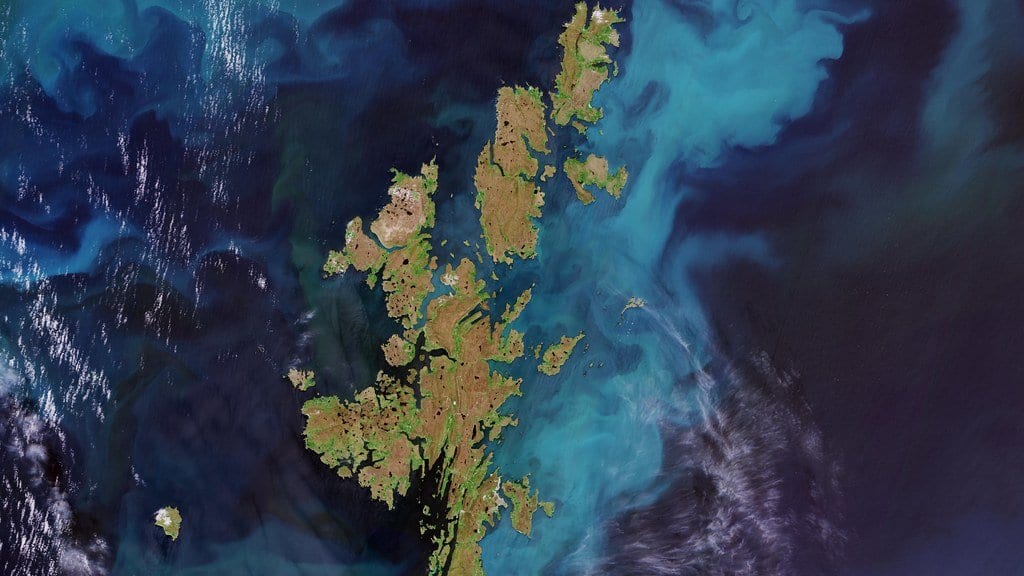
A study published Oct. 2 in Communications Earth & Environment reports a link between phytoplankton blooms in the high-latitude North Atlantic and how much central Europe's vegetation grows over the summer.
Young-Min Yang of Jeonbuk National University, Jae-Heung Park of Seoul National University and colleagues set the result against a question they say has remained unclear: whether year-to-year swings in ocean biology reach plant growth on land. The two are usually treated as separate parts of the global carbon cycle.
The paper reports that in bloom years the pigments absorb more of the incoming sunlight within the shallow late-summer mixed layer, the ocean's stirred upper layer, and that this warms the sea surface. The warming comes with higher air pressure near the bloom and lower pressure over Europe, which strengthens the westerly winds that carry moisture inland. Central Europe becomes wetter, and gross primary productivity, the carbon that plants take up as they grow, rises by roughly 15–20% across the growing season.
The relationship reported between ocean and land is a link, and the case that chlorophyll itself does the work comes from inside a model. In runs of an Earth system model in which chlorophyll interacts with the climate, holding the pigment at its long-term average left the sea-surface warming in place while the European productivity response was largely absent. The authors say that supports an active role for chlorophyll.
Physical swings in the North Atlantic have been studied for years as a source of European summer weather, and the pathway reported here runs through the ocean's biology instead. The authors describe variability in marine ecosystems as a potentially important pathway shaping productivity on land, and make no claim that a bloom year can be used to forecast a European growing season.
Korean government research grants funded the work, and the journal is publishing the accepted, peer-reviewed version early, to be replaced later by the final version.
Sources
- Communications Earth & EnvironmentPeer-reviewed