Logged Forests in Vietnam Show No Net Carbon Recovery, Study Finds
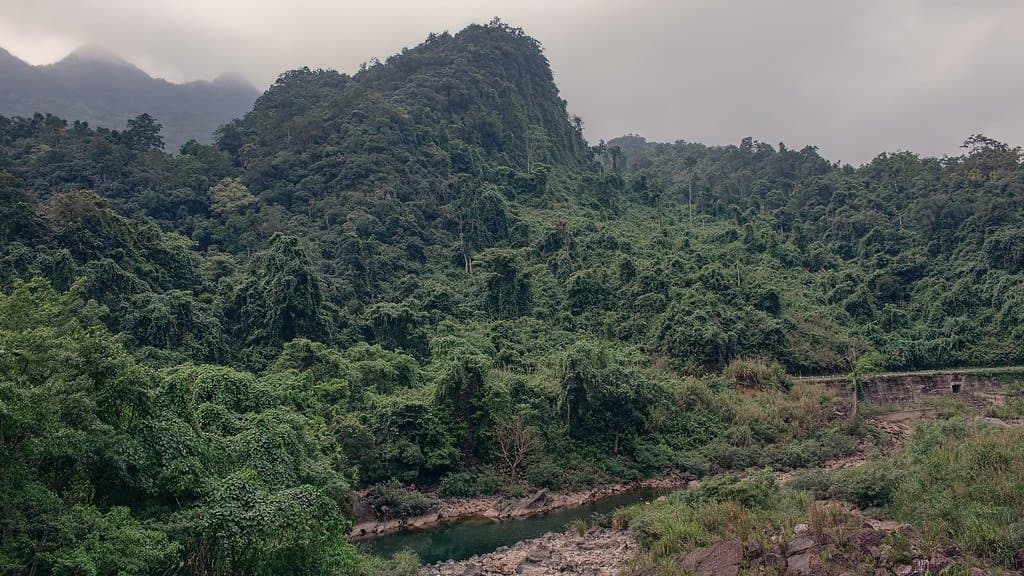
A study published Sept. 17, 2026 in Environmental Research Letters found no net gain in aboveground carbon in selectively logged tropical forests in central Vietnam, contradicting widely used assumptions about how fast those forests recover.
Amy C Bennett and Dominick V Spracklen of the University of Leeds, and colleagues, tracked 24 permanent plots from 2016 to 2024, nearly two decades after 25 years of commercial logging had ended. Net carbon uptake was indistinguishable from zero: 0.004 Mg C per hectare per year, 95% CI: −0.38, 0.38. The interval straddles zero, meaning the forests may have been a small source or a small sink across the monitoring period.
The authors report that observed recovery rates are significantly lower than IPCC benchmarks and previously published rates for Southeast Asian forests. Higher maximum temperatures were strongly associated with reduced carbon gains, the study found, suggesting that warming may already be limiting forest productivity in the region.
The authors note that the forests maintained their existing carbon stocks with no detectable net carbon loss, meaning they did not degrade further. Their conclusion is that carbon assessment frameworks relying on regional or global defaults, rather than site-specific long-term measurements, risk overestimating sequestration potential in degraded tropical forests.
The study was funded by the Natural Environment Research Council (award NE/Z00005X1), the UK Department for Science Innovation and Technology and British Council, and the European Research Council (DECAF project).
Sources
- iopscience.iop.orgPeer-reviewed