Moth Outbreak Shifts What a Northern Birch Forest Releases Into the Air
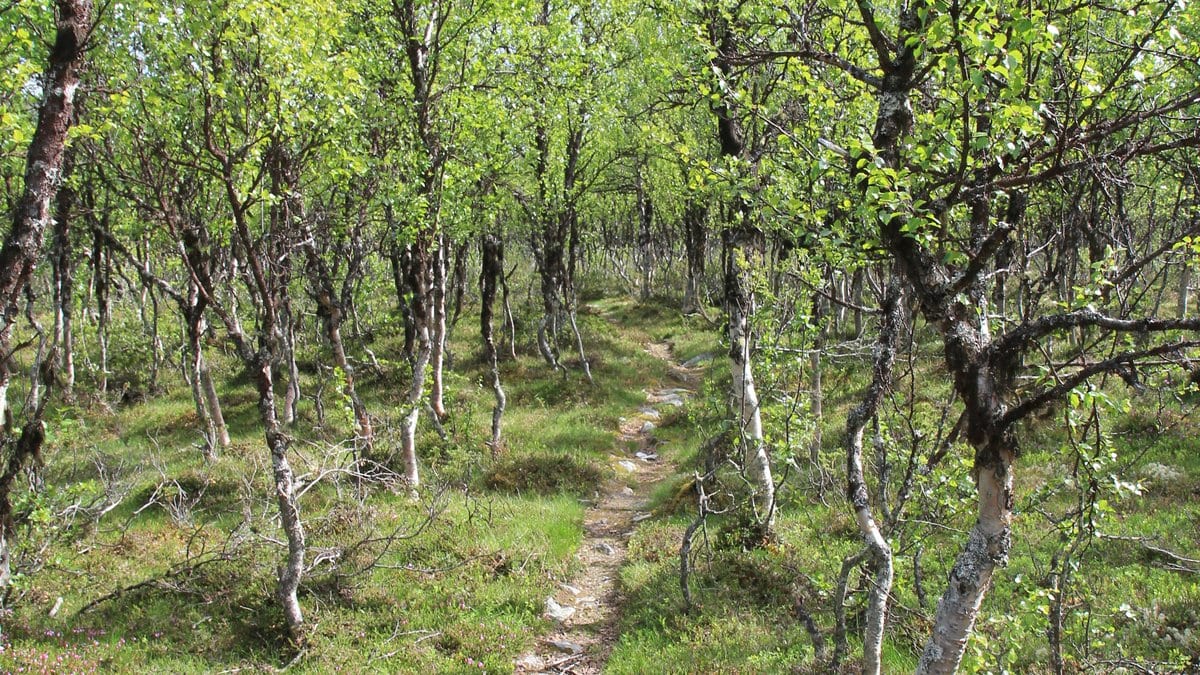
Emissions of airborne chemicals from subarctic birch trees rose year after year as moth feeding built toward an outbreak, and the mixture of compounds the trees gave off changed with it. Jolanta Rieksta and Riikka Rinnan, both of the University of Copenhagen, report the finding with colleagues, based on measurements on 256 mountain birch trees in northern Sweden. The work covered three consecutive growing seasons and was published Oct. 5, 2026, in Communications Earth & Environment.
The published paper reports that the effect of these outbreaks on birch emissions of volatile organic compounds, the chemicals plants release into the air, had not been quantified before. By its account, those compounds matter in two ways: they play a part in the interactions between plants and the animals that eat them, and they take part in the chemistry of the atmosphere.
The measurements were made on trees in the forest, as geometrid moth feeding increased on its own rather than being staged. Emissions rose as feeding pressure climbed from one year to the next and were highest in the outbreak year. Within that year, emissions early in the season ran higher than at the peak of feeding. At that peak, the trees gave off more complex blends of compounds, a seasonal shift in what the forest was releasing. After the outbreak, a second flush of leaves sustained the emission of some compounds.
The authors describe geometrid moth outbreaks as an important natural disturbance in the mountain birch forests of northern Fennoscandia, the far north of Norway, Sweden and Finland. They say such outbreaks are expected to intensify with climate change. Their conclusion stays with the trees: emission rates and the makeup of what is emitted track the timing of leaf growth and the intensity of feeding, over several years.
The paper is open access. The authors credit the Abisko Scientific Research Station with logistical support and with the laboratory and field facilities used for the work.
Sources
- Communications Earth & EnvironmentPeer-reviewed