Right Whale Count Falls Again, Even After the Biggest Calf Season in Years
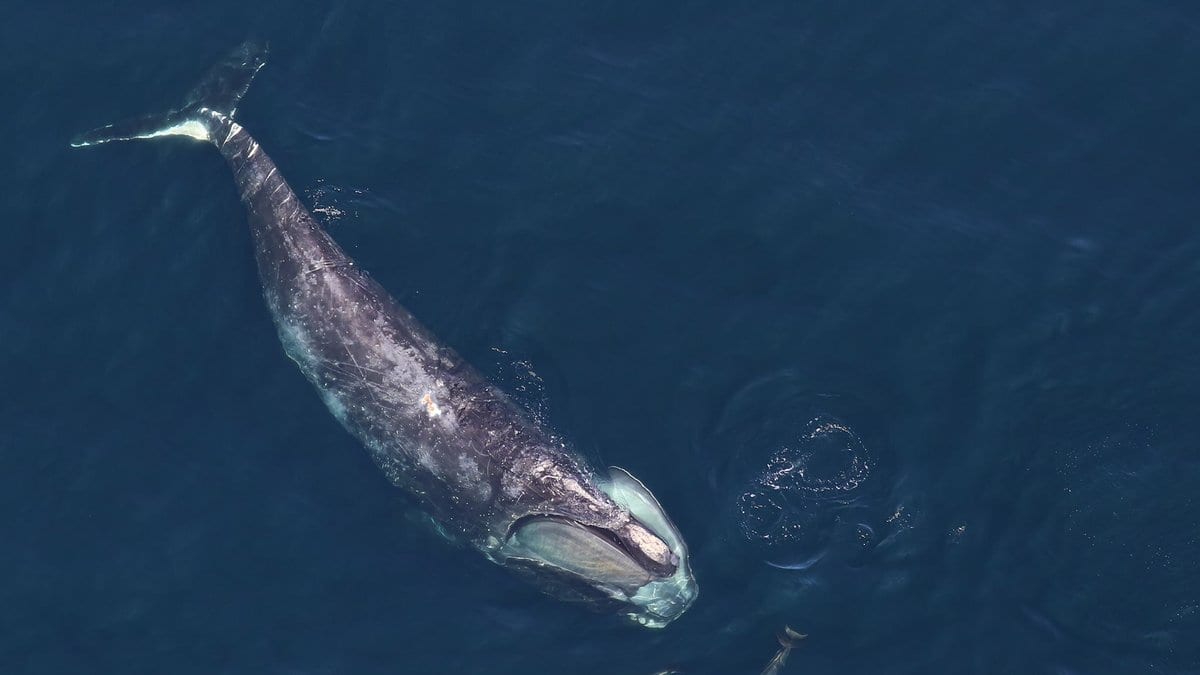
The North Atlantic Right Whale Consortium has put the critically endangered species at 382 whales in 2025, a 1.8% decline from its 2024 estimate, which has been recalculated as 389. Scientists at the New England Aquarium's Anderson Cabot Center for Ocean Life and the National Oceanic and Atmospheric Administration calculated the estimate together, and released it Nov. 16, 2026.
The Consortium releases the number each year in coordination with its annual meeting, this year in Halifax, Nova Scotia. Its members range from research organizations to the fishing and shipping industries and U.S. and Canadian agencies, working on the species' recovery.
The Aquarium's announcement gives the 2025 estimate a range of error of 11 whales either way. The comparison is therefore with a revised number, not the figure published a year ago. The estimated number of females of reproductive age held steady at 73. The 2025 estimate is 20% below the Consortium's high of 483 whales in 2011.
"The population is not yet on a clear path to recovery and is incredibly vulnerable to entanglements and vessel strikes, threats we know how to reduce," said Heather Pettis, who leads the center's right whale research program and chairs the Consortium.
Scientists are also reporting the year's deaths and injuries at the meeting: two right whale deaths have been detected so far in 2026. One carcass was found off North Carolina in January 2026, after an entanglement traced to Canadian snow crab gear; a second, reported off the eastern shore of Virginia in February 2026, died of an unknown cause. Eight human-caused injuries have been documented in 2026, seven of them entanglements and one a vessel strike.
The 2025–2026 calving season produced 24 calves, the most since 2009, among them a calf first sighted in Canadian waters in September 2026. Lindsey Jones, who manages the right whale catalog at the center, said that "population growth depends on every calf being able to reach maturity free from human-caused harm."
After the meeting the Consortium will draft a full annual report on the species' status, due on its website early in 2027.