Plastic Has Been Reported Throughout the Human Body, but Few Studies Subtracted the Lab's Own Plastic
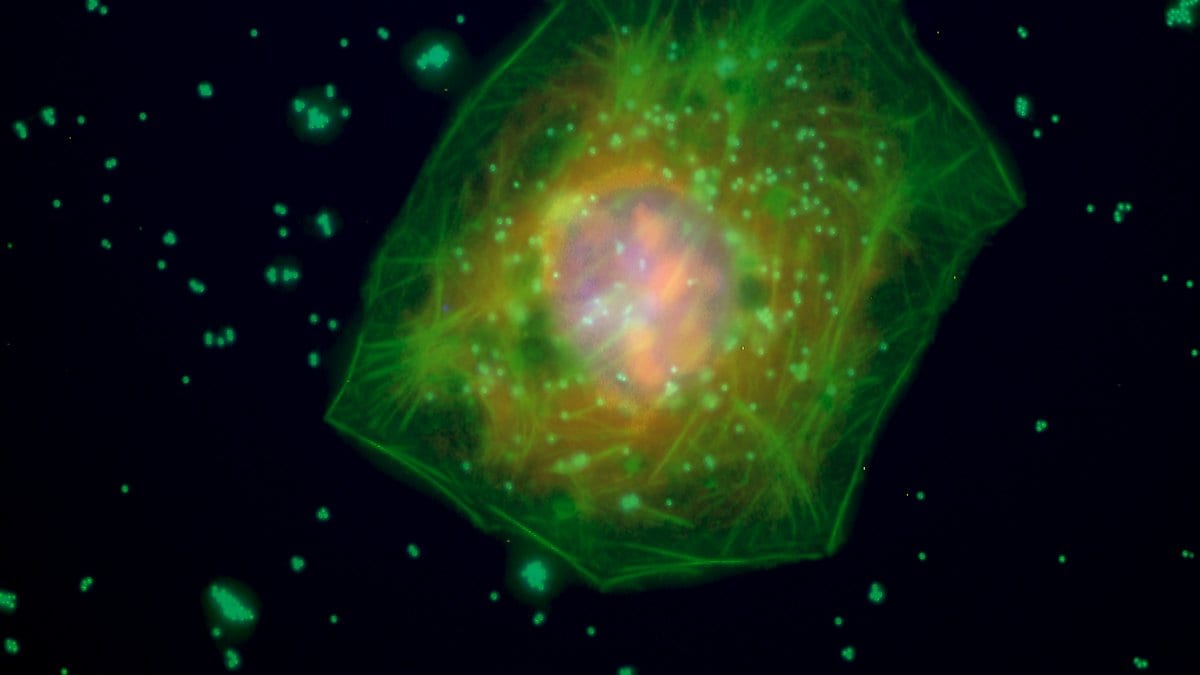
Microplastics and nanoplastics have now been reported in 13 human organ systems, and 23 of the 110 studies making those reports describe correcting their counts for plastic picked up in the laboratory. Those figures come from a scoping review by researchers at the University of Galway, published Nov. 20, 2026, in Microplastics and Nanoplastics.
The review charts where the particles have been reported in the body, by which methods, and how robustly those reports are supported. The authors describe the literature as uneven in method, contamination control and reporting unit, and difficult to interpret as a whole. Plastic is present in laboratory air, water and equipment; a blank sample, carried through the procedure with no tissue in it, measures that background so it can be subtracted.
The authors report that procedural blanks were run in 102 of the 110 studies, though many found no particles in them, and that explicit blank correction was reported in 23. In nearly half the studies, particles were identified by infrared methods with a lower size limit of roughly 10 to 20 micrometers — smaller fragments fall outside what those methods can see. Detection rates, particle sizes and concentrations varied substantially with the method used.
The studies date from 2021 to 2025. The digestive and female reproductive systems were the most studied; several others, among them those of the ear, eye and skin, rest on three studies or fewer. Reported detections spanned the brain, cerebrospinal fluid, the placenta, bone marrow and the fluid inside the eye.
The authors list higher reported particle burdens in tumor tissue than in comparison tissue across five cancer types, with no difference in one form of lung cancer. They state that the associations with disease are cross-sectional, measured at a single point in time, and generate hypotheses rather than establishing cause.
They add that several reported mass concentrations, particularly in brain tissue, are difficult to reconcile with what is known about how particles are taken up and carried through the body, and require independent verification. The review names the field's priority as standardized, contamination-controlled and fully reported measurement.
Sources
- Microplastics and NanoplasticsPeer-reviewed