Canada's Last Ice-Dammed Arctic Lake Vanished in 2020. Sensors Recorded It.
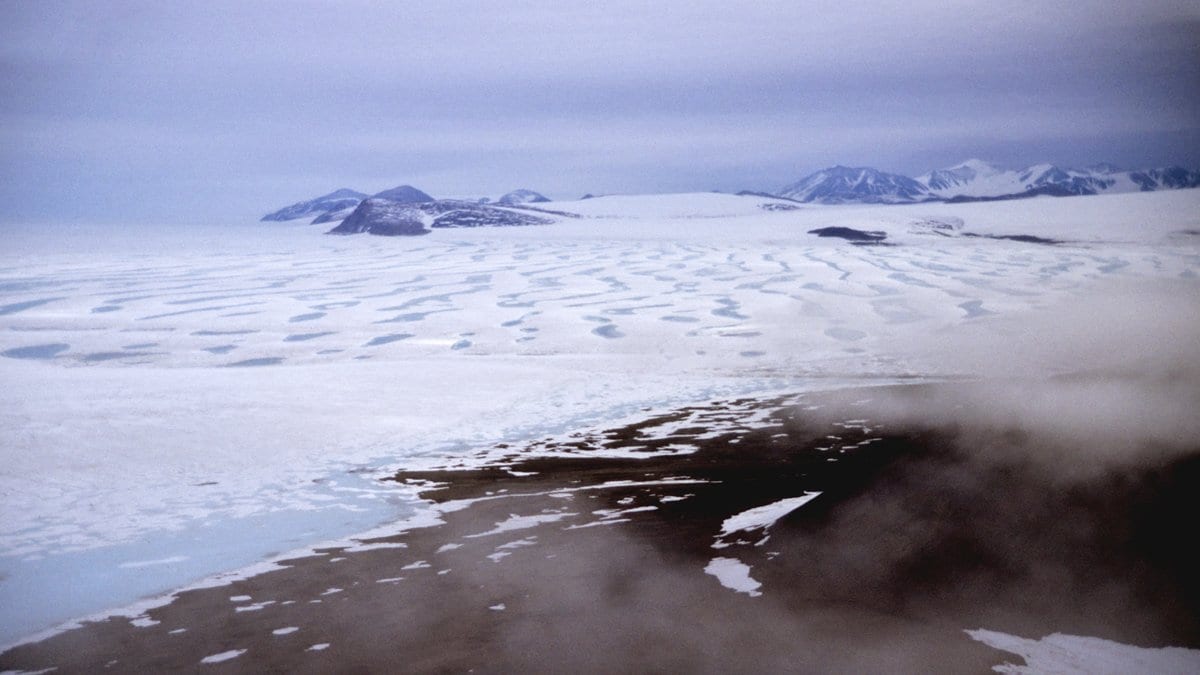
A decade of measurements from an instrument tethered to the ice in Milne Fiord captured the draining of the last epishelf lake in the Canadian Arctic, which was lost when the Milne Ice Shelf collapsed in 2020. The record was published Aug. 27, 2026, in the open-access journal Scientific Reports.
Epishelf lakes form where meltwater runoff is dammed behind an ice shelf, leaving a lasting layer of fresh water floating directly on seawater. Once widespread in the Arctic, these lakes had been present for thousands of years, but several others across the region drained before the Milne lake was lost.
The team, led by J. Bonneau of Université Laval and the University of British Columbia, compiled a decadal series of water-column profiles collected before and after the calving. These profiles show an abrupt, one-way transition from a relatively stable freshwater ecosystem to a marine system. Bonneau and colleagues describe the mooring data as an unprecedented record of epishelf lake drainage.
The paper also assesses the oceanographic, atmospheric and cryospheric factors that likely contributed to the 2020 calving.
The 10 authors include scientists at Carleton University, the University of Alberta, UC Davis and the University of Stirling, along with two from Ausuittuq (Grise Fiord), Nunavut. The researchers note that the loss "marks the extinction of a rare feature of a colder world" and highlights the vulnerability of what they call the Arctic's "Last Ice Area" of sea ice to climate warming.
Sources
- www.nature.comPeer-reviewed