Climate Change Made the Mediterranean's 2025 Fire Weather Worse, Mostly Through Heat
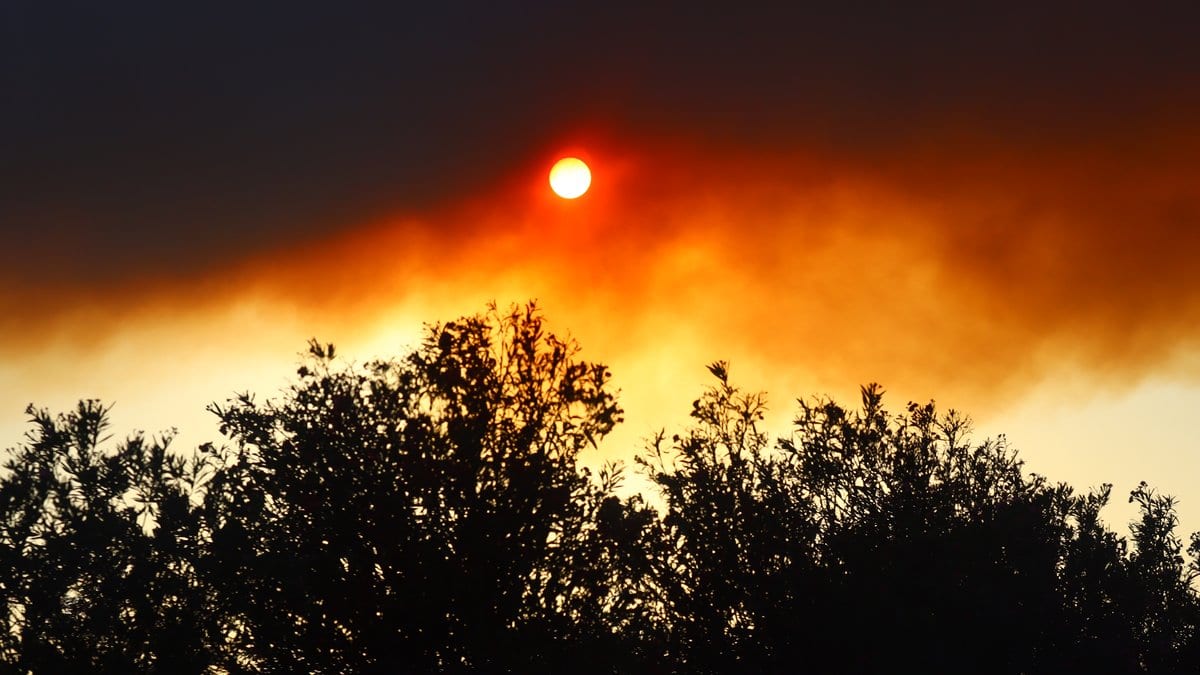
Linda van Garderen of Utrecht University and colleagues report that climate change substantially intensified the weather conditions behind the Mediterranean's extreme fire season of July and August 2025, and that rising temperature did most of that work. The paper was published Nov. 27, 2026, in Communications Earth & Environment.
The authors present the method as the wider point. They describe conditional storyline attribution as a way of linking specific physical changes in the climate to measures that matter for impacts, fire weather among them.
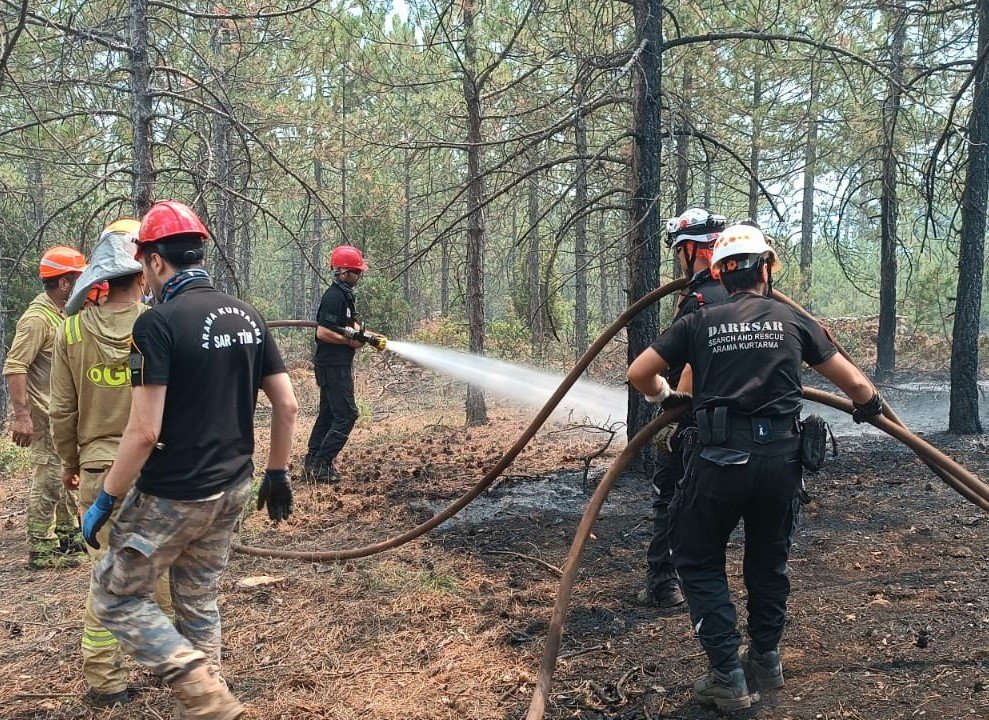
Their storyline experiment reruns a real season inside a climate model. The large-scale circulation is held close to what actually occurred in July and August 2025, while the background climate is shifted to a cooler past or a warmer future. The same summer then plays out under a different amount of warming, and the runs are compared through the Fire Weather Index, a standard fire-danger rating. Because the circulation is pinned to the real event, the comparison isolates what the authors call the thermodynamic contribution of climate change — its effect on heat and moisture rather than on the weather pattern itself.
What the method does not produce is a probability. The result is conditional on the season that actually happened, so it does not say the 2025 fire weather was some number of times more likely because of climate change, the way a probabilistic attribution study would. It says how much more fire-conducive that particular summer's weather was in a warmer climate than in a cooler one.
Across the Mediterranean, the team reports an increase in fire weather under climate change, with the strongest and most spatially coherent signal coming from higher temperatures. Reductions in relative humidity and in rainfall amplify fire-conducive conditions further in specific regions rather than everywhere. The simulations cover past and future climate states.
The authors are at Utrecht University, Helmholtz-Zentrum Hereon in Germany and the Max Planck Institute for Meteorology in Hamburg; Frauke Feser of Hereon is the senior author. German federal research programs funded the work.
Sources
- Communications Earth & EnvironmentPeer-reviewed