Marine Heatwaves Made Coastal Seas Absorb More Carbon, Not Less
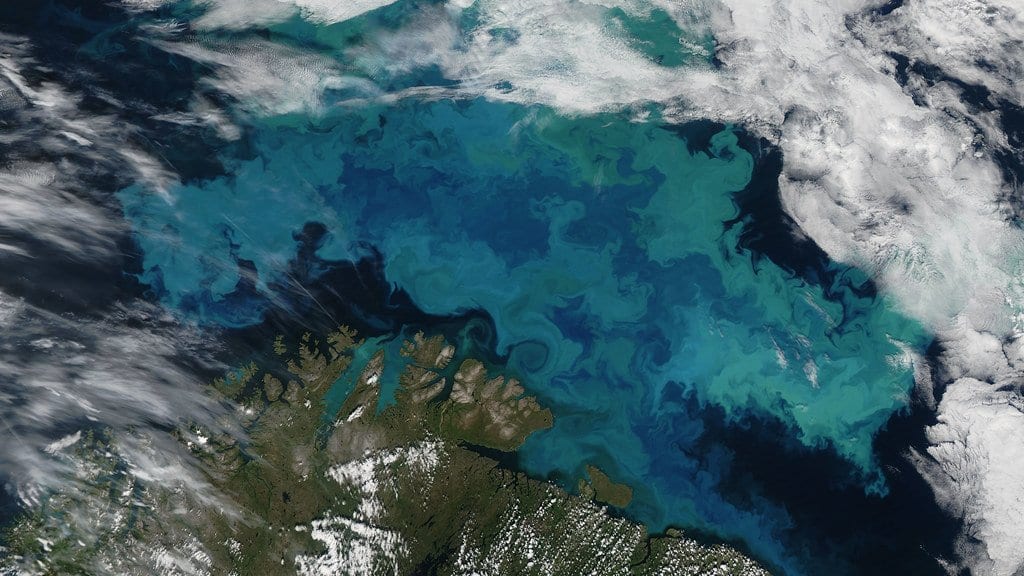
Marine heatwaves raised net carbon dioxide uptake in the world's continental shelf seas by 11.0 ± 1.6% between 1985 and 2020, a team led by Zhentao Hu of Helmholtz-Zentrum Hereon in Geesthacht, Germany, reports in a paper published Sept. 1 in Nature Communications.
The direction runs opposite to what the same events do in deep water. The authors report enhanced uptake on the shelves "in contrast to reduced uptake in the open ocean," where earlier work they cite found heatwaves suppress uptake by about 8%. Shelf seas are the shallow waters over continental margins, roughly 7% of the ocean surface by the paper's figure.
The team used four observation-based reconstructions of air-sea CO2 flux, giving priority to one built for coastal waters, and identified "marine heatwave months" from detrended sea surface temperatures. Summed across those months over 1985 to 2020, the extra uptake reached 40.02 teragrams of carbon in the primary dataset. That is the 11.0 ± 1.6% figure, measured against normal flux for the affected areas and months rather than against the shelf total. The other three datasets put the enhancement at 4.7 ± 1.1%, 8.8 ± 0.6% and 12.3 ± 3.0%.
Polar and subpolar shelves account for most of the effect, according to the paper: the Siberian shelves, the Barents and Kara seas, the Antarctic shelves and the northwestern Pacific. Warmer water alone should push CO2 out of the sea. The authors report that effect is outweighed there by two others: retreating sea ice, at 21.9% of the offsetting contribution, and non-thermal declines in dissolved carbon, at 78.1%. Their ocean model links most of the second to increased biological carbon fixation, the uptake of carbon by marine life.
Tropical shelves and western boundary current regions moved the other way, with more outgassing or weaker uptake during heatwave months, consistent with earlier regional measurements off the U.S. East Coast and in the Yellow and East China seas.
The authors put the 40.02 teragrams at about 0.62% of shelf-sea uptake over the period, and about 0.05% of the global ocean's uptake.
Sources
- doi.orgPeer-reviewed