Apple Says an 816-Billion-Parameter Model Ran Across Four Mac Studios
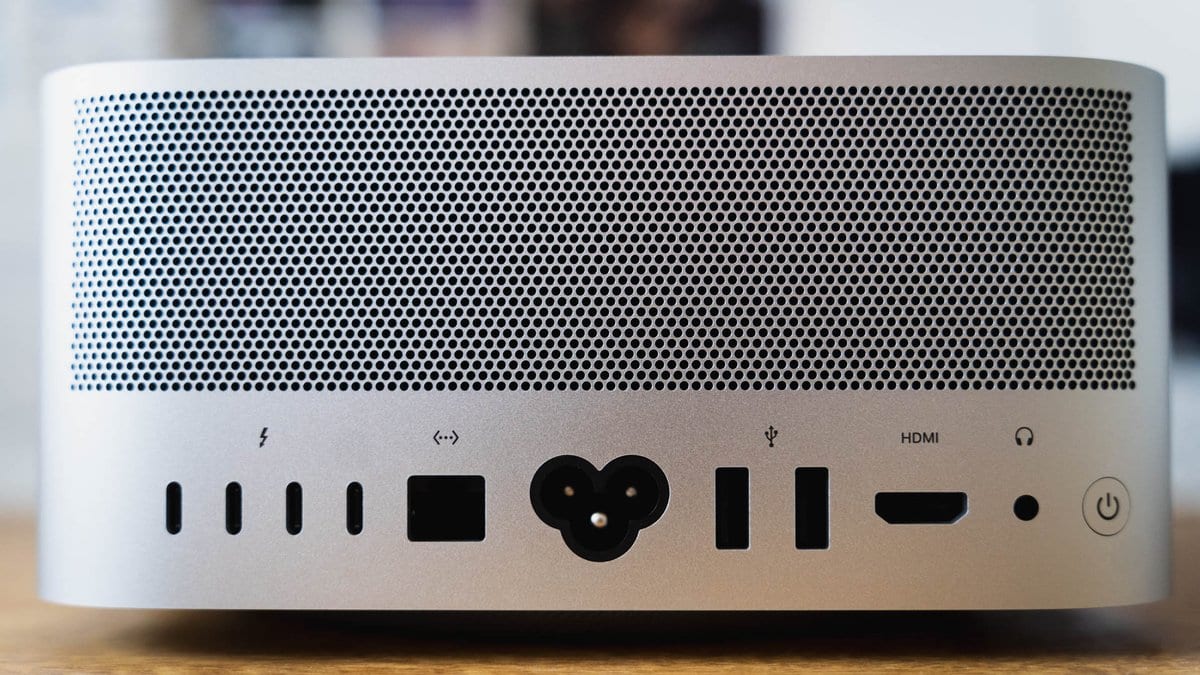
Apple reported on Oct. 15, 2026, that a language model with 816 billion parameters generated more than 36 tokens a second when split across four Mac Studio desktop computers, in a benchmark the company ran itself on its own hardware and software.
Apple says its open-source MLX framework exists to let researchers and developers run current models and methods on their own machines, in private, from a desk rather than in a data center. The code that makes several Macs work as one, a communication backend Apple calls jaccl, built on a Thunderbolt driver, shipped in MLX v0.30.1, released the same day.
The larger parameter count is not what the machines compute with for each word. Apple reports that the model keeps only 42 billion of those parameters active at a time, because it is a mixture-of-experts design that switches between subsets of its weights, so the speed cannot be compared with a conventional model of the same total size. The figure is also a generation rate: how fast the model produced text after reading a prompt of 8,192 tokens.
More than one computer was needed to run it at all. Apple says the model does not fit on a single Mac Studio even with its weights compressed to four bits each, so MLX divides it across machines linked by Thunderbolt cables.
The model is not Apple's: Muse Spark Open is Meta's, and its weights are public, which is why Apple could run it at all. Apple printed the exact command lines it used, so anyone with the same hardware can repeat the measurement; no independent evaluation of the result has been published.