Seaweed Carbon Sinks Cover Less Than 1% of Global Coastlines
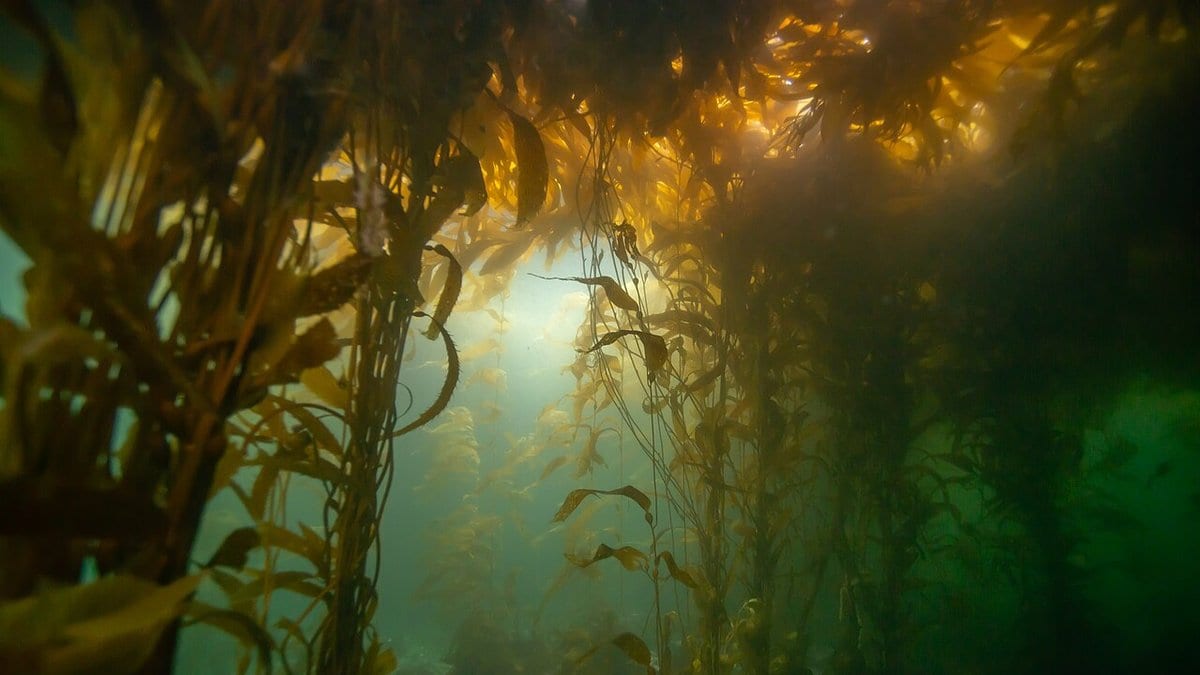
Researchers have mapped where seaweed carbon is buried along the world's coasts and report that the most favorable burial grounds occupy less than 1% of global coastlines.
The assessment, from a group led by Dongyang Fan and Xi Xiao of Zhejiang University with co-authors at KAUST, the Chinese Academy of Sciences and the University of Western Australia, appeared Aug. 31 in Nature Communications. It covers the global coast at a resolution of 5 arcminutes, about 9.2 kilometers at the equator. Each cell is scored on a Macroalgal Carbon Burial Index, a measure of how favorable a stretch of coast is for locking away carbon from seaweeds and kelps. The index draws on 1,617 sediment accumulation rate measurements, which the researchers describe as the most comprehensive dataset of its kind.
What decides burial is where sediment settles, not how much seaweed grows there, identifying the depositional environment as a critical constraint acting independently of macroalgal productivity. High-favorability sinks cluster in regions such as Korea Bay and the Okhotsk-Sakhalin region.
The authors also found that coastline complexity predicts the index (R² = 0.59), which could allow burial hotspots to be identified at low cost.
Protection does not line up with those hotspots. Existing marine protected areas cover 23.9% of low-burial coastlines but only 17.1% of primary burial hotspots, representing a conservation mismatch.
The journal published the paper as an early, citable version that will be replaced by the final version of record. The study was funded by China's National Key R&D Program and by provincial science foundations in Zhejiang and Guizhou, according to the funding statement.
Sources
- doi.orgPeer-reviewed