Warmer Water and a New Predator Drove a Squid Fishery to Collapse
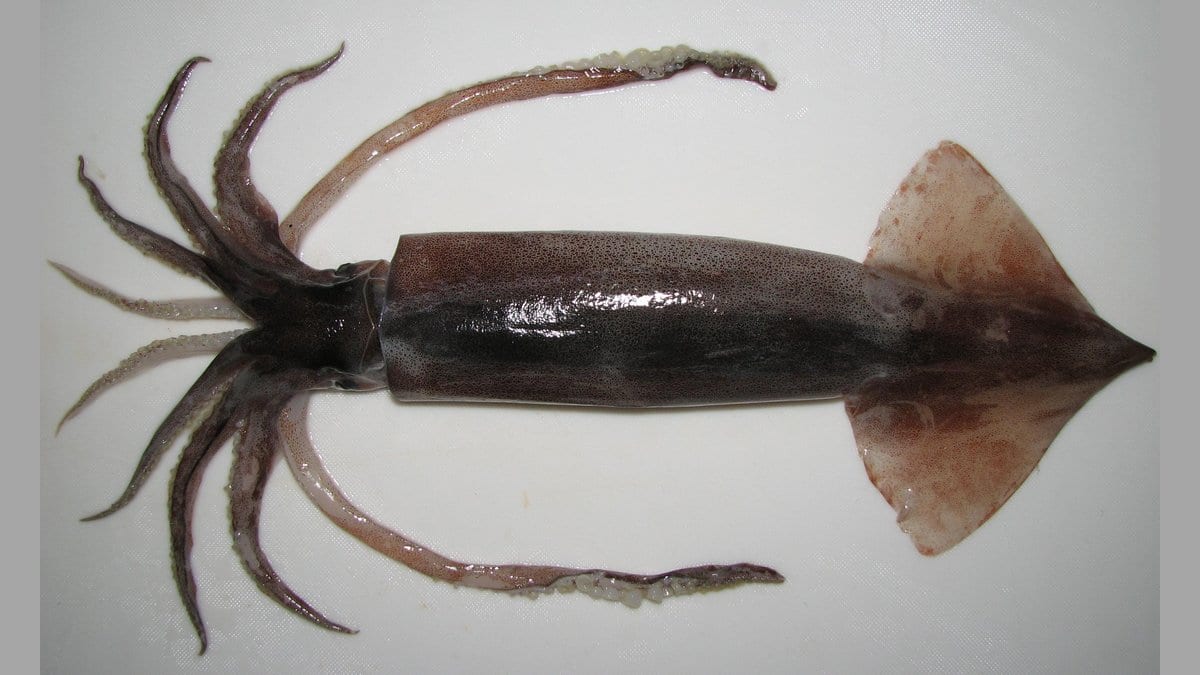
Catches of Japanese flying squid (Todarodes pacificus) in the Sea of Japan, also known as the East Sea, have collapsed, and a study of observations from 1993 to 2025 attributes the loss to three linked effects of ocean warming, among them the arrival of a warm-water predator. The analysis is by Seongsik Park and Kyunghoi Kim of Pukyong National University in Busan, South Korea, with two colleagues, one of them at Korea's National Institute of Fisheries Science. It was published Oct. 5, 2026, in Communications Earth & Environment.
In the open-access paper, the authors present the squid's decline as an early warning of the species replacements that warming could force in other oceans.
The authors report three pathways from rising ocean temperature to the collapse. One is a gradual loss of water cool enough for the squid. The second is acute heat stress during autumn and winter marine heatwaves, long spells of unusually warm water. The third is a trade-off between species, tied to the rapid influx of a warm-adapted predator, the Japanese amberjack (Seriola quinqueradiata).
The authors also report a link to the tropical Pacific: an intensified early-summer La Niña amplifies the autumn and winter heatwaves inside the main fishing grounds.
Climate model projections in the paper indicate that unchecked warming will raise the risk of the regional squid fishery reaching zero catch by the 2040s, across several emissions scenarios.
On that basis the authors call for management that crosses national borders and adapts to a changing climate. The work was funded by the Korea Institute of Marine Science and Technology Promotion, under the country's Ministry of Oceans and Fisheries.
Sources
- Communications Earth & EnvironmentPeer-reviewed