Swordfish Make Rare Deep Dives, and Probably Not to Feed
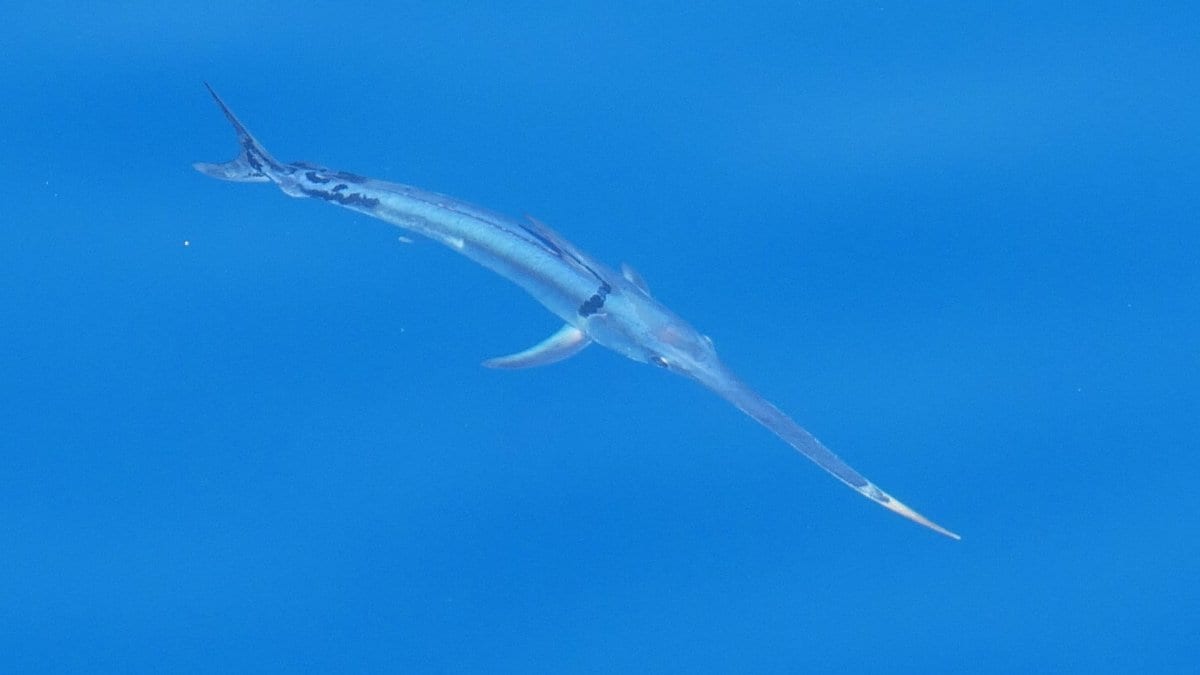
Thirty-four North Atlantic swordfish carrying pop-up satellite tags made unusually deep dives on 39 of 3,666 tracking days, and the researchers who tagged them conclude those descents are most consistent with the fish briefly sampling conditions far below their normal depth rather than feeding there. The work was published Nov. 6, 2026, in the journal Marine Biology.
Dives of that kind have turned up in swordfish tagging records for years with no agreed explanation, and the study weighs seven reasons previously proposed for deep diving by large ocean predators. Ciara Willis and Simon Thorrold of the Woods Hole Oceanographic Institution and their colleagues settle on environmental profiling, meaning occasional sampling of the water column, and say that while this may contribute to navigation, the mechanism behind it remains unresolved.
The tags recorded depth and temperature while the fish went about an ordinary routine of deep days and shallow nights. On days the authors did not classify as extreme, the deepest point of the day averaged 637 meters. On the extreme days it averaged 991 meters, the coldest water the fish encountered averaged 8.4 °C, and the deepest single dive in the set reached 1,664 meters.
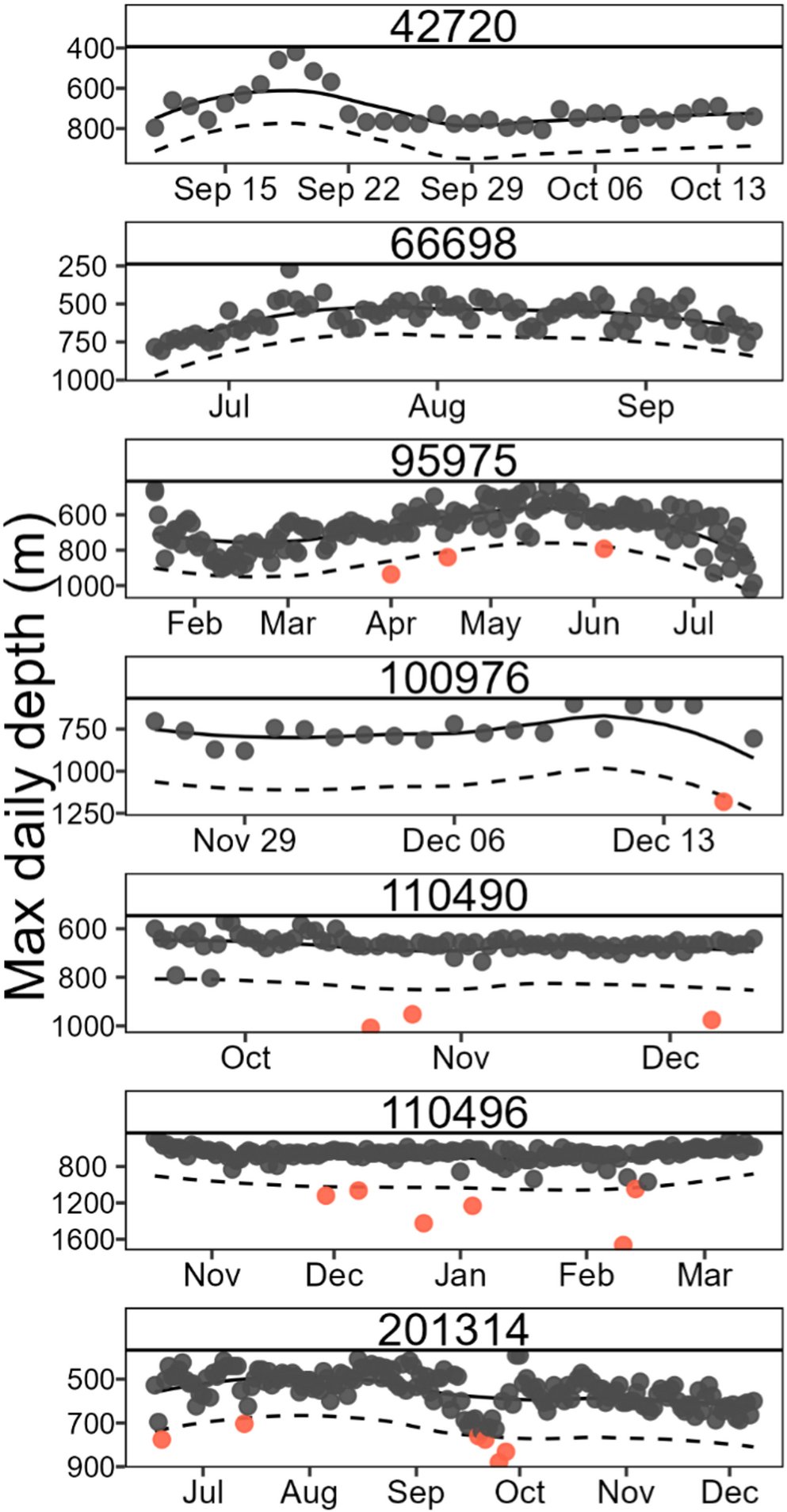
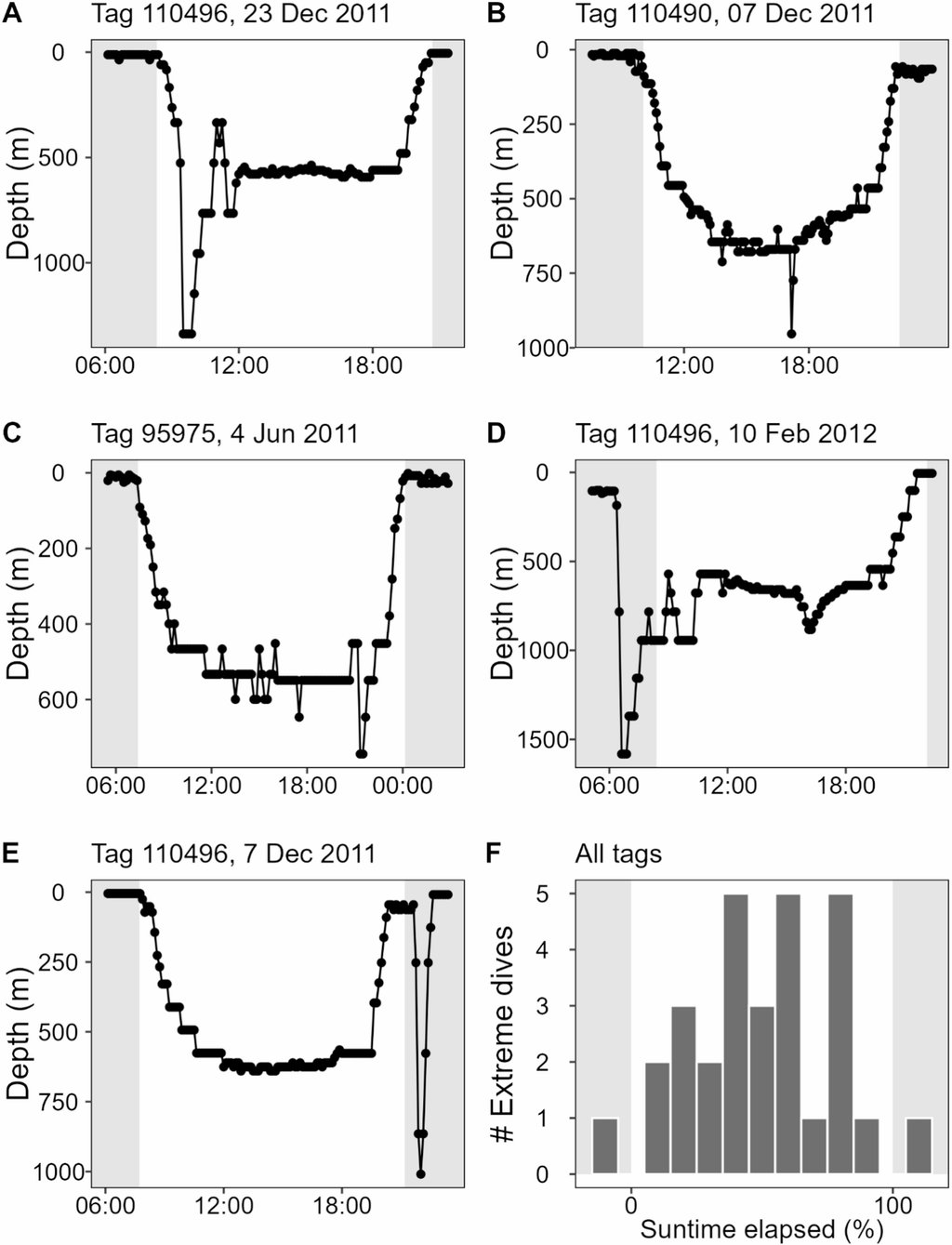
What the records did not show was time spent at the bottom. The authors report brief, mostly daytime dives that lasted about 45 minutes for fish making one in a day, often with only seconds at the deepest point, and descent rates close to those of the animals' routine daily movements. According to the authors, neither the shape of the dives nor their speed fits a fish working a deep prey layer or escaping a predator. Their statistical model put the dives where the sea surface stood higher and its temperature varied more, conditions the authors associate with fronts, eddies and major currents such as the Gulf Stream.
Most of the tagged fish were never recorded making such a dive, and some of those crossed the same waters as the ones that did. The authors take that as a sign the behavior depends on circumstances rather than being routine.
Sources
- Marine BiologyPeer-reviewed