Plastic in the Sand Changed How a Tidal Flat Reacted to a Storm
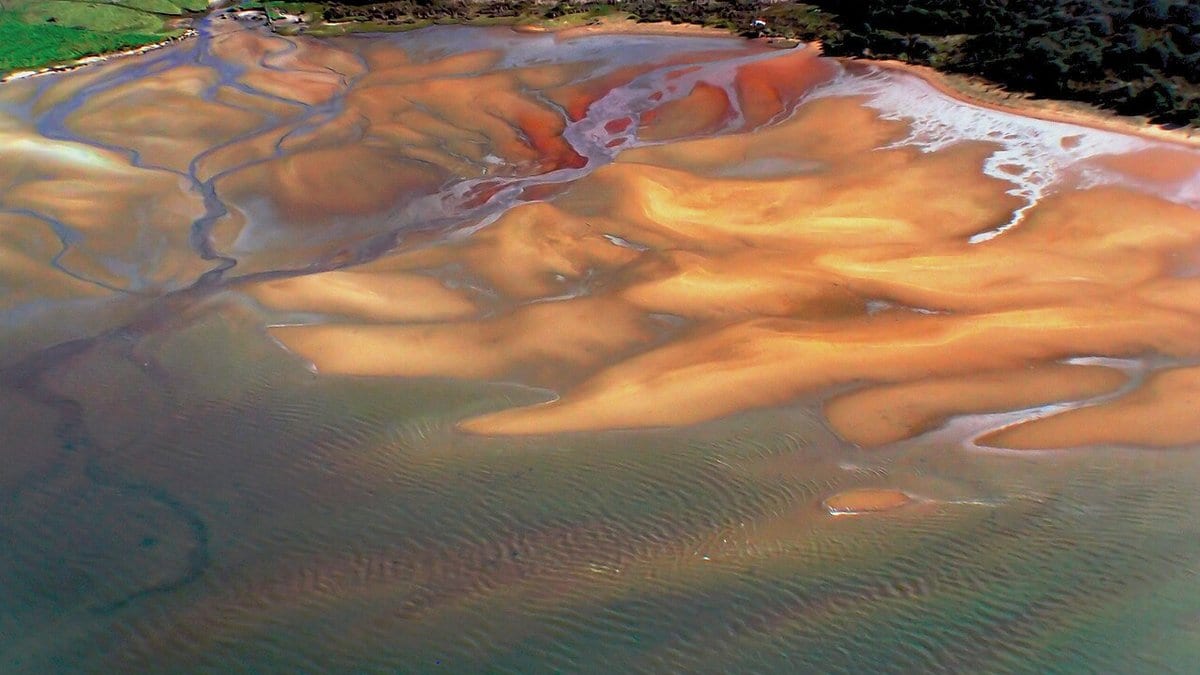
Plastic netting buried in a New Zealand tidal flat changed how the sediment responded to a storm, according to a two-month field experiment published Aug. 28, 2026, in Scientific Reports.
Ines Bartl, Samantha Ladewig and Simon Thrush of the University of Auckland's Institute of Marine Science ran control and plastic-polluted plots on a sandflat in Mahurangi Harbour and sampled them at six time points spanning conditions before and after a storm that arrived mid-experiment. The plastic treatment was polyester netting, 6 by 2 centimeters and 10 micrometers thick, inserted vertically into the sediment, which the team describes as a microplastic. They measured sediment oxygen consumption, nutrient and nitrogen fluxes, pore-water nutrient pools and sediment organic matter.
The finding is an interaction between the two, meaning what the plastic did once the storm arrived. In control plots, the storm cut sediment oxygen consumption by 24% and pore-water ammonium by 53%, while ammonium efflux, the flow of ammonium out of the sediment, rose 186% and nitrogen-oxide pools rose 166%. Measured against that control response, the plastic plots showed a 43% increase in sediment oxygen consumption, a 53% increase in ammonium efflux and 63% lower pore-water nitrogen oxides. The percentages are comparisons within this experiment, not absolute rates.
The researchers conclude that plastics can change how seafloor sediment responds to storms, "potentially altering nitrogen source–sink dynamics," and suggest such interaction effects may matter more as plastic pollution and storm frequency increase. That is their inference from a single site: one sandflat, one storm and one plastic treatment, measured over two months.
Scientific Reports received the paper Dec. 11, 2025, and accepted it Aug. 14, 2026. The journal is sharing the accepted version early, ahead of the final version of record. The work was funded by anonymous philanthropic donors through the Microphytes and Microplastics project, the University of Auckland and the Institute of Marine Science, per the paper's funding statement.
Sources
- www.nature.comPeer-reviewed