Flash Droughts Speed up Wildfire Spread, and the Difference From Ordinary Drought Is Sharp
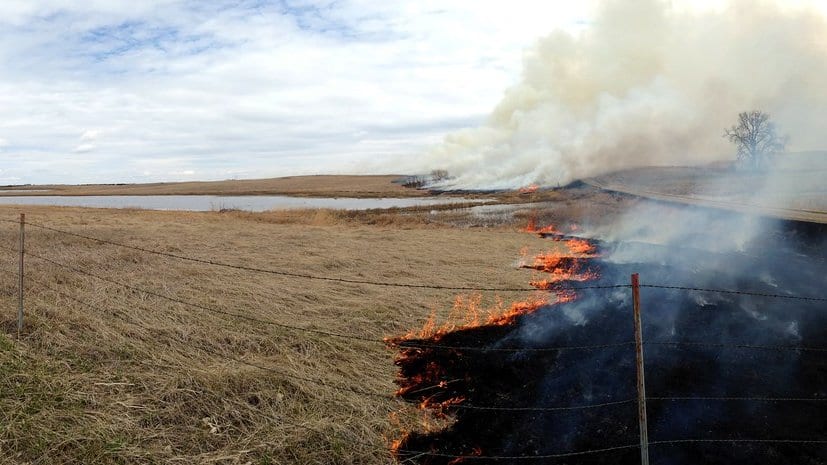
Fires that follow a flash drought, a rapid collapse of root-zone soil moisture over days to weeks, spread roughly 1.3 to 1.8 times faster in their opening hours than fires not linked to flash droughts, according to a study published Sept. 4, 2026 in Communications Earth & Environment.
The team, led by Masoud Zeraati at Newcastle University with colleagues at Newcastle and at the University of Strathclyde, analyzed wildfire spread dynamics across land-cover types in the conterminous United States. They used a model-derived root-zone soil-moisture flash-drought metric and compared those results against fires that occurred under conventional drought — defined as persistently low soil moisture without rapid onset.
Grasslands and croplands showed the strongest acceleration, followed by open shrublands, woody savannas, savannas and deciduous broadleaf forests. The paper attributes the pattern to faster drying and greater fuel continuity in fine-fuel ecosystems. Conventional drought, by contrast, produced "weaker and less consistent changes in fire spread," the authors report.
Rapid soil-moisture drawdown, not background dryness, "appears to provide a more direct pathway linking drought to accelerated wildfire spread," the paper states. The authors recommend that fire services monitor declines in root-zone soil moisture in the days to weeks before an ignition, arguing that such monitoring "could improve early warning of fire risk in ecosystems prone to rapid drying" in a way that static drought indices do not.
The study covered the conterminous United States; the paper does not extend its findings to other regions.
Sources
- www.nature.comPeer-reviewed