Most Fires That Turn Into Disasters Are Among the Most Extreme on Earth
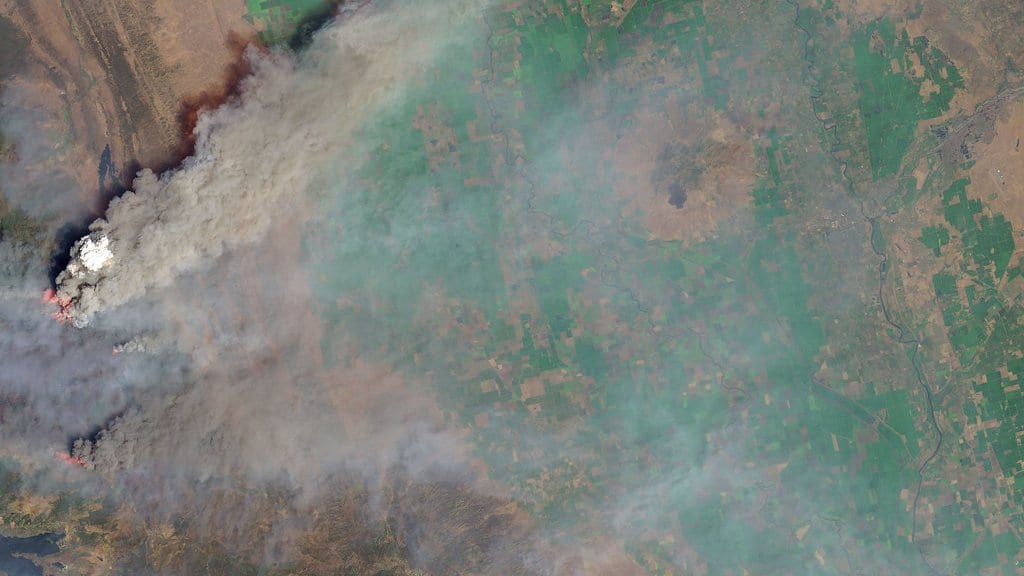
Most of the fires behind societal disasters rank among the most extreme fires on Earth, according to a study published Nov. 2, 2026, in Communications Earth & Environment. Working from a global record of individual fire events spanning 2002 to 2025, a team led by researchers at the University of California, Merced, reports that 66% of disaster-linked fires fall in the global top 0.5% for size, for how fast they spread in a single day, or for the energy they released in a day.
The authors write that the findings point to a need for better prediction and mitigation of extreme fires, to protect lives, homes and livelihoods.
The analysis identifies fire energy as the dominant driver of these disasters and puts the median energy of those fires in the 99.8th percentile of fires globally.
The paper reports one change over time: in temperate conifer forests, mainly those of western North America, the area burned by energetically extreme fires more than doubled across the period.
The team also reports that the Global South accounted for 95% of total population exposure to such fires and 76% of power-line exposure.
Cong Yin of the Earth Institute at the University of California, Merced, is the study's first author, and Mojtaba Sadegh of Boise State University is its senior author, with colleagues at the University of Tasmania and the University of East Anglia. The work was funded by the U.S. National Science Foundation and the U.S. Department of the Interior's Joint Fire Science Program.
Sources
- Communications Earth & EnvironmentPeer-reviewed