Hubble Study Finds Small Galaxies Lose Most of the Oxygen Their Stars Make
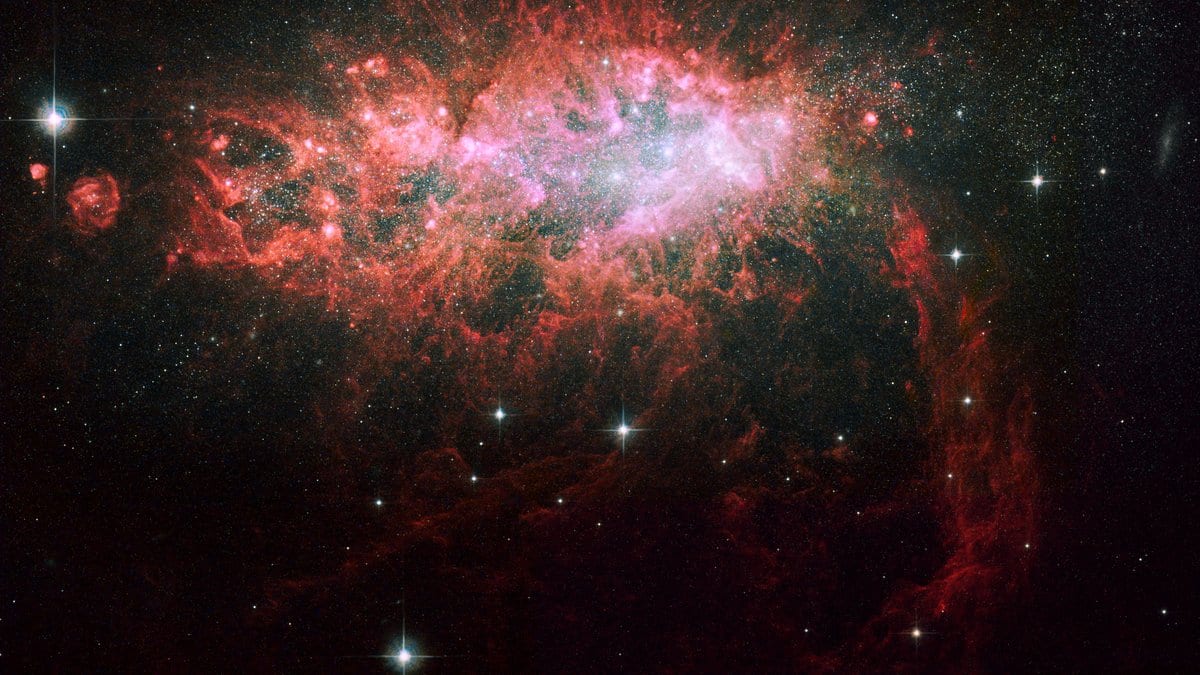
A team using NASA's Hubble Space Telescope reports that 37 nearby dwarf galaxies have kept only 4% to 25% of the oxygen their stars produced, 11% on average. The study appeared Nov. 2, 2026, in The Astrophysical Journal.
The measurement comes from the Galaxies Losing Oxygen via Winds (GLOW) project, funded by NASA and the National Science Foundation. Kristen Wingfield McQuinn of the Space Telescope Science Institute and Rutgers University, the project's principal investigator, said that tracing how much oxygen stars make and how much stays inside a galaxy helps researchers understand how galaxies change and how much they enrich the gas between galaxies.
The paper reports that nearly all of the oxygen these galaxies do keep sits in their gas rather than in their stars, and that winds driven by supernovae appear to strip oxygen out of low-mass galaxies more effectively than current models predict. Grace Telford, a GLOW co-investigator and assistant professor at the University of Utah, said that the oxygen must once have been inside the galaxies, so it must have been ejected by energy from massive stars and supernovae.
NASA's Goddard Space Flight Center says the team used archival optical images from Hubble to pick out individual stars and work out each galaxy's star-formation history and chemical makeup, with added data from NASA's retired Spitzer Space Telescope, the Very Large Array and the Australian Telescope Compact Array. The galaxies were chosen because their masses fall where simulations predict a growing share of their oxygen is blown out by supernovae, and because all are close enough for Hubble to separate their individual stars.
A 2014 study asked the same question of galaxies like the Milky Way and found they too had lost much of their oxygen, some of it in the thin halos of gas around them. GLOW extends that accounting to far smaller galaxies, and NASA says it is still unclear whether most of the missing oxygen sits in those halos or has left the galaxies' surroundings entirely.
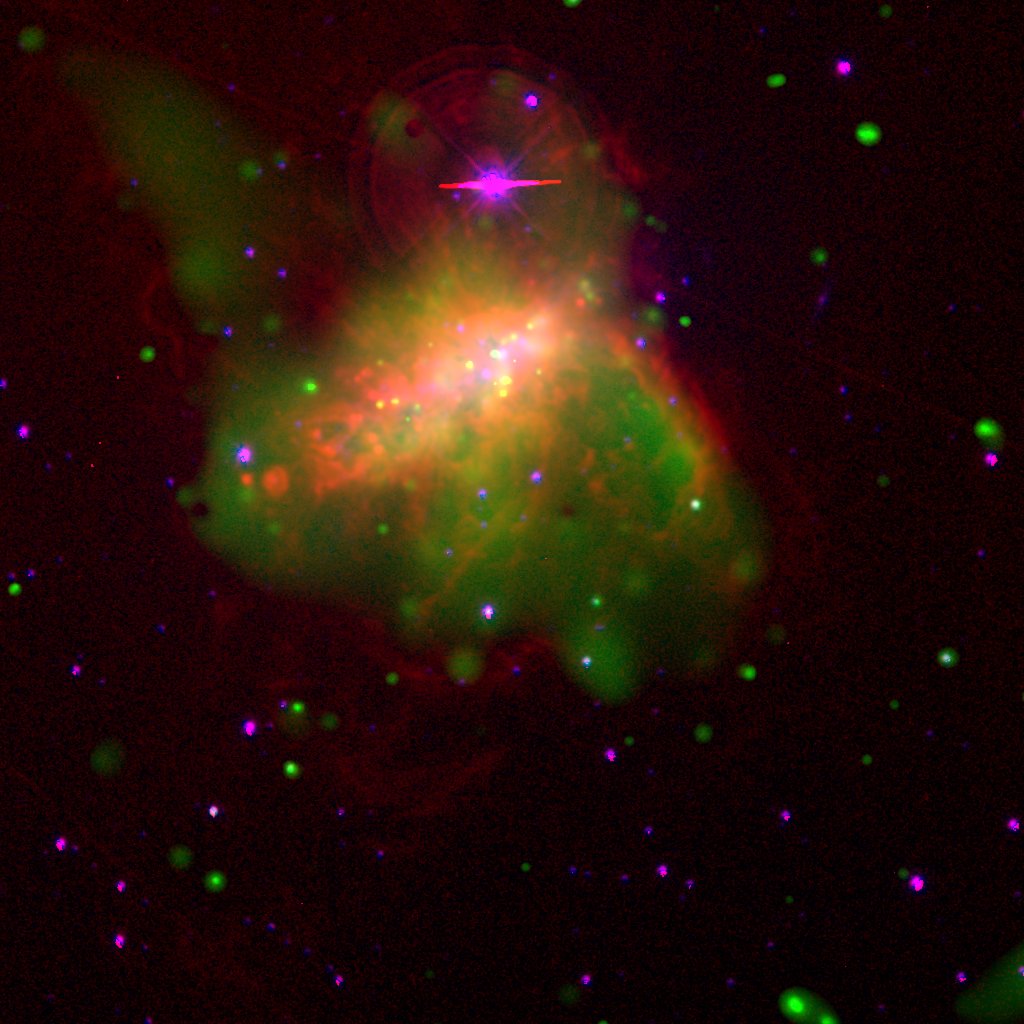
McQuinn has an approved program to look for fainter, lower-mass galaxies with NASA's Nancy Grace Roman Space Telescope.
Sources
- science.nasa.gov
- The Astrophysical JournalPeer-reviewed