Desert Soil Takes up Carbon Dioxide at Night and Gives It Back by Day
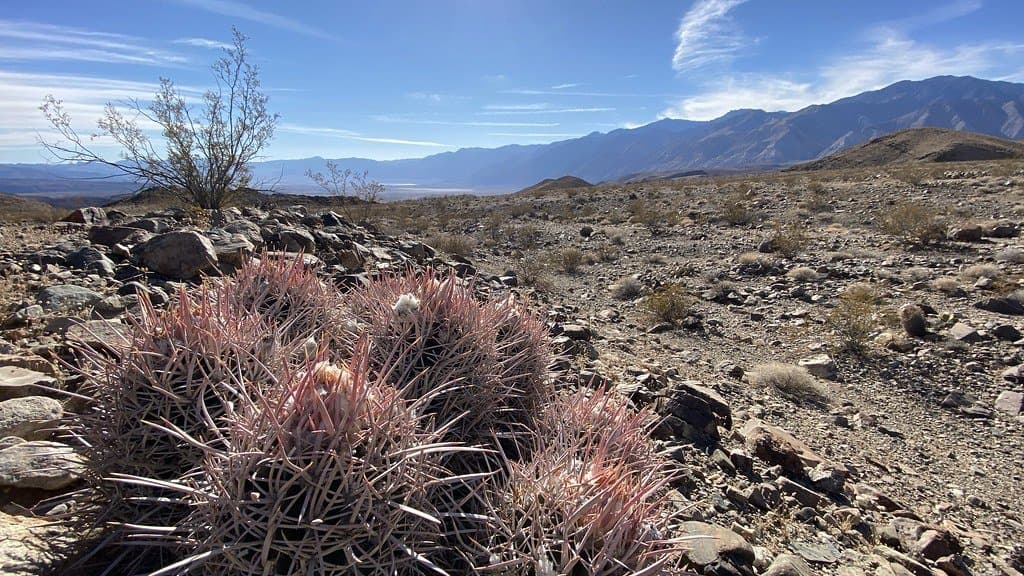
Carbon dioxide sticks to desert soil minerals as they cool at night and comes back off as they warm through the day, an exchange that involves no living thing at all, according to a study published Sept. 23, 2026 in the journal Science Advances.
The authors say their results mean that adsorption, gas sticking to mineral grains, should be counted in the global carbon cycle, and that including it would give a more accurate picture of how CO2 moves between land and air. The paper is by Anna Abramova, Ronald Amundson and colleagues at the University of California, Berkeley, with co-authors at Lawrence Berkeley National Laboratory and New Mexico State University.
Abramova and colleagues measured in the laboratory how much CO2 desert soil holds across a range of day-to-night temperatures and CO2 pressures, then set those numbers beside field data from the Mojave Desert. Annual uptake in the layer of soil that heats and cools over a single day runs 16.7 to 19.3 grams of carbon as CO2 per square meter. The authors say that, scaled up worldwide, the results indicate a possible non-biological exchange with the atmosphere of up to 2.2 billion to 2.5 billion metric tons of that carbon.
Two things measured in dryland soils have resisted explanation for decades. At night the soil can appear to absorb carbon rather than give it off. And the amount of CO2 leaving the ground at a given soil temperature is not the same when the soil is warming as when it is cooling. The authors propose that the physical sticking and release causes both, or contributes to them. The field data show carbon moving into the soil at night and out of it during the day. Once that temperature-driven physical exchange is accounted for, the apparent direction of the temperature relationship reverses.
The U.S. Department of Energy and the California Energy Commission funded the work. The laboratory measurements of how much CO2 the Mojave soils and clay minerals hold are posted publicly on Zenodo.
Sources
- doi.orgPeer-reviewed