African Dust Brings Living Bacteria Across the Atlantic to the Amazon
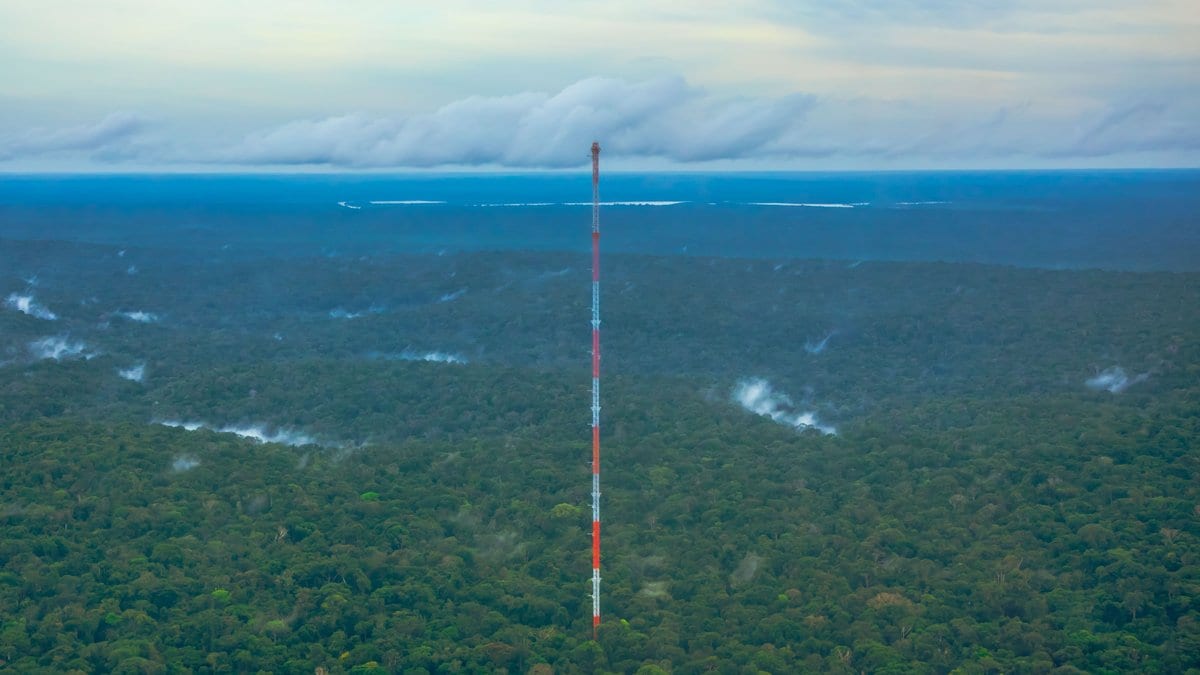
Dust blown across the Atlantic from North Africa carries living bacteria into the Amazon rainforest, Jens Weber, Bettina Weber and colleagues at the University of Graz and the Max Planck Institute for Chemistry in Mainz reported Oct. 27, 2026, in Communications Earth & Environment.
African dust has long been studied as a source of mineral nutrients for the forest. The paper reports that the plumes also move microbes between continents, with possible consequences for how the ecosystem works, for processes in the atmosphere and for human health.
The team sampled air at two heights on the Amazon Tall Tower Observatory in Brazil, 42 m and 323 m above the ground, and identified the bacteria, fungi and archaea it carried, both on ordinary days and through a five-day North African dust intrusion. During the intrusion the bacteria shifted strongly toward organisms found in dryland soils, in the living crusts that form on their surface, and in the sea.

The fungi did not move. Fungal communities stayed unchanged through the intrusion, and under ordinary conditions they were stable and dominated by locally produced fungi, while the bacterial communities varied with height and over time.
The team also measured a threefold rise in airborne endotoxin, an inflammatory molecule from bacterial cell walls, with no enrichment of organisms that live only by causing disease.
The paper is open access, and the journal is publishing the accepted version early, ahead of the final version of record. The work was funded by the German Federal Ministry of Education and Research; the Brazilian Ministério da Ciência, Tecnologia e Inovação; the Austrian Science Fund; and the University of Graz.
Sources
- Communications Earth & EnvironmentPeer-reviewed