Cleaner Air in China Came With Healthier Weights in Young Children
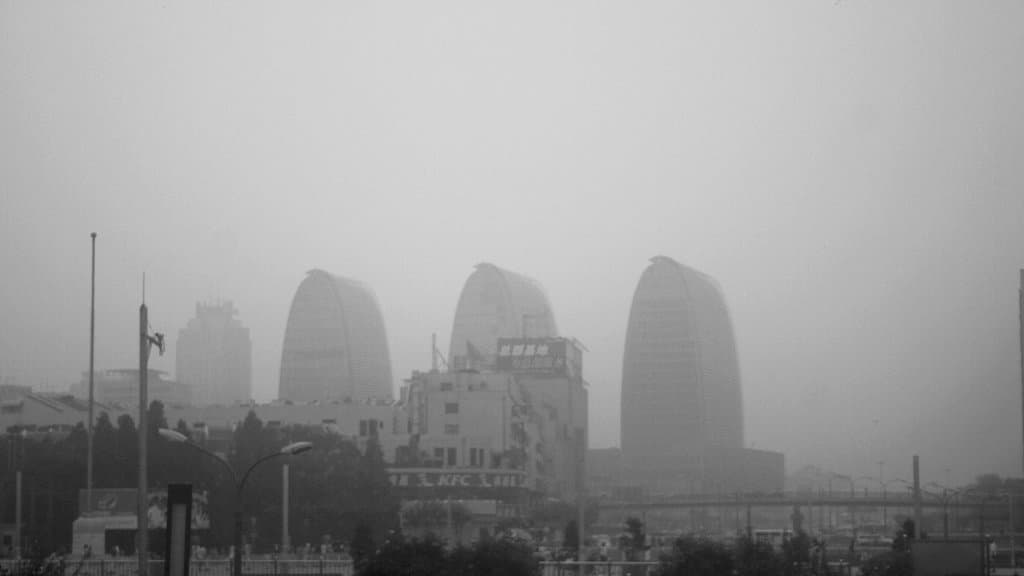
China's national clean-air program is linked to better weight outcomes in young children, according to a study published Sept. 15, 2026 in Communications Earth & Environment. Counties covered by the program had less wasting (children too thin for their height) and less overweight among children under five than comparison counties did, the authors report.
The authors present the study as population-level evidence that clean-air regulation reaches early-childhood nutrition, and they suggest pairing air-quality management with child-health policy in heavily polluted places. The paper is open access.
Lili Xu of Southwestern University of Finance and Economics, Laixiang Sun of the University of Maryland, and colleagues used annual data from 2,759 counties between 2005 and 2017. They treated China's Air Pollution Prevention and Control Action Plan as a natural experiment, comparing the counties it covered with matched counties it did not. The policy is associated with a 0.760% reduction in wasting and a 3.950% reduction in overweight relative to control areas, they report. That is an association read out of existing county records, not a trial.
Falling levels of fine particulate matter account for an estimated 57.7% of the first effect and 68.9% of the second, by the authors' own calculation. They put the direct health care savings across the program's pilot areas at US$120.87 million or more.
The gains were generally larger in northern regions, in cities built around resource extraction, and in counties that were more polluted to begin with or regulated more strictly, the paper says. The work was funded by the National Natural Science Foundation of China, the Hong Kong Research Grants Council and the Shandong Provincial Natural Science Foundation.
Sources
- Communications Earth & EnvironmentPeer-reviewed